2026-04-20
Content
A ball valve is a quarter-turn shutoff device that uses a hollow, perforated sphere — referred to as a ball — to control the flow of liquids or gases through a pipeline. When the ball's hole is aligned with the pipe, fluid flows freely. When the handle is rotated 90 degrees, the solid side of the ball blocks the passage and flow stops completely. This simple mechanical principle makes ball valves one of the most reliable and widely used valve types across industrial, commercial, and residential applications.
Ball valves are the go-to solution when a dependable, fast-acting shutoff is required. Unlike gate valves that require multiple turns to open or close, a ball valve responds instantly. This characteristic alone makes it indispensable in emergency shutoff systems, chemical processing lines, water distribution networks, and gas supply systems.
In practical terms, a standard 2-inch full-port ball valve handling water at 100 PSI can achieve full open-to-close operation in under one second when actuated manually. That kind of response speed is impossible with globe or gate valves of the same size. The ball valve description is ultimately defined by this combination of simplicity, reliability, and speed.
Understanding the ball valve description requires knowing what each internal part does. Every component plays a direct role in performance, sealing capability, and service life.
The ball itself is the heart of the valve. It is typically machined from stainless steel, brass, carbon steel, or exotic alloys like Hastelloy or Duplex stainless steel for corrosive environments. The bore through the center of the ball determines flow capacity. In a full-port design, the bore diameter matches the pipe's inner diameter, offering zero flow restriction. In a reduced-port (standard-port) design, the bore is one pipe size smaller, which introduces a modest pressure drop but reduces manufacturing cost.
Seats are the sealing rings that press against the ball on both upstream and downstream sides. The most common seat material is PTFE (polytetrafluoroethylene), known commercially as Teflon. PTFE seats are chemically inert, have low friction, and can handle temperatures from -40°F to 400°F (-40°C to 204°C). For higher temperature applications, seats may be made from PEEK (polyether ether ketone), metal, or carbon-filled PTFE. The seat design determines whether a valve achieves bubble-tight shutoff or just throttling-grade sealing.
The stem connects the handle or actuator to the ball. It transmits rotational torque to the ball. A critical safety feature is the anti-blowout stem design, which prevents the stem from being ejected from the valve body under high pressure. ANSI/API standards now require this feature in most industrial ball valves. The stem is sealed with packing (usually PTFE or graphite rings) to prevent leakage at the valve bonnet.
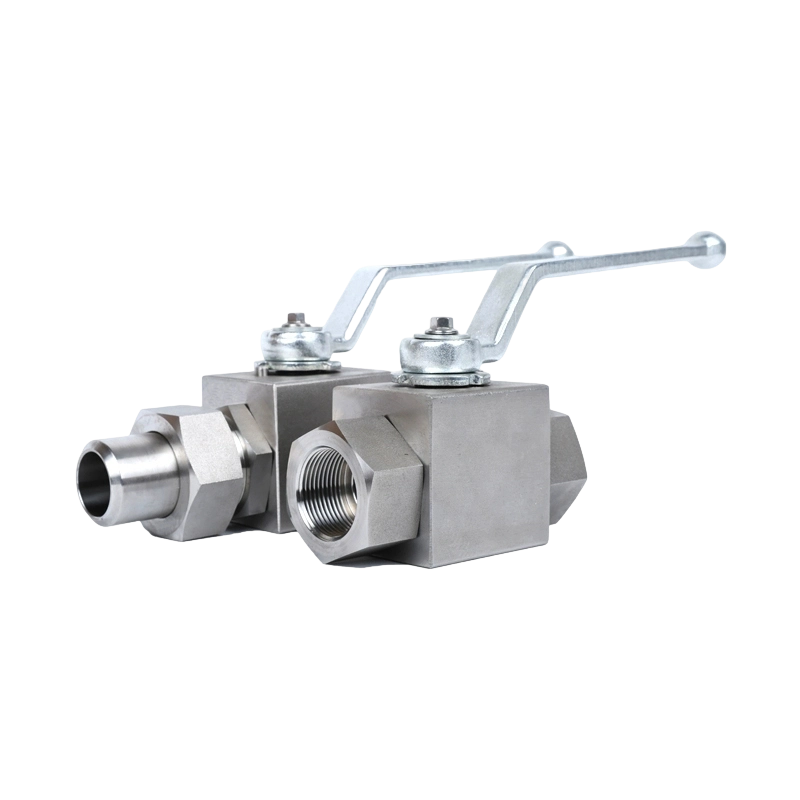
The valve body houses all internal parts and connects to the piping system via threaded, flanged, or welded end connections. Body materials range from brass and bronze for low-pressure plumbing, to carbon steel for industrial service, to 316 stainless steel for corrosive or sanitary applications. The body configuration — one-piece, two-piece, or three-piece — affects repairability and installation flexibility.
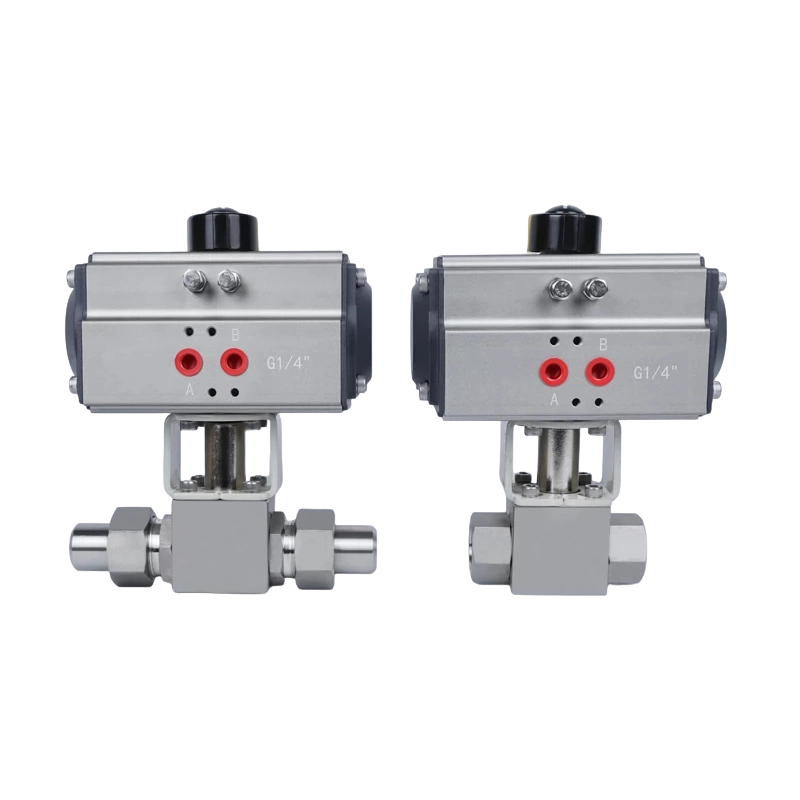
For manual ball valves, the handle is a lever that provides the quarter-turn actuation. Handles are typically made from ductile iron, steel, or reinforced plastic. Many handles include a lockout provision to secure the valve in the open or closed position. For automated systems, ball valves are fitted with pneumatic, hydraulic, or electric actuators that respond to control signals and integrate with process control systems.
The ball valve description varies significantly depending on design configuration. Each type is engineered for a distinct set of operating conditions.
In a floating ball valve, the ball is not fixed to the stem but instead "floats" between the two seats. Line pressure pushes the ball against the downstream seat to create a seal. This design is cost-effective and works well for smaller pipe sizes and moderate pressure ratings — typically up to Class 600 (1,480 PSI at ambient temperature in carbon steel). Floating ball valves are the standard choice for water supply lines, gas distribution systems, and general-purpose industrial applications in sizes from 1/4 inch to 8 inches.
A trunnion mounted ball valve uses upper and lower trunnions (mechanical anchors) to fix the ball in place. The seats move toward the ball to create the seal, rather than the ball moving to the seat. This design dramatically reduces operating torque, making it suitable for large-diameter pipes (above 6 inches) and high-pressure applications up to Class 2500 (6,170 PSI). Trunnion valves are the standard in oil and gas pipelines, subsea applications, and high-pressure steam systems.
Instead of a round bore, the V-port ball valve features a V-shaped notch in the ball. This allows for proportional flow control rather than simple on/off operation. As the ball rotates, the V-notch progressively opens or closes, giving the operator fine control over flow rate. V-port ball valves are used in processes where precise flow modulation is needed, such as chemical dosing systems, pulp and paper production, and temperature control loops.
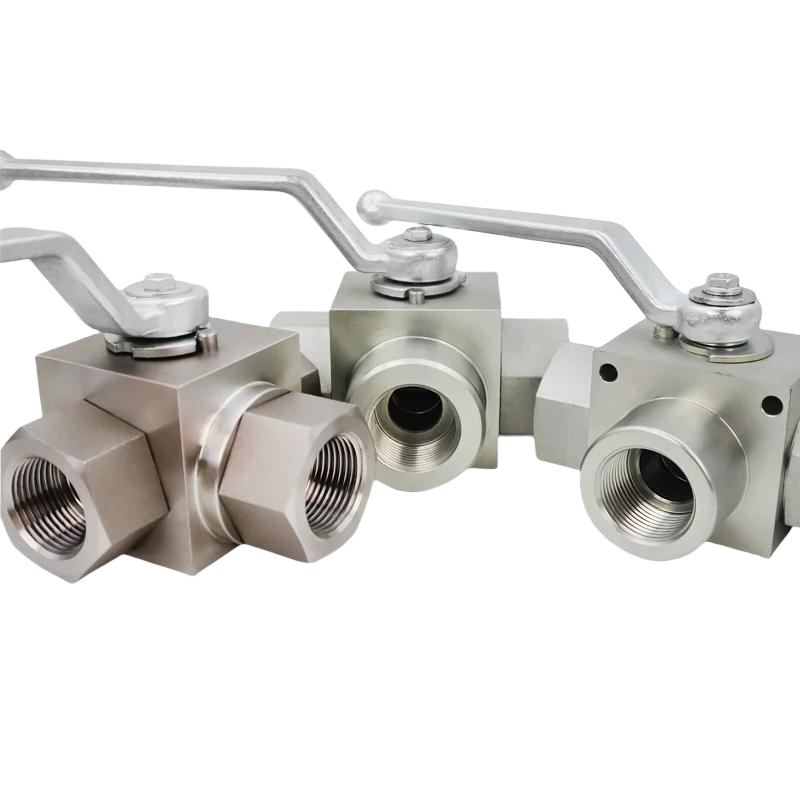
Multi-port ball valves have more than two flow openings. A three-way ball valve can divert flow between two outlets (T-port) or mix two inlets into one outlet (L-port). Four-way ball valves handle more complex flow distribution requirements. These are widely used in mixing stations, hydraulic systems, and distribution manifolds where flow direction must be changed without installing multiple separate valves.
Full-port (or full-bore) ball valves have a bore equal to the inner diameter of the connecting pipe, resulting in no pressure drop across the valve when fully open. This is critical in applications involving pigging (pipeline cleaning), slurries, or any service where pressure loss cannot be tolerated. Reduced-port valves cost less and are adequate for most standard services where a small pressure drop is acceptable.
| Type | Typical Size Range | Pressure Class | Primary Use |
|---|---|---|---|
| Floating Ball Valve | 1/4" – 8" | Class 150 – 600 | Water, gas, general industrial |
| Trunnion Mounted | 2" – 60" | Class 150 – 2500 | Oil & gas pipelines, high pressure |
| V-Port Ball Valve | 1/2" – 12" | Class 150 – 300 | Flow control, chemical dosing |
| Three-Way Ball Valve | 1/4" – 6" | Class 150 – 600 | Flow diversion, mixing |
Knowing how a ball valve works is central to any accurate ball valve description. The operation is straightforward but the engineering behind achieving leak-tight shutoff millions of cycles is not.
The sealing mechanism relies on the spring force of the seats pushing against the ball. In floating ball designs, upstream pressure assists the downstream seat in creating a tighter seal as pressure increases — a self-energizing effect that actually improves shutoff performance under high pressure. In trunnion designs, spring-loaded seats maintain contact independent of line pressure, providing consistent sealing at both high and low pressure conditions.
Material choices in a ball valve directly determine its compatibility with the fluid, operating temperature, pressure rating, and expected service life. Selecting the wrong material is one of the most common and costly mistakes in valve specification.
A thorough ball valve description in a technical or procurement context must include the applicable standards. These standards define dimensional requirements, pressure-temperature ratings, testing procedures, and material traceability.
Comparing ball valves to other valve types helps clarify when a ball valve is the right selection and when another design would better serve the application.
| Valve Type | Actuation | Shutoff Quality | Throttling Capability | Pressure Drop | Best For |
|---|---|---|---|---|---|
| Ball Valve | Quarter-turn | Bubble-tight | Poor (standard), Good (V-port) | Very low (full-port) | On/off isolation |
| Gate Valve | Multi-turn | Good | Poor | Very low (fully open) | Infrequent operation |
| Globe Valve | Multi-turn | Good | Excellent | High | Flow control, throttling |
| Butterfly Valve | Quarter-turn | Moderate | Moderate | Low to moderate | Large diameter, low pressure |
| Check Valve | Automatic | Good | None | Low | Backflow prevention |
Ball valves outperform gate and globe valves in cycle speed and space efficiency. However, globe valves are the superior choice for precise flow control applications where the fluid must be throttled consistently over time. Butterfly valves win on cost-per-inch-diameter for large low-pressure lines, but cannot match the shutoff quality of a well-specified ball valve in most fluid services.
Ball valves are found in virtually every sector of industry and infrastructure. Understanding where they are used deepens the overall ball valve description and explains why production volumes for ball valves globally exceed hundreds of millions of units annually.
Ball valves are the dominant valve type in upstream, midstream, and downstream oil and gas operations. Pipeline isolation, wellhead control, manifold systems, and pig launchers all rely on trunnion-mounted ball valves rated to API 6D. In a single natural gas transmission compressor station, it's common to find over 200 ball valves in various sizes from 2 inches to 36 inches. These must handle methane, hydrogen sulfide, and condensates at pressures ranging from 100 to 2,000 PSI or more.
Chemical plants require valves that resist corrosion from acids, caustics, solvents, and oxidizers. Lined ball valves (PTFE-lined body and ball) are used where metal contact with the process fluid is unacceptable. High-alloy ball valves in Hastelloy or Inconel are specified for the most aggressive services. V-port ball valves serve as control valves in chemical dosing and reactor feed systems.
Municipal water systems use ball valves at service entry points, water meter installations, fire suppression systems, and treatment plant chemical injection points. NSF/ANSI 61 certification is required for valves in contact with potable water, restricting materials to those that do not leach harmful compounds. Brass and ductile iron ball valves with EPDM or PTFE seats are standard in these applications.
Sanitary ball valves in 316L stainless steel with electropolished surfaces and PTFE or EPDM seats are used in food processing, brewing, dairy, and pharmaceutical manufacturing. These valves meet 3-A Sanitary Standards and FDA material requirements. Cleanability (CIP — Clean-in-Place) is a key design requirement; the ball and body interior must drain completely without dead legs where bacteria can grow.
Brass ball valves are ubiquitous in commercial and residential HVAC systems for isolating chillers, boilers, heat exchangers, and air handling units. Full-port designs with drain plugs are used at low points in systems for maintenance purposes. Actuated ball valves tied to building management systems (BMS) control water flow in variable-volume hydronic systems for energy efficiency.
Nuclear, natural gas, and renewable energy power plants rely on ball valves for cooling water systems, fuel gas supply, and steam blowdown. In nuclear applications, ball valves must meet ASME NQA-1 quality assurance requirements and carry full material traceability documentation. High-integrity, low-fugitive-emission designs are required for environmental compliance.
A precise ball valve description in a purchase specification prevents mismatched equipment, costly replacements, and safety incidents. The following parameters must be defined for any ball valve procurement:
Even the highest-quality ball valve will underperform or fail prematurely if installed or maintained incorrectly. The following guidance covers the most common operational issues encountered with ball valves in service.
Every ball valve carries a pressure-temperature (P-T) rating that defines the maximum allowable working pressure (MAWP) at specific temperatures. Misreading a P-T rating is one of the most dangerous errors in valve selection. A valve rated at 285 PSI at 100°F may only be rated at 150 PSI at 400°F due to reduction in material yield strength at elevated temperatures.
ASME B16.34 provides the standard P-T rating tables for flanged and buttwelding valves. For example, an ASTM A216 WCB carbon steel valve in ANSI Class 150:
Seat material limits may be more restrictive than body material limits. A PTFE-seated ball valve with a carbon steel body might be rated for 800°F at the body level, but the PTFE seats limit practical operating temperature to 400°F. Always check seat ratings separately from body ratings in the valve datasheet.
When a ball valve is fitted with a pneumatic, electric, or hydraulic actuator, it becomes an automated on/off or control element in a process system. This is an increasingly common configuration as industrial facilities move toward greater automation and remote monitoring.
Pneumatic actuators use compressed air (typically at 40–120 PSI) to rotate the ball. Spring-return (single-acting) designs fail to a defined position (open or closed) when air supply is lost — a critical safety feature. Double-acting designs require air on both sides and must have a separate fail-safe mechanism. Pneumatic actuators respond in under one second for most valve sizes, making them ideal for emergency shutdown (ESD) applications.
Electric actuators receive 4–20 mA or digital signals from a DCS or PLC and drive the valve to position via an electric motor and gearbox. They are suitable for locations without instrument air supply. Electric actuators on ball valves are now standard in remote pipeline monitoring stations, water treatment facilities, and building automation systems. Response time is slower than pneumatic — typically 5 to 30 seconds for a full stroke — which may be acceptable for many process applications.
Solenoid valves are used with pneumatic actuators to control the air supply and direct it to open or close the ball valve. Smart positioners are used when modulating control is required — they receive a control signal and position the ball accurately to a target angle (for V-port or characterized ball valve applications). Modern smart positioners include HART or Foundation Fieldbus communication for diagnostic feedback to the control system.
Recommended Products
Copyright © Yancheng Yanye Hydraulic Parts Co., Ltd. All Rights Reserved
Custom Ball Valve Factory
China Ball Valve Manufacturers




 English
  русский
  Español