2026-05-04
Content
The best actuated ball valve packages for oil and gas skids combine a full-bore or reduced-bore ball valve body rated to at least ASME Class 150–2500, a matched actuator (pneumatic, electric, or hydraulic), a positioner or solenoid valve, and all necessary limit switches, mounting hardware, and feedback devices—delivered as a single, pre-tested assembly. Skid builders consistently report 30–45% faster installation time when they source complete actuated ball valve packages from a single supplier versus assembling components separately. That reduction in integration risk is the core reason packaged solutions dominate upstream, midstream, and downstream skid applications.
Oil and gas skids—whether they handle produced water separation, gas compression, chemical injection, metering, or custody transfer—demand valves that open and close reliably under pressure cycles, resist sour or corrosive media, and communicate with a PLC or DCS without additional engineering hours. An actuated ball valve that ships pre-assembled and factory-tested against the process datasheet eliminates the three most common field failures: actuator misalignment, incorrect spring sizing, and solenoid voltage mismatch.
This article breaks down every decision point—valve body construction, actuator selection, accessory stacking, material compatibility, sizing, certification requirements, and supplier evaluation—so procurement engineers, skid fabricators, and instrument engineers can specify confidently and avoid costly rework.
Not every ball valve body is suitable for skid duty. The process conditions—pressure class, temperature, fluid phase, and media chemistry—dictate which body design belongs in the package.
In a floating ball valve, the ball is held between two seats and pushed against the downstream seat by line pressure to achieve sealing. These valves are economical, compact, and available in sizes from ½ inch through 4 inches in Class 150 to Class 1500. Floating designs are standard on chemical injection skids, glycol dehydration skids, and instrument isolation applications where differential pressure across the valve stays below approximately 600 psi in 2-inch bodies. Above that threshold, seat load becomes excessive and trunnion-mounted designs are preferred.
Trunnion-mounted ball valves support the ball mechanically at the top and bottom via trunnions, so line pressure does not transfer load to the seats. This makes them suitable for large-diameter, high-pressure, and high-cycle applications. Sizes from 2 inches to 56 inches in Class 150 through Class 2500 are common on gas compression skids, pipeline launcher/receiver skids, and ESD (Emergency Shutdown) applications. A well-specified trunnion-mounted ball valve on an ESD skid can achieve fire-safe performance per API 607 and a cycle life exceeding 10,000 open/close operations at maximum rated pressure.
Side-entry (split-body or three-piece) valves can be disassembled in-line and are preferred where maintenance access is limited on compact skids. Top-entry valves allow seat and ball inspection without removing the valve from the pipeline, which is especially valuable on large-bore, high-pressure gas processing skids where pulling a 6-inch Class 900 valve from service is costly. Three-piece ball valve bodies—where the central body and two end pieces are bolted together—allow the body and actuator package to be swapped while leaving end connectors welded in the skid piping.
Full-bore (full-port) ball valves have a flow path equal to the pipe inside diameter, minimizing pressure drop and allowing pigging. They are mandatory on pipeline pigging skids and any metering application where permanent pressure loss is unacceptable. Reduced-bore valves are one to two pipe sizes smaller internally, which reduces the actuator torque requirement and lowers valve cost—a practical choice on utility, vent, and drain lines where flow restriction is acceptable.
The actuator is as important as the ball valve itself. Selecting the wrong actuator type results in insufficient torque at end of travel, slow stroke times, or failure in the safe position during a power or instrument air loss event.
Pneumatic scotch yoke actuators convert linear piston movement into rotary torque through a yoke mechanism. The torque output is highest at 0° and 90° (the positions where ball valves need it most to break and seat) and lowest at mid-stroke. Scotch yoke designs are the dominant actuator on oil and gas skids where instrument air at 60–120 psi is available, particularly in sizes above DN50 (2 inches) where rack-and-pinion actuators become cost-inefficient. Spring-return (fail-open or fail-closed) configurations provide a defined safe position on ESD and on/off control valves without requiring a separate energy source during failure.
Rack-and-pinion pneumatic actuators use two opposing pistons driving a central gear to produce rotary output. They are compact, lightweight, and cost-effective for valve sizes up to 3–4 inches. Their torque output is relatively constant across the full 90° stroke, which makes them well-suited for ball valves with consistent operating torque requirements. Spring-return and double-acting versions are both widely available. On skids with many small-bore isolation ball valves (½ inch to 2 inch on chemical injection manifolds, for example), rack-and-pinion packages with 4-way solenoid valves and NAMUR-mounted limit switch boxes offer a repeatable, modular solution.
Electric actuators are preferred when instrument air is unavailable or when precise positioning (for throttling applications) is required. Multi-turn or quarter-turn electric actuators with integral gearboxes can operate ball valves from ½ inch to 48 inches. Modern electric actuators integrate fieldbus protocols (HART, PROFIBUS, Modbus, FOUNDATION Fieldbus) and provide torque monitoring, position feedback, and partial stroke testing within a single device—capabilities that reduce external instrument loading on the skid. For remote or unmanned wellhead skids without reliable instrument air, electric actuators powered by solar/battery systems have become standard on isolation and ESD ball valve packages.
Hydraulic actuators deliver the highest force density of any actuator type, making them the only practical choice for large-bore (10-inch and above), ultra-high-pressure (Class 1500 and 2500) trunnion ball valves on wellhead Christmas tree skids and high-integrity pipeline shutdown systems. They require a hydraulic power unit (HPU) on the skid, which adds cost and maintenance burden, but no other actuator type can reliably operate a 20-inch Class 1500 trunnion ball valve with the torque margin and speed required.
Actuator output torque at minimum supply pressure (typically 60 psi for pneumatic systems) must exceed the valve's maximum required torque (including break-open torque under maximum differential pressure, with seat wear factor applied) by at least 25–30%. Many experienced skid engineers specify a 40% margin for valves in dirty or high-cycle service. Undersized actuators are the single most common cause of actuated ball valve failure in the field.
Material selection drives both price and service life. Incorrect material choices lead to corrosion failures, stress corrosion cracking, or elastomer degradation within months of startup.
| Service | Body Material | Ball / Stem | Seats | Relevant Standard |
|---|---|---|---|---|
| Sweet crude / gas | ASTM A216 WCB Carbon Steel | 316 SST | PTFE / RPTFE | API 6D, ASME B16.34 |
| Sour service (H₂S) | ASTM A216 WCB + NACE trim | 17-4PH H1150 / Duplex | PTFE / Filled PTFE | NACE MR0175 / ISO 15156 |
| Produced water / brine | CF8M (316 SST) or Duplex 2205 | 316 SST / Duplex | PTFE or metal seats | API 6D, ASME B16.34 |
| Cryogenic LNG | ASTM A352 LCB / LCC | 316L SST | PCTFE / PEEK | BS 6364, API 6D |
| High-temp steam / process | ASTM A217 WC9 / C12A | Stellite-overlay 316 | Metal seats (Inconel) | ASME B16.34 |
Sour service compliance under NACE MR0175 / ISO 15156 is non-negotiable for any skid processing fluids with partial pressures of H₂S above 0.05 psia (0.34 kPa). This affects not only body and trim hardness limits but also the actuator materials—springs, yoke pins, and fasteners must all comply. Many skid fabricators overlook the actuator hardware when specifying NACE packages, which creates compliance gaps that regulators and operators will flag during pre-commissioning inspection.
For seats and seals, PTFE is suitable from approximately −53°C to +200°C and handles most hydrocarbon services. Reinforced PTFE (RPTFE with 15–25% glass or carbon fill) improves creep resistance for high-cycle applications. Metal seats are required above 200°C, for erosive slurry service, and for fire-safe applications where soft seats would be destroyed in a fire event before the valve can be actuated to the safe position.
Skid packages entering oil and gas facilities must comply with a layered set of valve, actuator, and safety standards. Missing a single certification can delay skid acceptance for weeks.
When sourcing packaged solutions, always request a Compliance Matrix from the supplier showing which tests were performed on the specific valve-actuator combination, not just on the valve body alone. A ball valve with API 6D certification paired with a generic actuator that has not been tested as part of the assembly does not automatically constitute a certified actuated package.
The ball valve and actuator are only two components of a functional skid package. The accessories determine whether the package integrates cleanly with the skid control system and provides the diagnostics and safety functions required.
For pneumatically actuated ball valves, a solenoid valve (typically 4-way, 5-port) controls the air supply to the actuator. The solenoid must be specified for the correct supply voltage (24VDC is most common on modern skids), enclosure rating (IP67 minimum for outdoor skids, IP68 for submersible or wash-down zones), and ATEX/IECEx zone. NAMUR-interface solenoids mount directly on the actuator with no tubing, reducing potential leak points and improving response time. Single-solenoid spring-return configurations are standard for fail-safe ESD ball valves; double-solenoid configurations are used for non-safety-critical on/off control where speed in both directions matters.
Limit switch boxes provide discrete (open/closed) position confirmation to the DCS or PLC. They typically contain two inductive, magnetic, or mechanical microswitches adjustable to trigger at full-open and full-closed positions. NAMUR-output proximity switches (EN 60947-5-6) are used in intrinsically safe circuits. For modulating service, a 4–20 mA analog positioner or smart electro-pneumatic positioner with HART communication provides continuous position feedback and enables partial stroke testing (PST) for SIL-rated ESD ball valves without taking the valve fully out of service.
Instrument air quality directly affects actuator reliability. A 5-micron filter regulator upstream of each actuated ball valve removes particulates and condensate, and allows local pressure adjustment. A lockup (trip) valve holds the actuator in position during instrument air loss events where the desired fail position is "stay put" (fail-in-place) rather than spring-return. Volume tanks (air accumulators) can extend available actuating air for a defined number of strokes after supply loss.
A manual override handwheel or declutchable lever allows operators to position the ball valve during commissioning, maintenance, or actuator failure without requiring instrument air or electrical power. Scotch yoke actuators typically accept top-mounted handwheels; rack-and-pinion actuators accept side-mounted overrides. Handwheels should be lockable in position on ESD valves to prevent inadvertent operation.
Adjustable needle valves on the actuator exhaust ports control stroke speed. Fast closure of large-diameter ball valves can generate destructive water hammer pressure surges in liquid-filled lines. Pipeline operators generally limit ball valve closure time to a minimum of 3–5 seconds per inch of pipe diameter to keep surge pressures within acceptable limits. Proper speed control tuning during factory acceptance testing (FAT) prevents costly field modifications after skid installation.
Different skid types impose different demands on actuated ball valve packages. Understanding these profiles prevents over- and under-specification.
Chemical injection skids typically handle small-bore (½ inch to 2 inch) lines at moderate pressures (up to Class 600). The chemicals—methanol, scale inhibitor, corrosion inhibitor, biocide—vary widely in compatibility with seat materials. PTFE seats are generally compatible, but fluoroelastomer body seals should be confirmed against the specific chemical. Rack-and-pinion pneumatic actuators with NAMUR solenoid valves and micro-switch limit boxes are the standard package. Stainless steel bodies (CF8M) are often required to resist corrosive chemicals. On chemical injection manifold skids with 20–40 actuated ball valves, standardizing on a single package size and actuator type reduces spare parts inventory cost by 60–70% compared to mixed specifications.
Gas compression skids require actuated ball valves on suction and discharge headers, recycle lines, bypass lines, and blowdown lines. Suction and discharge isolation valves are often 4–12 inches in diameter at Class 300–900, requiring scotch yoke pneumatic or hydraulic actuators. Blowdown valves must be fire-safe (API 607) and may be safety-instrumented (SIL 2) ESD ball valves. Speed of closure is critical—a compressor ESD sequence typically requires full valve closure within 3–10 seconds depending on unit size and SIS design basis. Anti-static devices (earthing spring between ball and body) prevent static charge buildup in gas service.
Produced water skids process highly saline, corrosive water that may also contain sand, scale, and residual hydrocarbons. Ball valve bodies in Duplex 2205 or Super Duplex 2507 stainless steel resist chloride stress corrosion cracking far better than standard 316 SST in high-chloride environments (chloride content above 1,000 ppm). Full-bore valve designs prevent solid deposition in the valve bore. For slurry-containing produced water with high sand loading, metal-seated ball valves with hardened Stellite overlays on the ball and seats resist erosive wear that would destroy soft seats within weeks of service.
Metering skids demand ball valves with tight shutoff (API 6D double block and bleed, or DBB, configuration) for prover loop isolation and meter calibration. DBB ball valves integrate two seating surfaces and a body cavity vent in a single compact valve body, replacing three conventional valves. Electric actuators with 4–20 mA positioning and HART communication are preferred on metering skids because they provide precise, reproducible positioning and eliminate actuator air supply as a variable in meter proving operations.
Surface safety valves (SSVs) and surface-controlled subsurface safety valves (SCSSVs) on wellhead skids operate in the most demanding service: wellbore pressures up to 15,000 psi, sour gas, sand, and the most severe ESD requirements (SIL 3 in some cases). These applications typically use hydraulically actuated ball valves with spring-return to closed and full API 6A (Wellhead Equipment) or API 6D qualification. The hydraulic power unit (HPU) controlling these valves is a skid in itself and must be designed with the same rigor as the valve package.
A comprehensive Factory Acceptance Test (FAT) on the complete actuated ball valve package—valve body, actuator, accessories, and control system interface—catches integration problems before they become field problems. The following tests should be required on all safety-critical and high-pressure skid packages.
Requiring witnessed FAT with operator or third-party inspector presence is standard practice for ESD and SIL-rated actuated ball valve packages on oil and gas skids. Test reports, including torque curves, stroke time records, and leakage rate measurements, become part of the valve package documentation delivered with the skid.
Supplier selection for oil and gas skid ball valve packages is not purely a price exercise. Delivery time, documentation quality, engineering support, and post-delivery service all affect total project cost. Consider the following criteria systematically.
Suppliers who assemble and test valve-actuator packages in their own facility have direct control over quality and schedule. Broker models—where a distributor purchases a valve from one manufacturer and an actuator from another and ships them separately—create accountability gaps. When a leakage problem appears at commissioning, a broker with no in-house testing capability will point to the valve manufacturer; the valve manufacturer will point to the actuator; and the project timeline suffers. Prefer suppliers with documented in-house assembly and testing infrastructure.
Major operators (ExxonMobil, Shell, Saudi Aramco, TotalEnergies, BP) and EPC contractors maintain Approved Vendor Lists for valve and actuator suppliers. A supplier's presence on relevant AVLs shortens the qualification process significantly. Request AVL documentation specific to the ball valve product line and actuator type you are specifying—approval for one product does not automatically extend to all product lines.
A complete actuated ball valve package documentation set should include: general arrangement and dimensional drawings, body and actuator material certifications (mill certs, EN 10204 3.1 or 3.2), NDT reports, hydrostatic and seat test records, actuator torque output curves, wiring diagrams for electrical accessories, ATEX/IECEx certificates for electrical components, NACE compliance statement, and operation and maintenance (O&M) manual. Incomplete documentation is the most frequently cited reason for delayed skid acceptance by operator QA teams. Establish documentation requirements in the purchase order, not after delivery.
Standard actuated ball valve packages in common sizes (1 inch to 4 inch, Class 150/300, carbon steel or 316 SST, PTFE seats, pneumatic rack-and-pinion actuator) should be available from stock or within 6–8 weeks from leading suppliers. Large-bore, high-pressure, or exotic material packages (10-inch Class 900 Duplex trunnion with scotch yoke and hydraulic actuator) typically require 16–24 weeks. Confirm lead time on the actual specification you need—not catalog lead times for standard versions—before committing to a skid delivery schedule.
Actuated ball valve packages in remote or offshore locations require accessible spare parts and technical support. Confirm that the supplier maintains regional stocking of soft goods kits (seats, seals, O-rings), solenoid coils, and limit switch modules. Suppliers with global service centers in the regions where your skid will operate—Middle East, Southeast Asia, West Africa, North Sea, North America—reduce downtime when field issues occur. Request references from projects in similar geographies and service conditions before awarding the order.
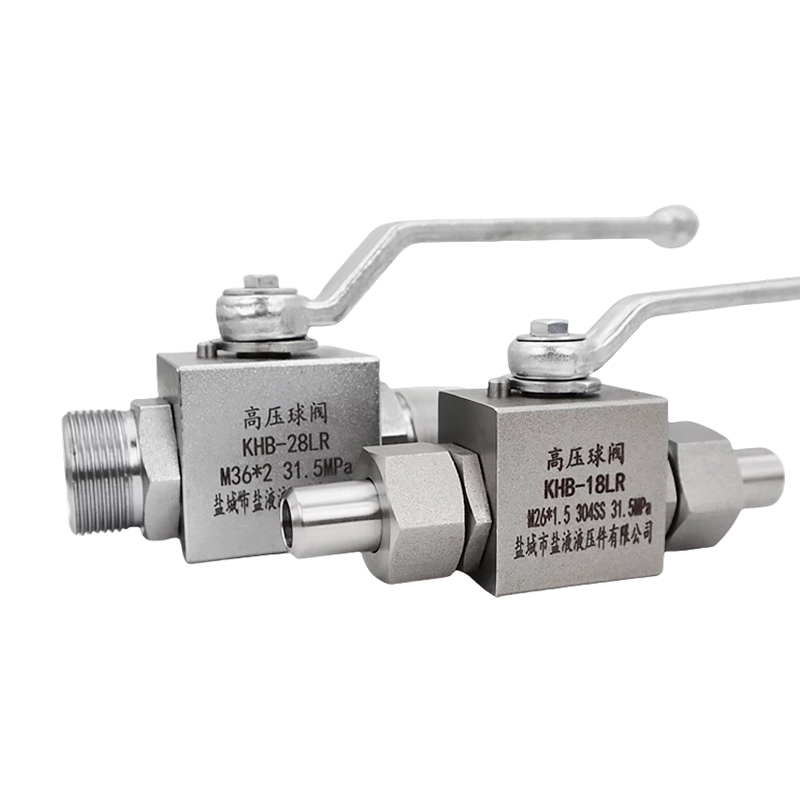
Purchase price is typically 20–35% of the total cost of ownership for an actuated ball valve on an oil and gas skid over a 20-year service life. Maintenance, downtime, and replacement costs dominate. Decisions made at specification and procurement stage directly determine the long-term cost.
The highest-return investment in actuated ball valve packages for oil and gas skids is not buying the cheapest valve that meets minimum specifications—it is buying the right package, correctly specified, from a supplier capable of delivering complete documentation and long-term support. The difference in purchase price between a marginal and a well-specified package is rarely more than 15–25%. The difference in life-cycle cost can be 200–400% when factoring in early failure, unplanned downtime, and maintenance burden.
Recommended Products
Copyright © Yancheng Yanye Hydraulic Parts Co., Ltd. All Rights Reserved
Custom Ball Valve Factory
China Ball Valve Manufacturers




 English
  русский
  Español