2026-01-14
Content
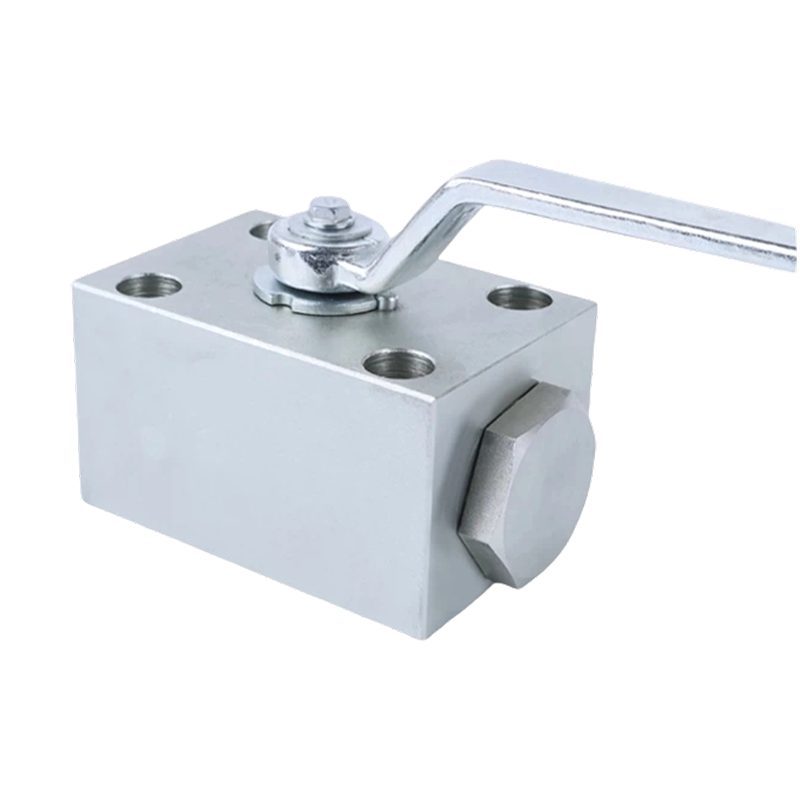
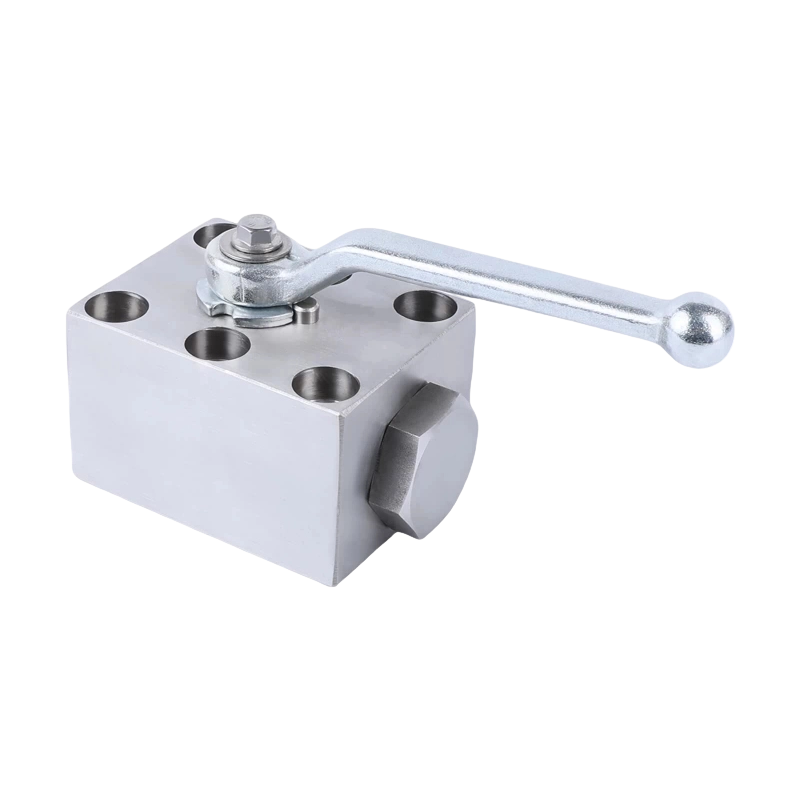
A ball valve is a quarter-turn valve that uses a hollow, perforated, and pivoting ball (the "ball") to control flow through it. The ball has a hole (port) through the middle. When the hole is aligned with the pipe (open position), fluid flows freely; when rotated 90 degrees, the solid part of the ball blocks flow (closed position). This design offers low pressure drop, quick operation, and reliable sealing.
| Type | Key Features | Typical Use Cases |
|---|---|---|
| Floating Ball Valve | The ball is free-floating and held in place by the downstream seat. | General-purpose applications with low to moderate pressures. |
| Trunnion Ball Valve | The ball is fixed on a shaft (trunnion), reducing torque. | High-pressure, high-temperature, and large-diameter pipelines. |
| Full Bore (Full Port) | The valve's bore is the same size as the pipe (port-to-port flow). | Critical flow applications where pressure loss must be minimized. |
| Reduced Bore (Standard Port) | The bore is smaller than the pipe size. | Cost-sensitive applications where some pressure drop is acceptable. |
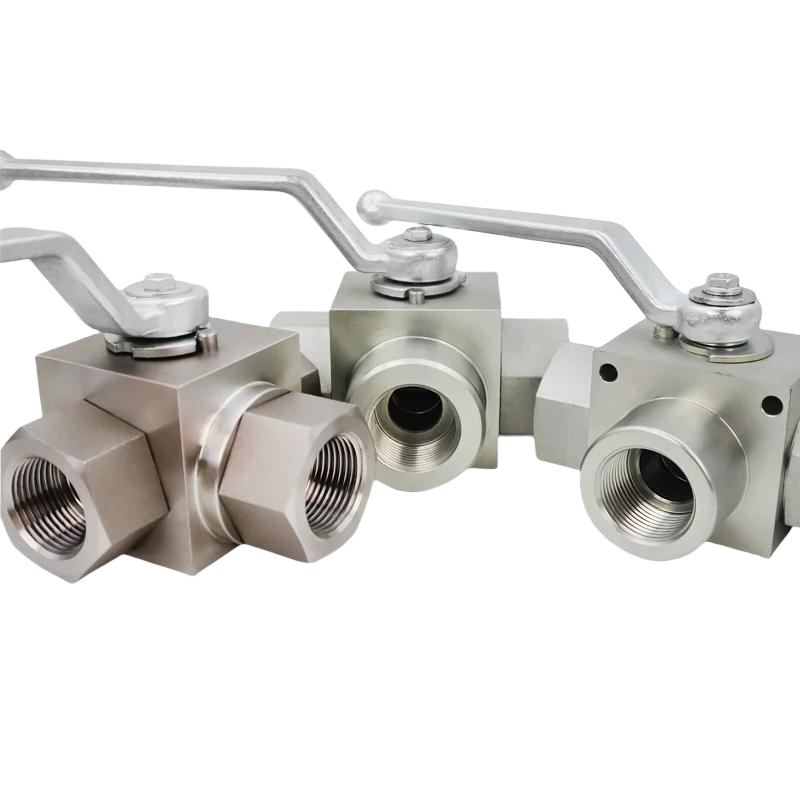
| Three-Way Ball Valve | Has three ports (T or L configuration). | Diverting flow, mixing, or sampling. |
| Four-Way (Multi-Port) Ball Valve | Four ports for complex flow routing. | HVAC systems, chemical processing, and water treatment. |
| Metal-Seated Ball Valve | Seats made of metal (e.g., stainless steel). | High-temperature, abrasive, or corrosive media. |
| Soft-Seated Ball Valve | Seats made of PTFE (Teflon) or similar polymers. | Food, beverage, water, and low-temperature applications. |
3.1 Material Compatibility
Choosing the right material ensures durability and prevents corrosion.
| Component | Common Materials | Suitable Media |
|---|---|---|
| Body | Carbon Steel (CS), Stainless Steel (SS 304/316), Brass, PVC, CPVC, PVDF | Varies: CS for oil/gas, SS for corrosive liquids, Brass for water, PVC for chemicals |
| Ball | Stainless Steel (AISI 304/316), Duplex, Titanium | Aggressive chemicals, high temperatures |
| Seat | PTFE (Teflon), PEEK, Viton, EPDM, Nitrile | PTFE for chemicals, Viton for high temp, EPDM for water |
3.2 Pressure & Temperature Ratings
Pressure Ratings: Typically range from 150 PSI (PN 10) to 600 PSI (PN 40) or higher for high-pressure applications.
Temperature Range: Depends on seat material. PTFE seats can handle -200°F to 500°F (approx. -129°C to 260°C), while metal seats can handle even higher temperatures.
3.3 End Connections
Threaded: NPT, BSP, FPT (common in low-pressure, smaller sizes).
Flanged: ANSI, DIN, BS, MSS (required for high-pressure or large-diameter pipelines).
Welding: Butt-welded (for seamless integration into pipelines).
Sanitary: Tri-clamp or sanitary fittings (for food, pharma, and biotech).
3.4 Flow Coefficient (Cv)
Cv indicates the flow capacity. Higher Cv means less pressure drop. Buyers should match Cv with system flow requirements to avoid bottlenecks.
3.5 Actuation Options
Manual: Lever, wheel, or gear handle for simple on/off control.
Electric: Motorized actuators for remote or automated control (common in water treatment or HVAC).
Pneumatic/Hydraulic: For high-speed or heavy-duty automation.
When requesting a quote, always provide these specifications:
Size (DN / NPS): The diameter of the valve.
Pressure Rating (PN / Class): Determines the valve's ability to handle pressure (e.g., PN16, Class150, Class300).
Connection Type:
Flanged (most common for larger pipes)
Welded
Threaded (NPT/BSP for smaller sizes)
Material:
Carbon Steel (general purpose)
Stainless Steel (304/316) (corrosive environments)
Alloy Steels (high-temperature applications)
Actuation:
Manual (lever or wheel)
Electric Actuator (for automation)
Pneumatic/Hydraulic (for heavy-duty control)
5.1 Core Parameters
When purchasing, you need to provide or confirm the following information:
Size: Typically ranging from 1/8" to 42" or even larger.
Pressure Class: ANSI 150, 300, 600, 1500, 2500, etc.
Temperature Range: Varies with material, from -50°C to 600°C or higher.
Connection Type: Flanged, threaded (NPT/BSP), welded, socket weld, etc.
Media: Type of fluid (gas, liquid, slurry), and its corrosiveness or abrasiveness.
5.2 Key Considerations
Sealing Type: Soft seat (PTFE) vs Hard seat (metal). Soft seats offer better sealing but shorter lifespan; hard seats are wear-resistant.
Drive Type: Manual, pneumatic, electric, hydraulic. Higher automation typically means higher cost.
Special Features: Fire-safe, anti-static, blow-out proof stems, ISO 5211 mounting pads for actuators.
5.3 Common Questions (FAQ)
Are ball valves uni-directional?
Most standard ball valves are bi-directional (fluid can flow in either direction). However, certain designs (like some three-way valves) may have flow direction considerations.
Full Port vs Reduced Port?
Full port valves have a bore equal to the pipe diameter, offering minimal pressure drop. Reduced port valves have a smaller bore, resulting in higher pressure drop but often lower cost.
| Industry | Typical Use Cases |
|---|---|
| Oil & Gas | Pipeline transport, wellhead control, offshore platforms (requires high pressure and corrosion resistance). |
| Water & Wastewater | Municipal water treatment, irrigation systems, sewage treatment (requires sanitary design, corrosion resistance). |
| Chemical Processing | Handling acids, bases, solvents (requires chemical compatibility and often metal seats). |
| Food & Beverage | Processing lines, sanitary pipelines (requires FDA-approved materials, cleanability). |
| HVAC | Chilled water systems, heating systems (requires reliability and sometimes actuator integration). |
| Pharmaceutical | GMP-compliant pipelines (requires high cleanliness standards). |
7.1 Routine Checks
Seat Inspection: Regularly check for wear on seats and balls, replace if necessary.
Lubrication: Apply appropriate grease to stems to prevent corrosion and sticking.
Anti-Stick Measures: Periodically operate valves that are not in use to prevent the internal grease from drying out and causing the valve to stick.
7.2 Cleaning
Soft Seat Valves: Regularly clean seats to prevent buildup or corrosion.
Hard Seat Valves: May require high-pressure cleaning or chemical cleaning to prevent hard seat sticking.
Confirm Specifications: Size, pressure, temperature, connection.
Confirm Material: Based on media corrosiveness (e.g., stainless steel for water, Hastelloy for corrosive chemicals).
Select Sealing Type: Soft seat vs Hard seat.
Check Drive Type: Manual or actuator (pneumatic/electric).
Check Certifications: API, ISO, ANSI.
Check Warranty: Service life, seat replacement policy.
| Standard | Scope |
|---|---|
| API 6D | Ball valves for pipeline service (high-pressure). |
| ISO 5211 | Actuator mounting (interchangeable actuators). |
| ASME B16.34 | Valve flanges and fittings. |
| ANSI B16.5 | Pipe flanges (Class 150, 300, etc.). |
| DIN 3352 | Ball valves (German standard). |
| BS EN 13547 | Copper alloy ball valves (British/European). |
| UL/CSA | Safety certifications for North America. |
10.1 Installation Best Practices
| Step | Key Actions | Why It Matters |
|---|---|---|
| Pre-Installation Inspection | Verify material, pressure rating, and end connections match the system specifications. Check for any visible damage or defects. | Prevents compatibility issues and early failure. |
| Pipe Preparation | Ensure pipe ends are clean, smooth, and free of burrs. For welded connections, use proper welding techniques (e.g., TIG or MIG). | Reduces stress concentrations and prevents leaks. |
| Thread Sealing | Use appropriate thread sealant (PTFE tape or pipe dope) for threaded connections. Tighten to the recommended torque. | Guarantees a leak-proof seal. |
| Flange Alignment | Align bolt holes precisely for flanged connections. Use a torque wrench to tighten bolts in a cross-pattern to the specified torque. | Ensures even pressure distribution and prevents flange leakage. |
| Handle Position | Install the valve with the handle in the closed position, especially for high-pressure applications. | Reduces the load on the seat during initial pressurization. |
| Support | Provide adequate support for the pipe and valve to prevent mechanical stress on the valve body. | Prevents misalignment and mechanical damage. |
10.2 Maintenance Guidelines
| Maintenance Task | Frequency | Tips |
|---|---|---|
| Visual Inspection | Monthly (for critical systems) | Check for external leaks, corrosion, or handle wear. |
| Seat Replacement | Every 2-5 years (depending on usage) | Follow the manufacturer's disassembly guide; replace both seats simultaneously for balanced wear. |
| Lubrication | As needed for metal-seated valves | Use high-temperature lubricants on the stem and ball to reduce wear. |
| Actuator Maintenance | Annually (for automated valves) | Inspect for air/hydraulic leaks, check sensor calibrations, and test manual override. |
| Cleaning | After each use for sanitary valves | Disassemble and clean with approved chemicals to prevent biofilm formation. |
| Factor | Impact on Cost | Typical Range |
|---|---|---|
| Material | Higher for stainless steel, duplex, or exotic alloys. | Carbon steel: Low, Stainless steel: Medium-High, Exotic alloys: High |
| Size & Pressure Rating | Larger sizes and higher pressure ratings increase material thickness and testing requirements. | Small (1/2"-1"): 100, Large (4"+): 1000+ |
| Seat Type | Metal seats are more expensive than PTFE but last longer in harsh conditions. | PTFE: Low, Metal: Medium-High |
| Actuation | Adding an electric or pneumatic actuator significantly raises the price. | Manual: Low, Actuated: 500+ |
| Certification | API or ISO certifications add to testing and documentation costs. | Certified: +10-30% |
11.1 Supplier Evaluation Checklist
Technical Support: Can the supplier provide engineering assistance for custom applications?
Lead Time: Standard stock vs. custom fabrication timelines.
Warranty: Standard warranty period and coverage details.
After-Sales Service: Availability of spare parts and repair services.
Compliance Documentation: Access to material test reports (MTR) and pressure test certificates.
| Feature | Ball Valve | Gate Valve | Globe Valve | Butterfly Valve |
|---|---|---|---|---|
| Operation Speed | Instant (quarter-turn) | Slow (multiple turns) | Moderate (multiple turns) | Fast (quarter-turn) |
| Pressure Drop | Very Low (full bore) | Low (when fully open) | Higher (due to flow path) | Low to Moderate |
| Throttling Capability | Poor (not designed for flow control) | Poor (requires wear) | Good (designed for throttling) | Moderate (advanced designs) |
| Durability | High (especially metal-seated) | High (simple design) | Moderate (more moving parts) | Moderate (disc wear) |
| Cost | Moderate | Low to Moderate | High | Low to Moderate |
| Best Use | On/off control, quick shut-off | Isolation in low-pressure systems | Precise flow control | Large diameter, low-cost isolation |
13.1 Smart Ball Valves
| Feature | Description |
|---|---|
| IoT Integration | Sensors embedded in the valve body monitor position, temperature, and pressure, transmitting data to a central SCADA system. |
| Predictive Maintenance | AI algorithms analyze sensor data to predict seat wear or stem fatigue before failure occurs. |
| Remote Actuation | Wireless or networked actuators allow operators to open/close valves from a central control room, reducing manual labor. |
| Energy Efficiency | Smart algorithms optimize valve operation to reduce energy consumption in HVAC and water distribution systems. |
13.2 Material Innovations
| Innovation | Benefits |
|---|---|
| Ceramic Seats | Higher abrasion resistance for slurry and sand applications. |
| Super Duplex Stainless Steel | Exceptional corrosion resistance in marine and offshore environments. |
| 3D-Printed Prototypes | Faster development cycles for custom valve designs. |
14.1 Common Failure Modes
| Symptom | Likely Cause | Diagnostic Steps |
|---|---|---|
| Leakage at Stem | Worn stem packing, damaged O-ring, or over-torqued handle. | Check stem packing for wear. Replace O-ring or re-pack the stem. Verify torque specifications. |
| Leakage Past the Seat | Seat wear (PTFE erosion), debris in seat, or overpressure. | Disassemble valve, inspect seat for wear or scratches. Clean debris. If seat is worn, replace both seats. |
| Difficulty Turning Handle | High pressure, lack of lubrication (for metal seats), or corroded threads. | Verify system pressure is within rating. Apply high-temperature lubricant to metal seats. Check for corrosion on threads and clean. |
| Noise/Vibration | Turbulent flow (often due to reduced bore), or cavitation. | Check if valve is full bore. If not, consider replacing with a full bore valve. Ensure flow velocity is within acceptable range. |
| Stuck in Open/Closed Position | Seat deformation, foreign object jammed, or excessive torque. | Disassemble and inspect ball and seats for deformation. Remove any foreign objects. |
14.2 Preventive Maintenance Checklist
Monthly Visual Checks: Look for external leaks, corrosion, and handle integrity.
Quarterly Seat Inspection: For critical applications, disassemble and inspect seats for micro-abrasions.
Lubrication Schedule: Apply lubricant to metal seats every 6-12 months (if recommended by manufacturer).
Torque Verification: Re-check bolt torque on flanged connections annually.
15.1 Case Study: Chemical Plant Acid Transfer
Scenario: A plant needed to transfer 30% sulfuric acid at 150°C and 200 psi.
Solution:
Valve Type: Trunnion ball valve (to handle high pressure without excessive torque).
Material: Duplex stainless steel (resistant to chloride stress corrosion cracking).
Seat: PTFE (for chemical resistance) with a metal backing ring (to prevent deformation at high temperature).
Outcome: Achieved a leak-free operation for 3 years with only one seat replacement due to normal wear.
15.2 Case Study: Food & Beverage Sanitary System
Scenario: A dairy processing line required a valve for milk transfer, with strict hygiene standards.
Solution:
Valve Type: Sanitary three-way ball valve (T-configuration for diverting flow).
Material: 316L stainless steel (FDA-approved, corrosion-resistant).
Design: Tri-clamp connections, smooth interior surfaces, no dead legs.
Outcome: Simplified cleaning-in-place (CIP) procedures and passed 3-A sanitary audits.
| Aspect | Consideration |
|---|---|
| Material Recycling | Stainless steel bodies are 100% recyclable. PTFE seats can be recycled, but metal seats have higher recyclability. |
| Energy Efficiency | Full bore ball valves reduce pressure drop, lowering pump energy consumption. |
| Leak Prevention | Properly selected ball valves prevent hazardous chemical leaks, protecting the environment. |
| Lifecycle Cost | While metal-seated valves have higher upfront costs, their longer lifespan reduces waste and replacement frequency. |
Standard off-the-shelf valves may not meet niche requirements. Custom options include:
Special Materials: Hastelloy, Inconel, Titanium for extreme corrosion or temperature.
Unique Sizes: Oversized ports for large-diameter pipelines (e.g., 24", 30").
Special Seats: Ceramic, Graphite, or custom polymer blends for abrasive slurries.
Integrated Sensors: Position indicators, pressure transducers, or temperature sensors embedded in the valve body.
Actuator Integration: Custom actuator brackets for limited space or specific mounting orientations.
| Test Type | Purpose | Typical Standard |
|---|---|---|
| Hydrostatic Test | Verify pressure integrity (typically 1.5x or 2x rated pressure). | API 598, EN 593 |
| Seat Leakage Test | Ensure seat can hold pressure without leaking. | API 598 |
| Torque Test | Measure the force required to operate the valve. | API 598 |
| Endurance Test | Simulate long-term operation (e.g., 10,000 cycles). | API 598 |
| Material Test Report (MTR) | Verify chemical composition and mechanical properties. | ASTM A240 (Stainless Steel) |
Proper installation is crucial for ensuring the performance and longevity of ball valves. Follow these best practices:
Direction of Flow: Ensure the valve is installed in the correct flow direction. Look for the arrow on the valve body indicating the proper flow direction.
Torque Requirements: Do not over-tighten the bolts. Use a calibrated torque wrench and follow the manufacturer's torque specifications (usually measured in ft-lbs or Nm).
Alignment: Ensure the valve is perfectly aligned with the piping to avoid stress on the stem and body. Misalignment can cause leakage or damage to the valve.
Support: For larger valves, ensure the pipe supports are close to the valve to reduce stress on the connections.
Compliance: Verify that the valve meets industry standards (e.g., API 6D for pipeline valves, ASME B16.34 for pressure-temperature ratings). Ensure it has the necessary certifications for your specific industry (e.g., food-grade, fire-safe).
Q1: Why is my ball valve leaking after installation?
A: Leaking is often due to improper torque on the bonnet bolts or misalignment of the valve body. Ensure that the bolts are tightened to the manufacturer’s specifications (often using a torque wrench) and that the valve is not installed at an angle that stresses the seals.
Q2: Can I use a ball valve for throttling (flow control)?
A: While ball valves can be used for throttling, they are not ideal for fine flow control because the flow can become turbulent, causing wear. For precise throttling, consider a globe valve or a control ball valve specifically designed for that purpose.
Q3: What's the difference between a three-way and a four-way ball valve?
A: A three-way (T-shaped) valve has one inlet and two outlets (or vice versa), allowing the fluid to be directed to one of two paths. A four-way (X-shaped) valve has two inlets and two outlets, allowing for mixing or diverting flows between four ports.
Q4: How do I choose between Carbon Steel and Stainless Steel?
A: Choose Carbon Steel for non-corrosive fluids like water or oil, where cost is a concern. Opt for Stainless Steel (304/316) for corrosive or food-grade applications, as it offers superior resistance to rust and bacterial growth.
Q5: Do I need a lockout device on my valve?
A: In many industrial settings, especially where safety is critical, a lockout/tagout (LOTO) device is required to prevent accidental operation. This is especially important for valves controlling hazardous fluids or high-pressure systems.
Q6: What does “Trunnion Mounted” mean?
A: In a trunnion-mounted valve, the ball is supported by two trunnion bearings on the sides. This design reduces the torque needed to operate the valve, making it ideal for large-diameter or high-pressure applications.
Q7: Are ball valves suitable for high-temperature steam?
A: Yes, but you need a valve rated for high temperature (e.g., PN25 or higher) and often a metal seat (like metal-on-metal) to handle the heat without degrading.
Q8: How do I maintain a ball valve?
A: Regularly check for wear on the seals (especially for soft-seated valves). Lubricate the stem if it’s a metal-seated valve. Ensure the valve is clean and free of debris before installation.
Q9: What is a “Full Bore” ball valve?
A: A full bore (or full port) valve has an internal diameter equal to the pipe size, ensuring minimal pressure drop across the valve. It’s essential for applications where flow efficiency is critical.
Q10: Can ball valves be automated?
A: Yes, they can be equipped with pneumatic, electric, or hydraulic actuators for remote or automated operation. Smart actuators can even provide feedback on valve position and health.
| Term | Definition |
|---|---|
| Full Port (Full Bore) | The valve's internal passage is the same size as the pipe, minimizing pressure loss. |
| Reduced Port (Reduced Bore) | The valve's internal passage is smaller than the pipe, reducing cost but increasing pressure loss. |
| Trunnion | A support shaft used in larger ball valves to hold the ball in place, reducing the torque required to turn the valve. |
| V-Port | A ball valve with a V-shaped hole, designed for better flow control (throttling). |
| API 6D | A standard specification for pipeline valves used in the oil and gas industry. |
Recommended Products
Copyright © Yancheng Yanye Hydraulic Parts Co., Ltd. All Rights Reserved
Custom Ball Valve Factory
China Ball Valve Manufacturers




 English
  русский
  Español