HOME / NEWS / Industry News / Pipe Clamp Selection Across Demanding Metal Piping Industries: Matching Hardware to Environment and Load

2026-11-23
**Abstract:** Metal piping systems form the circulatory backbone of heavy industry, and the humble pipe clamp is the critical interface between that vibrating, thermally cycling, sometimes corrosive artery and the structural steel that holds it in place. Selection errors—whether a standard clamp in a 5,000 psi hydraulic line or a zinc-plated clamp on an offshore deck—invite premature failure, safety incidents, and unplanned downtime. This article examines clamp selection through the lens of three demanding environments: high-pressure hydraulic systems, thermally active power and process piping, and corrosive marine/offshore installations. It draws on industry standards including MSS SP-58 and application-specific guidance to illustrate how operating pressure, temperature, motion, and atmospheric exposure dictate clamp series, body material, and hardware finish.
## 1. High-Pressure Hydraulic Systems: When Standard Is Not Enough
Hydraulic piping in mobile equipment, mining machinery, and heavy industrial power units presents a deceptively simple clamping problem. The pipe is rigid, the layout is dense, and the fluid is contained—so why not use the standard clamp? The answer lies in pressure pulsation, shock loads, and the mechanical violence of the operating environment.
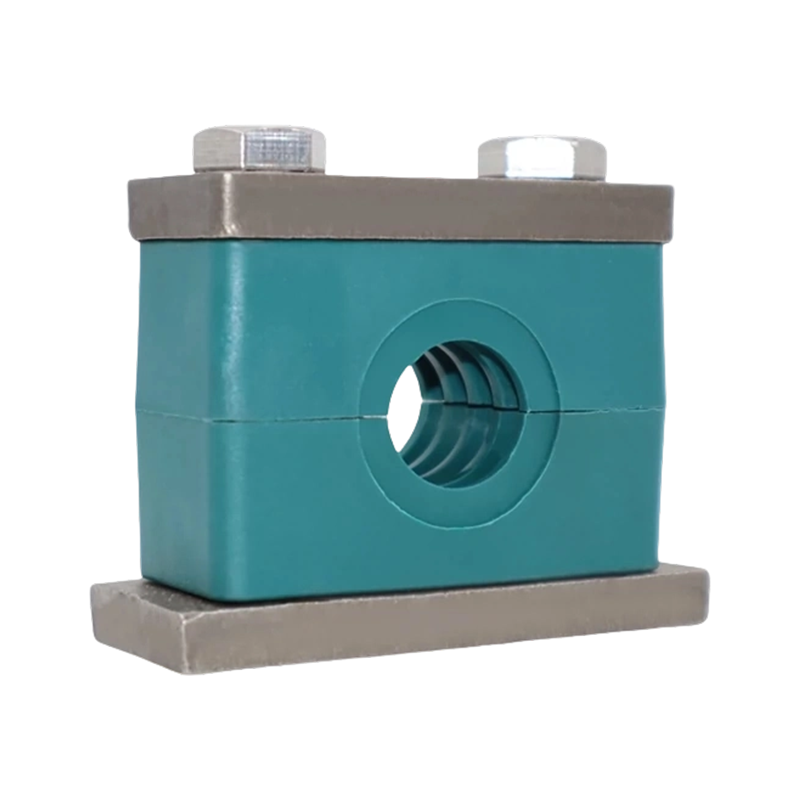
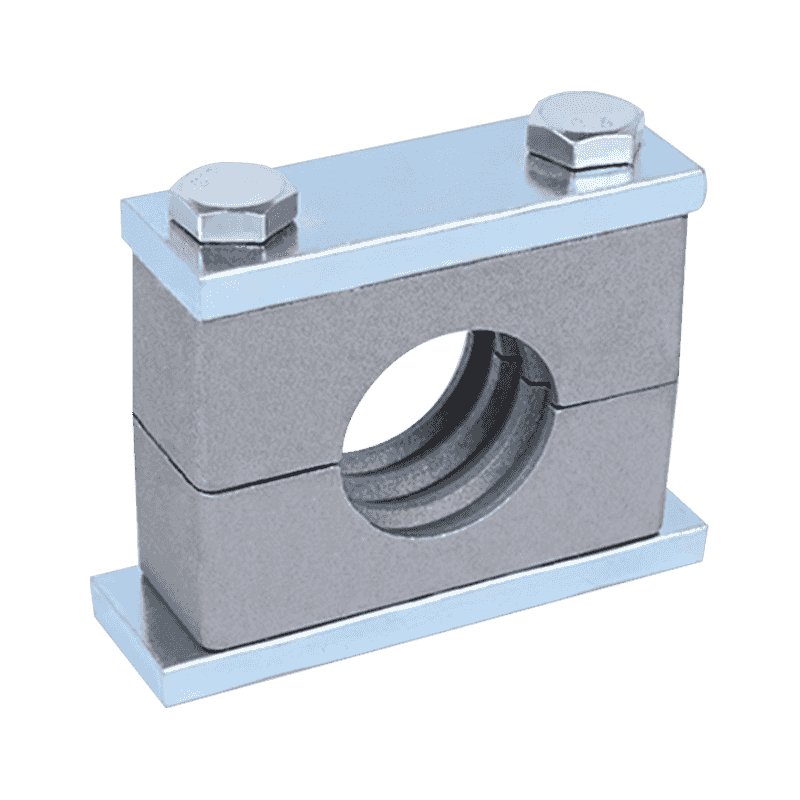
Clamp series selection begins with operating pressure and dynamic load. General industry guidance suggests that standard series clamps suit hydraulic lines up to approximately 2,000 psi . Beyond that threshold—or where the line carries the additional weight of a large filter housing or accumulator—the heavy series becomes necessary. For systems operating at 5,000 psi (single) or 10,000 psi (double), heavy series clamps are the baseline, not an upgrade . A mining application adds a further dimension: impact from falling rock or collisions with other equipment means that even a moderate-pressure line may warrant heavy-series hardware simply to survive the abuse .
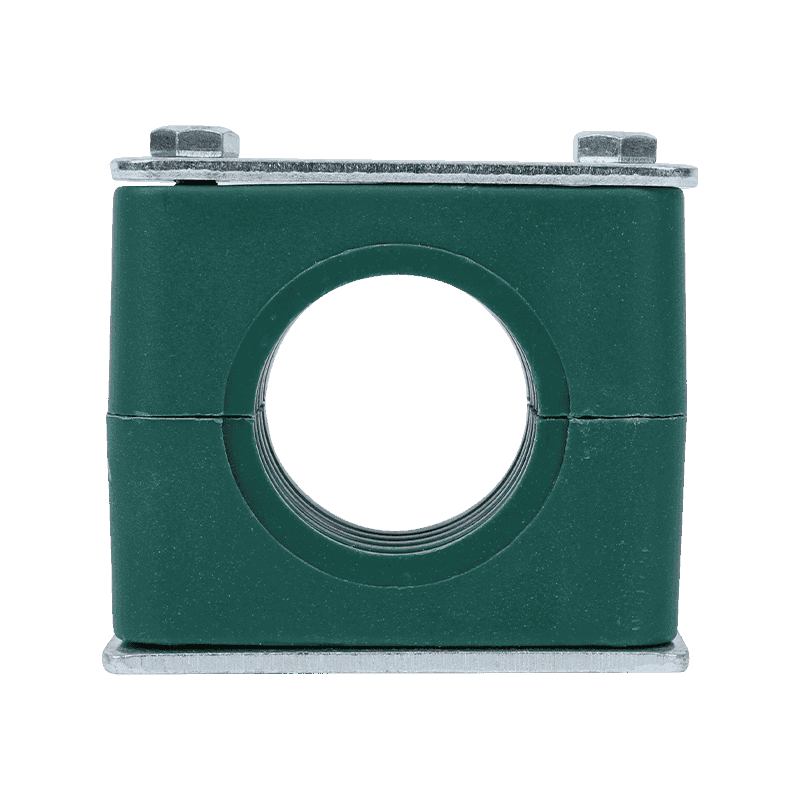
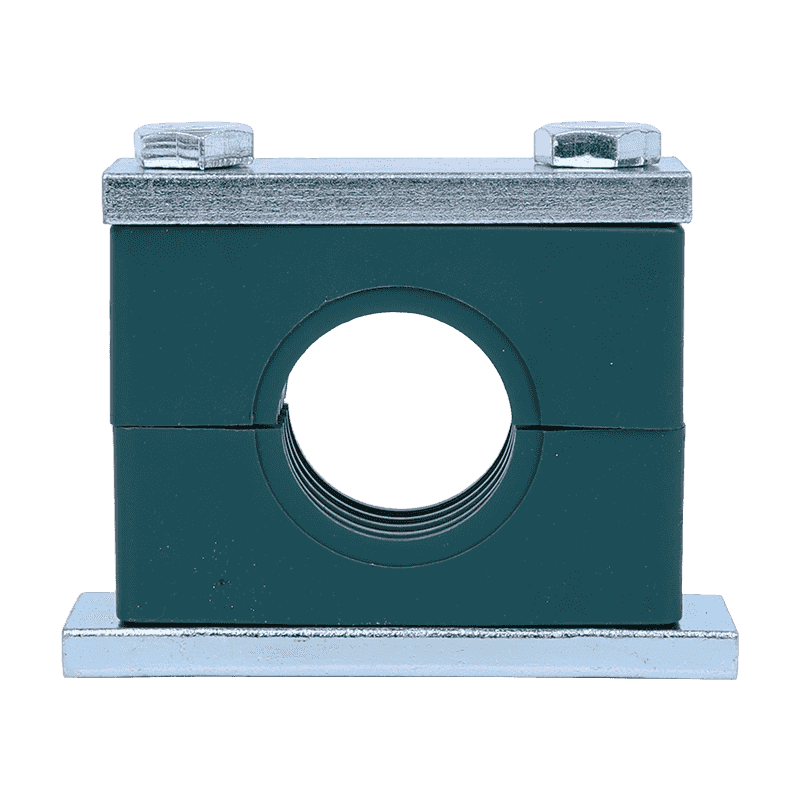
Clamp body material follows temperature and chemical compatibility rather than pressure alone. Polypropylene offers broad chemical resistance for general hydraulic service, while high-temperature cast nylon extends usefulness into elevated-temperature zones. Aluminum clamp bodies serve high-pressure and heavy-industry applications where the clamp must resist deformation under load without adding unnecessary weight . Hardware material is a separate decision: zinc-plated steel suffices for protected indoor machinery, but washdown areas, coastal installations, and chemical plants demand stainless steel (AISI 304 or 316) to prevent the clamp from becoming the first point of corrosion failure .
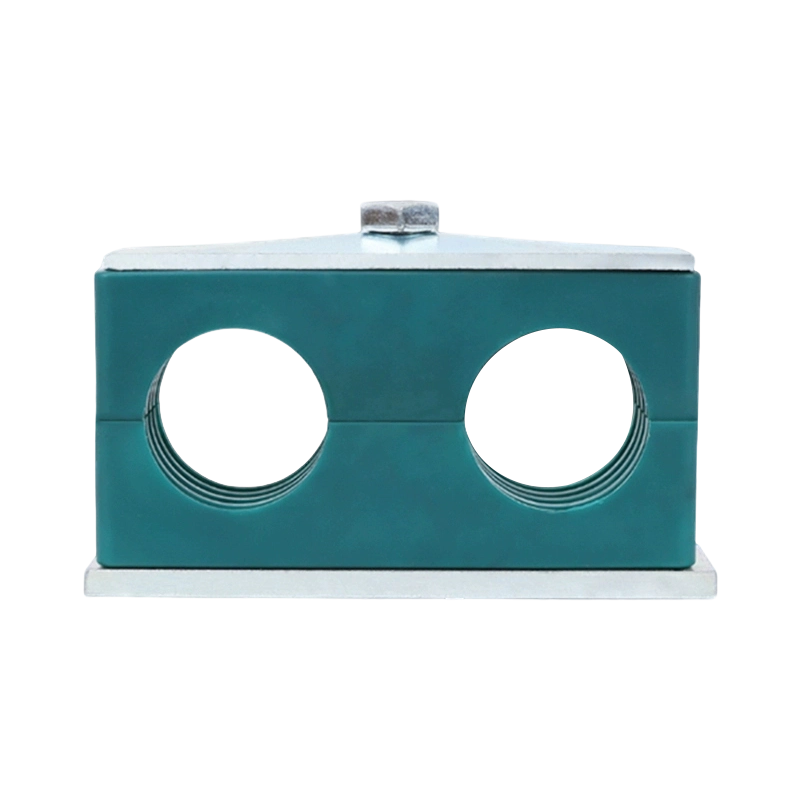
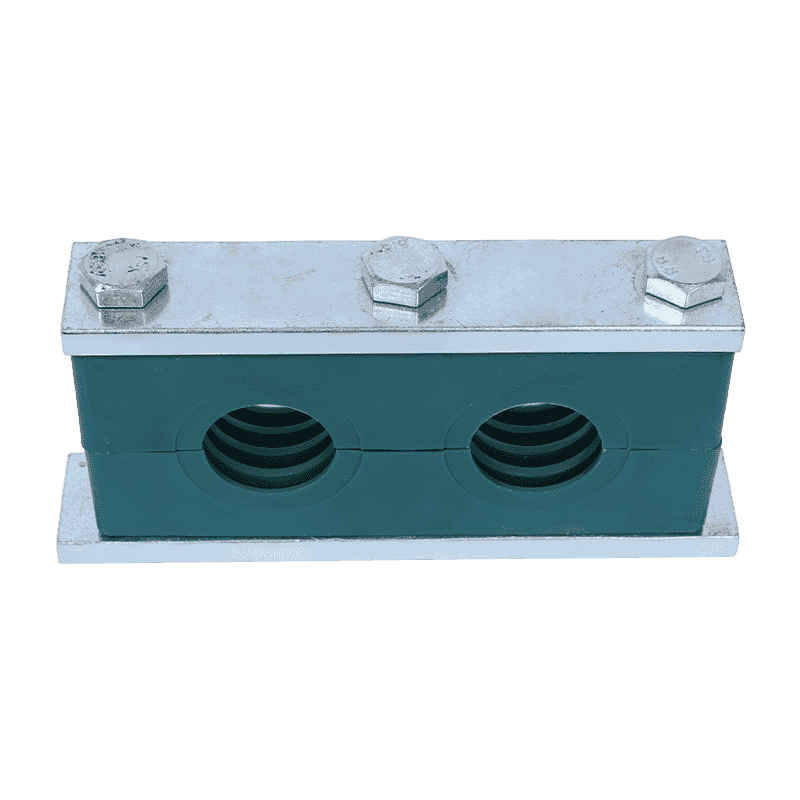
Layout density introduces the multi-line clamp. Where several parallel hydraulic lines run through a confined machine envelope, block clamps that secure multiple tubes in a single unit reduce footprint and ensure consistent spacing. Twin series clamps handle two parallel pipes; multi-line clamps accommodate several lines in one modular block . This is not merely a space-saving convenience—uniform clamping maintains predictable vibration transmission characteristics across the bundle.
## 2. Thermally Active Piping: Motion Management as the Primary Criterion
Power plants, refinery process units, and district heating networks share a defining characteristic: the pipe moves. Thermal expansion from ambient to operating temperature can displace a support point by tens of millimeters, and the clamp must either accommodate that motion or restrain it deliberately—never accidentally.
The first distinction is between rigid and spring-supported clamps. Rigid hangers suit locations where vertical movement is negligible or where the pipe must be held at a fixed elevation. Where vertical displacement exceeds roughly 40 mm, or where the load variation of a variable spring would exceed 25%, constant-load hangers become the specified solution . Constant-load hangers—whether moment-coil or cam-and-spring designs—maintain supporting force within a narrow band (typically 6% variation) across the full travel range, preventing the pipe from “hunting” for equilibrium as it heats and cools .
Variable spring hangers, by contrast, accept load variation up to 25% and are appropriate for less demanding thermal service. Both types require careful attention to the cold and hot positions: spring hangers are shipped locked in the cold position, must remain locked during hydrostatic testing, and are released only before commissioning . This procedural discipline prevents spring damage and ensures that the as-installed support condition matches the design intent.
Horizontal movement requires a different clamp strategy. Where thermal expansion causes lateral displacement, the clamp must either permit sliding or allow the hanger assembly to swing. For swing applications, hanger rods must never exceed a 4-degree angle from vertical under either cold or hot conditions; if geometry cannot satisfy this, the hanger must be offset during erection so that the operating position remains within tolerance . Where headroom is limited and linear horizontal movement is substantial, horizontal travelers (MSS Type 58) provide a dedicated solution .
Insulated piping introduces the risk of insulation crush. Protection shields (MSS Type 40) and thermal-hanger shield inserts distribute the clamp load across the insulation surface, preventing the pipe from bearing on a compressed crescent of damaged thermal material . For hot lines where movement is negligible, pre-insulated swivel loop hangers eliminate the need for separate shields by incorporating the load-spreading function into the hanger body .
## 3. Corrosive and Marine Environments: The Finish Determines the Lifetime
An offshore platform, a ship’s bilge, or a chemical plant atmospheric zone presents a clamp selection problem that is primarily electrochemical rather than mechanical. Carbon steel clamps with standard zinc plating will fail—the only question is how quickly. The specification must elevate corrosion resistance to the primary selection criterion.
Shipboard piping standards explicitly require that hangers in bilges, ballast tanks, and weather-exposed areas be zinc-plated or blasted and coated with inorganic zinc, or coated with the same material as the surrounding area . For offshore and marine topsides, stainless steel hardware in AISI 316 (W4/W5 grade) provides maximum resistance to salt-laden moisture . Where the clamp body itself contacts the pipe, dissimilar material contact must be managed: hanger liners are required unless the hanger and pipe are of the same material, preventing galvanic couple formation .
Clamp body materials for corrosive service extend beyond metallurgy. Anti-corrosion technology clamps—developed specifically for offshore, marine, and chemical environments—combine material selection with geometry that avoids crevice corrosion sites . Polypropylene and polyamide clamp bodies, paired with stainless steel hardware, serve chemical process lines where the clamp must resist both atmospheric corrosion and occasional splash or spill exposure. The salt-spray test performance of the hardware finish is often the deciding factor between a clamp that survives five years and one that requires replacement in eighteen months.
Installation practice in marine environments adds a further constraint: hanger bolts within tanks or other inaccessible areas must be secured with lock nuts or lock washers, preventing vibration-induced loosening where inspection is impossible . This is a clamp selection criterion as much as an installation note—the chosen hardware must be compatible with positive locking methods.
## 4. Cross-Cutting Selection Logic
Across all three environments, a consistent hierarchy of decisions emerges. The first question is not “which clamp?” but “what is the pipe doing?” A line that is static, cold, and low-pressure asks far less of its clamps than one that pulses at 5,000 psi, grows 60 mm between cold and hot states, or sits in salt spray. The second question is “what happens if the clamp fails?” A failed clamp on a low-pressure water line is a maintenance item; a failed clamp on a high-pressure hydraulic line near personnel is a safety event.
Industry standards provide the framework, but the application determines the specific choice. MSS SP-58 establishes the material, design, and selection basis for pipe hangers and supports across all service temperatures . Within that framework, the specifying engineer must translate operating pressure, temperature range, expected motion, and atmospheric exposure into a clamp series, body material, and hardware finish that will perform for the design life—not merely at the moment of installation.
The practical conclusion is that pipe clamps are not commodity hardware. They are engineered components whose selection must be documented, justified, and verified against the specific demands of the piping system they secure. A clamp chosen by habit rather than analysis is a latent failure point, waiting for the first thermal cycle or the first winter storm to reveal its inadequacy.
Recommended Products
Copyright © Yancheng Yanye Hydraulic Parts Co., Ltd. All Rights Reserved
Custom Ball Valve Factory
China Ball Valve Manufacturers




 English
 русский
 Español