HOME / NEWS / Industry News / Pneumatic Ball Valves: Technical Overview and Application Case Studies

2026-11-23
**Abstract**
Pneumatic ball valves are quarter-turn rotary valves actuated by compressed air, widely used for on/off and diverting service in process industries. Their appeal lies in fast actuation, high flow capacity, and reliable bubble-tight sealing. This article outlines the working principle, key design features, and practical application scenarios, including a detailed case in high-pressure sewage service, to illustrate selection considerations and operational benefits.
## 1. Working Principle and Core Components
A pneumatic ball valve consists of a ball valve body and a pneumatic actuator. The ball, typically a sphere with a through-bore, rotates 90° to open or close flow. The actuator converts compressed air pressure into rotary motion via a piston-rack-and-pinion mechanism (or, in some designs, an arc-shaped piston driving a connecting rod) . Double-acting actuators require air to both open and close; single-acting (spring-return) actuators use air to drive one direction and a spring for fail-safe return.
Key advantages include low flow resistance (the bore matches the pipe ID when open), quick quarter-turn operation, and tight shutoff. The valve body may be two-piece or three-piece for maintenance access, and seat materials are selected for compatibility with the process fluid .
## 2. Design Variations for Specific Service Conditions
Standard pneumatic ball valves handle water, oil, gas, and slurries across water treatment, chemical, petrochemical, and power applications . However, demanding services require specialized designs:
- **Jacketed valves** for fluids that solidify or crystallize at ambient temperature. Steam or heat-transfer fluid circulates through a jacket around the body, maintaining flowability. This is common for urea, waxy crude, and bitumen service .
- **High-pressure balance designs** for sewage and slurry injection. A patented three-way reversing configuration uses a feedback piston and balance pipe to counteract line pressure, allowing a smaller actuator to shift the ball against high differential pressure .
- **Hygienic and corrosion-resistant variants** with 316 stainless steel or all-plastic bodies for food, beverage, and semiconductor chemical delivery .
## 3. Application Case: High-Pressure Sewage Reversing Service
A representative technical challenge is switching high-pressure sewage flow between outlets without valve chatter or seal damage. A patented pneumatic three-way ball valve design addresses this by integrating a push-rod mechanism with a feedback piston .
**Configuration.** The valve body has three ports: P (high-pressure water inlet), A, and B. A push rod, driven by a pneumatic piston, can mechanically force the ball left to seal the P port, connecting A–B. When the push rod retracts, high-pressure water itself shifts the ball right to seal the B port, connecting P–A. A balance pipe connects the inlet chamber C to a feedback chamber D behind the main piston, so that line pressure assists rather than opposes actuation .
**Operational sequence.** In sewage service, the valve alternates between injecting water into the wellhead (P–A open) and diverting flow to drain or alternative line (A–B open). The feedback piston ensures that the actuation force required from the air supply remains modest even as line pressure fluctuates. This reduces actuator size, air consumption, and mechanical shock on the ball and seats.
**Why it matters.** In conventional high-pressure three-way ball valves, the ball is pressed against the seat by line pressure during switching, causing high friction and seat wear. The balance-pipe approach neutralizes much of this force, extending seat life and reducing the torque margin needed from the actuator . For field operators, this translates to fewer stuck valves and lower instrument air demand.
## 4. Practical Considerations and Maintenance
Field experience indicates that most pneumatic ball valve problems trace to air supply, actuator adjustment, or debris rather than the valve body itself. Before assuming valve failure, technicians should verify air pressure **at the actuator** (not at the compressor), confirm solenoid function, and check for kinked tubing . If the valve is stiff when operated manually, over-torqued end caps or foreign material behind the seats are likely causes; a three-piece body allows seat replacement without removing the whole valve from the line .
Preventive maintenance typically includes replacing body gaskets every 12 months and actuator seals every 24 months, with leak checks recorded after each service . For critical emergency shutdown (ESDV) service in sour gas gathering, single-acting spring-return actuators are preferred so that loss of air drives the valve to the safe position .
## 5. Conclusion
Pneumatic ball valves are compact, fast, and adaptable across a wide range of fluids. Their performance in difficult services depends on matching the body and seat design to the process—whether that means jacketing for crystallization, balancing for high pressure, or hygienic certification for food contact. The high-pressure sewage reversing case illustrates how thoughtful mechanical design, using line pressure as an assist rather than an obstacle, can improve reliability and reduce operating cost. As with any automated valve, proper air quality and routine seal replacement remain the foundation of dependable service.
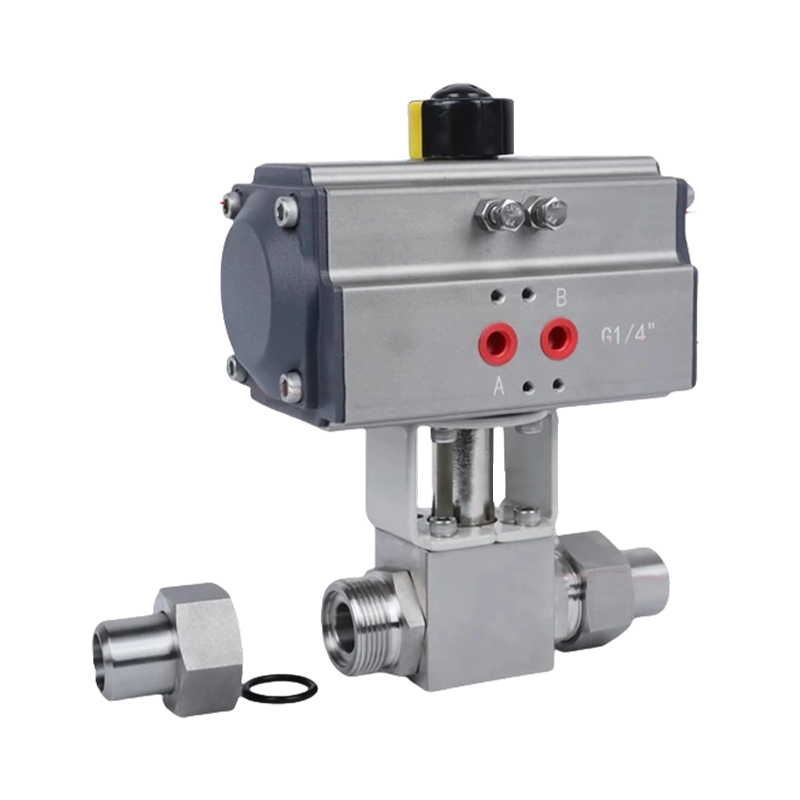
Core Selling Points
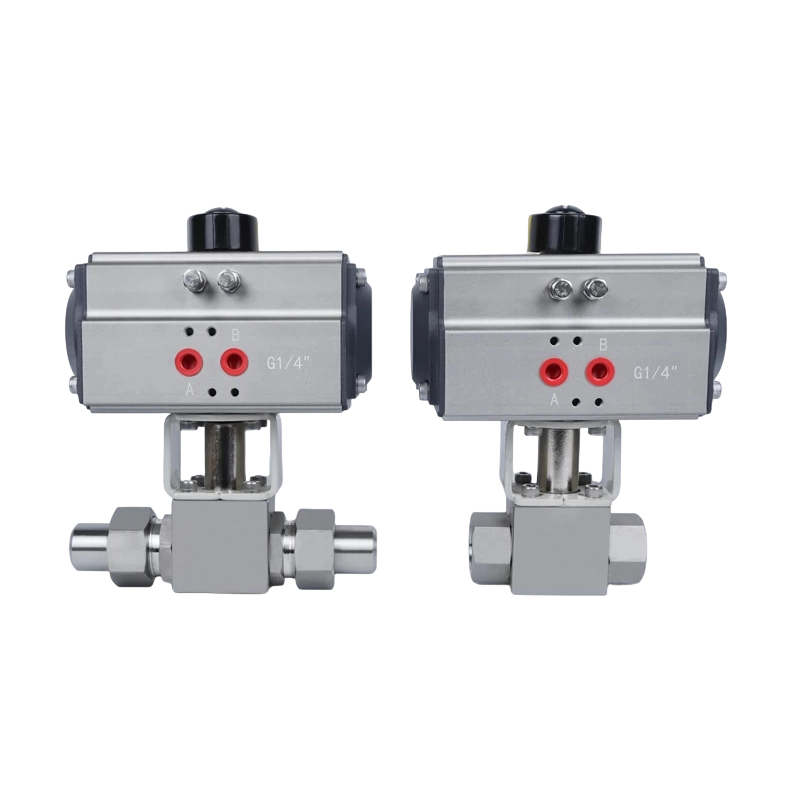
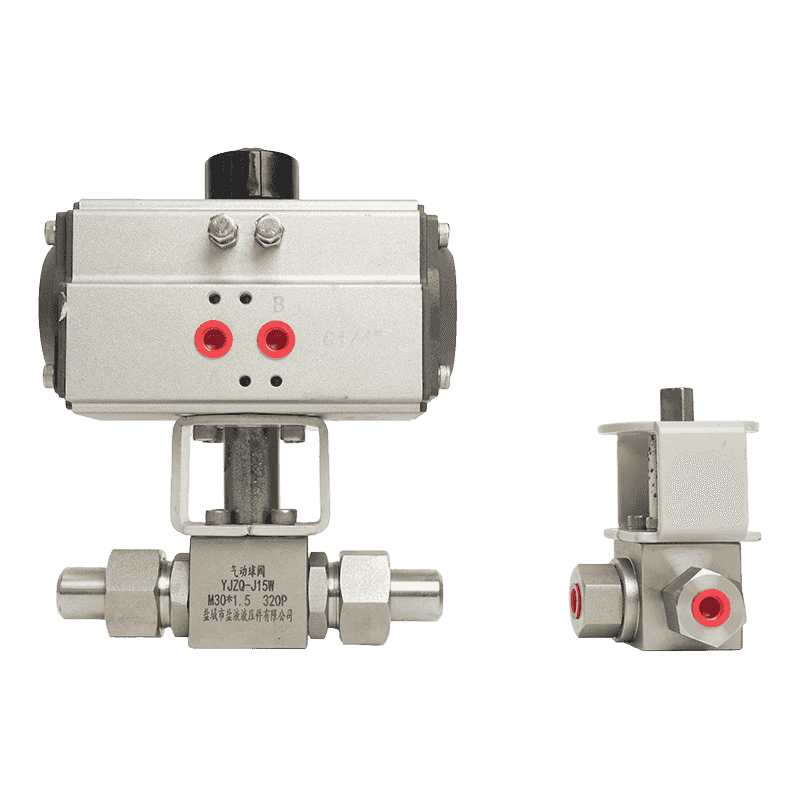
Pneumatic Automation: Equipped with a high-performance pneumatic actuator, enabling remote and fast on-off control, and easy integration into PLC systems.
High-Pressure Performance: Specifically designed for high-pressure working conditions, with a pressure rating of up to 31.5MPa and above, ensuring stable and reliable performance.
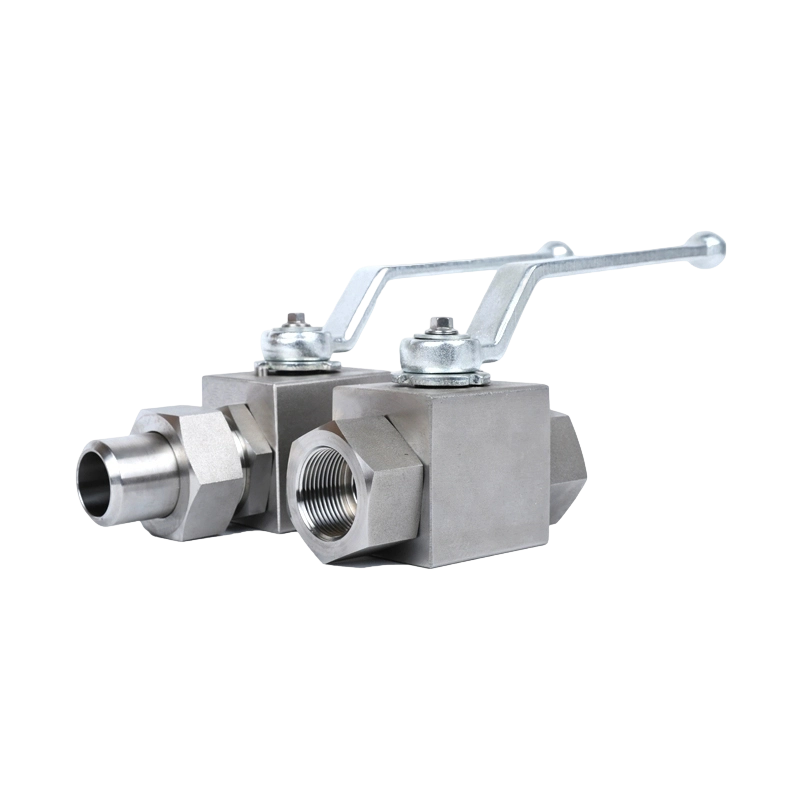
Stainless Steel Corrosion Resistance: The valve body is made of 304 stainless steel, featuring corrosion resistance and rust prevention, suitable for harsh medium environments.
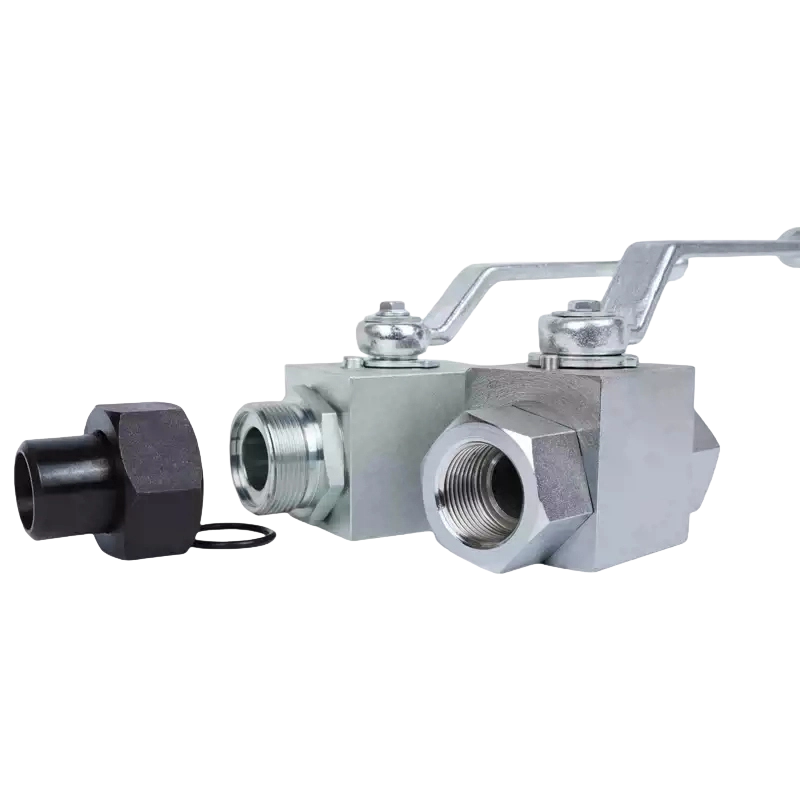
Dual Thread Options: Provides internal thread (G/NPT) and external thread interfaces to meet different pipeline connection requirements.
Nitrogen-Specific: Especially suitable for the precise control of high-pressure gases such as nitrogen, air, and inert gases.
Recommended Products
Copyright © Yancheng Yanye Hydraulic Parts Co., Ltd. All Rights Reserved
Custom Ball Valve Factory
China Ball Valve Manufacturers




 English
 русский
 Español