2026-05-25
Content
Water treatment valves are mechanical devices that control the flow, pressure, and direction of water and process fluids throughout treatment systems. Without correctly specified valves, a water treatment plant cannot maintain consistent output quality, safe operating pressure, or regulatory compliance. Every stage of the treatment process — from raw water intake and chemical dosing to filtration, disinfection, and final distribution — depends on valves that open, close, throttle, or prevent backflow at precisely the right moment.
The global water and wastewater treatment valve market reflects how seriously the industry takes this dependency. Analysts consistently value it at several billion dollars annually, driven by aging infrastructure replacement, stricter effluent standards, and the expansion of municipal and industrial treatment capacity worldwide. A valve failure at a critical point in a system can result in cross-contamination, equipment damage, process shutdown, or costly regulatory penalties — so selecting the right valve type, material, and actuation method is a decision with real financial and public-health consequences.
This guide covers the main valve types used across water and wastewater treatment, explains the operating conditions that determine selection, and identifies the maintenance and lifecycle factors that experienced engineers factor into their procurement decisions.
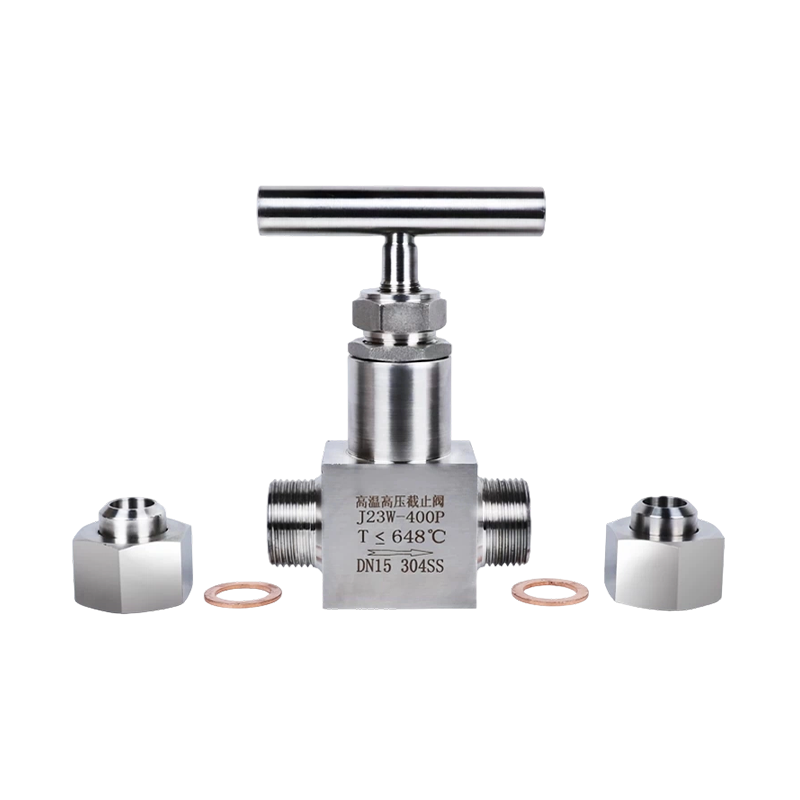
Water treatment environments demand a range of valve designs because the fluids handled span clean potable water, corrosive chemical solutions, sludge, and biogas. Each valve type has a defined mechanical principle, and matching that principle to the process condition is the starting point for any valve specification exercise.
A ball valve uses a spherical plug with a through-bore. When the bore aligns with the pipe, the valve is open; when rotated 90 degrees, it is fully closed. Ball valves are the dominant isolation valve in water treatment because they achieve a bubble-tight shutoff in a quarter turn, with minimal torque and negligible pressure drop when fully open. They are available in full-bore and reduced-bore configurations, in sizes from 6 mm instrument lines up to 300 mm and beyond for main headers. Materials range from brass and bronze for smaller domestic or light-commercial applications to 316 stainless steel and PTFE-lined bodies for chlorinated water, chemical dosing lines, and corrosive service.
In water treatment, ball valves appear at pump suction and discharge isolations, at chemical injection points, on filter inlet and outlet headers, and at every sample and drain connection. Their fast operation makes them well-suited to automated sequences where quick isolation is needed. Floating ball designs handle most standard applications, while trunnion-mounted ball valves are used for high-pressure or large-diameter service where the seat loads in a floating design would be excessive.
Butterfly valves close by rotating a disc around a central stem. They are compact, lightweight, and inexpensive relative to gate or ball valves at large diameters, which makes them the preferred isolation and flow-regulation valve on larger water mains — typically from 100 mm upward. Double-offset and triple-offset (triple eccentric) butterfly valves provide improved seating geometry and can achieve metal-seat shutoff suitable for higher-pressure and higher-cycle applications. Soft-seated concentric butterfly valves are widely used on filter outlet headers, distribution system isolations, and tank inlets where bi-directional tight shutoff is acceptable at lower differential pressures.
One important caveat: butterfly valves are generally not recommended in raw wastewater or screened effluent streams that carry fibrous or stringy materials. The disc protrudes into the flow path even when open, and rags or debris can accumulate around the stem, leading to operational problems. Knife gate valves or full-bore ball valves are preferred in those services.
Gate valves operate by raising or lowering a gate through the flow path. When fully open, they present minimal obstruction and low pressure drop; when closed, the gate seats against a ring, stopping flow. They are well suited to infrequent operation where either full-open or full-closed positions are required. Partial opening causes erosive turbulence that damages the gate and seats, so gate valves should never be used for throttling.
Resilient-seated gate valves with rubber-encapsulated wedge gates are very common in municipal water distribution and water treatment plant pipework up to 600 mm diameter. The rubber seat provides consistent shutoff over the valve's service life and tolerates minor grit or sediment that would damage a metal-seated gate. Metal-seated wedge gate valves are used where temperature or chemical compatibility precludes rubber. Knife gate valves — a variant with a sharp-edged flat gate — are widely used in sludge handling and dewatering streams because the cutting action handles the slurries and settled solids that would jam a conventional gate.
Check valves, also called non-return valves, allow flow in one direction only. They operate automatically without an actuator: forward flow opens the closure element; reverse flow or loss of pressure closes it. In water treatment, check valves are critical at pump discharges, on chemical injection quills, at filter effluent manifolds, and wherever backflow could contaminate treated water or damage pumps.
The most significant operational concern in pump discharge applications is water hammer — the pressure surge created when a pump trips and the reversing column of water slams the check valve shut. Swing check valves close slowly and are prone to generating harmful pressure transients in high-velocity lines. Non-slam or nozzle check valves use spring-assisted closure to shut before the flow fully reverses, dramatically reducing water hammer. In systems where pump trip scenarios are common, selecting a non-slam check valve can protect downstream pipework and equipment from pressure spikes that could otherwise reach several times the normal operating pressure.
Common check valve types in water service include swing, lift, dual-plate wafer, ball, piston, and nozzle (silent) designs. Material selection follows the same principles as other valve types: cast iron or ductile iron for large municipal lines, stainless steel or PTFE-lined bodies for chemical dosing and corrosive streams.
Globe valves use a plug or disc that moves perpendicular to the flow seat, providing inherently good throttling characteristics. They impose a higher pressure drop than gate or ball valves but offer precise, stable flow regulation across a wide range of openings. In water treatment, globe valves appear at pump discharge regulation points, in chemical dosing headers, and in heating or cooling systems associated with digesters and drying equipment.
Diaphragm control valves use a flexible rubber or elastomeric diaphragm moved by hydraulic pilot pressure or an electro-pneumatic positioner to regulate flow. They are widely used for pressure reduction, level control, and flow control in distribution networks and reservoir inlets. A pressure-reducing diaphragm valve on a reservoir inlet, for example, can maintain a constant downstream pressure regardless of fluctuating upstream supply pressure — a function that protects the downstream distribution network from overpressure and reduces water loss through leakage at joints and fittings.
Air and vacuum valves are often overlooked but are essential to safe pipeline operation. Air pockets that collect at high points in a pipeline reduce effective pipe bore, increase pump head requirements, and can cause sudden pressure transients when expelled. Air release valves vent small air volumes continuously during operation; air/vacuum valves admit large volumes of air during pipeline draining and expel large volumes during filling, preventing vacuum collapse. A pipeline that fills too quickly without functional air valves can collapse under external soil pressure or experience severe surge, which is why air valve specification is a critical pipeline design step.
Valve selection in water treatment is not simply a matter of picking a familiar type. Each application has a combination of parameters that must be matched to the valve's mechanical capabilities, material compatibility, and expected service life. The following table summarizes the key selection criteria and where each valve type performs best.
| Valve Type | Primary Function | Typical Application | Not Suitable For |
|---|---|---|---|
| Ball Valve | Isolation / quick shutoff | Pump isolation, chemical dosing, sampling lines | Precise throttling service |
| Butterfly Valve | Isolation / modulating control | Large-diameter water mains, filter headers, tank inlets | Fibrous or rag-laden wastewater |
| Gate Valve | Full-open / full-closed isolation | Distribution mains, infrequent-operation isolations | Throttling; high-cycle operation |
| Check Valve | Backflow prevention | Pump discharge, chemical injection, filter manifolds | Systems requiring forward-flow control |
| Globe / Control Valve | Precise flow / pressure control | Pressure reduction, level control, dosing regulation | High-flow, low-pressure-drop requirements |
| Knife Gate Valve | Isolation in slurry service | Sludge handling, dewatering, screenings removal | Clean-water, high-pressure service |
| Air / Vacuum Valve | Air management and vacuum protection | Pipeline high points, pump discharge headers | Submerged or below-grade service without special body design |
Every valve has a pressure-temperature (P-T) rating that defines its safe operating envelope. Municipal water treatment systems typically operate at relatively modest pressures — city water distribution networks are commonly designed for 4 to 10 bar (58 to 145 psi) — but industrial and high-rise applications can reach 25 bar or more. Valves must be rated for the maximum credible system pressure, including any surge or water hammer scenarios, not just the normal operating pressure. Temperature ratings become significant in systems that handle hot water for thermal treatment, boiler feedwater, or steam condensate.
Water treatment uses a wide range of chemicals — chlorine, sodium hypochlorite, sulfuric acid, hydrochloric acid, ferric chloride, sodium hydroxide, and many coagulants and flocculants. Valve body, seat, and seal materials must be compatible with the specific chemical at the expected concentration and temperature — a valve rated for dilute chlorine solution may fail rapidly in concentrated hypochlorite service. Stainless steel (316 or duplex grades) handles most disinfectant applications. PTFE-lined valves or full PTFE/PFA body valves are used where acids or strongly oxidizing reagents demand maximum chemical resistance. Rubber-seated valves in contact with ozone or high-concentration chlorine require careful elastomer selection, with EPDM being generally more resistant than nitrile.
For modulating control valves, the flow characteristic — how flow changes in relation to valve travel — is a key selection parameter. Equal-percentage characteristics are preferred for most throttling applications because they provide stable control across a wide range of flow conditions. Linear characteristics suit applications where the valve is the dominant pressure drop in the system. Getting this wrong results in poor control loop performance: a valve with the wrong characteristic tends to hunt at one end of its travel and lose sensitivity at the other.
Modern water treatment facilities increasingly rely on automated valve operation to support process control systems, reduce operator workload, and ensure consistent response times. The choice of actuator type — manual, electric, pneumatic, or hydraulic — depends on the required speed of operation, available utilities, and the control system architecture.
Electric actuators are the most common choice in water treatment because electrical power is universally available and they integrate directly with programmable logic controllers (PLCs) and SCADA systems. They provide accurate position feedback, torque monitoring, and can be programmed with adjustable travel speeds and fail-safe positions. Multi-turn electric actuators are standard on gate, globe, and knife gate valves; quarter-turn actuators are used on ball and butterfly valves. Where power interruption is a concern, electric actuators can be fitted with battery or capacitor back-up modules to achieve a defined fail-safe position on loss of supply.
Pneumatic actuators use instrument air to generate torque or thrust. They operate faster than electric actuators for on/off duty and are intrinsically safe in potentially explosive atmospheres — an important consideration in areas where biogas from anaerobic digesters may be present. Double-acting designs require air for both opening and closing; spring-return (single-acting) designs use a spring to achieve a defined fail position when instrument air is lost, without requiring a secondary power source. Pneumatic actuators require a reliable instrument air supply, which adds infrastructure cost but is standard in most industrial water treatment facilities.
Diaphragm control valves used for pressure regulation and level control in water distribution and treatment are often hydraulically pilot-operated — they use the system's own water pressure, controlled through small pilot valves and orifices, to position the main valve. These pilot-operated valves can perform complex functions including pressure reduction, pressure sustaining, flow limiting, and level control without any external power. Their reliability and simplicity make them well-suited for remote pumping stations and reservoir installations where power availability may be limited.
Understanding where each valve type is most likely to appear in a treatment process helps engineers and procurement teams anticipate what they need and why.
At the raw water intake, large-diameter butterfly or gate valves isolate the intake screens and settling chambers. Knife gate valves handle the grit and screenings that accumulate in these early stages. Check valves on pump discharges prevent backflow when pumps are taken offline for maintenance. Air valves are installed at high points in the raw water rising main to prevent air locking during pipeline startup.
Chemical dosing circuits demand particularly careful valve selection because the fluids are often concentrated, corrosive, and handled in relatively small line sizes. Ball valves in PVDF, PP, or 316 stainless steel provide reliable isolation. Back-pressure check valves on dosing pump discharges prevent siphoning and ensure accurate chemical delivery to the process — a failure here can result in significant over- or under-dosing with immediate water quality consequences. Diaphragm valves are used where the smooth internal bore minimizes chemical accumulation and simplifies cleaning.
Rapid gravity filters, pressure filters, and membrane systems each rely on multiple valves for service, backwash, and air-scour sequences. Butterfly valves on filter inlet and outlet headers offer compact installation and fast actuation. The backwash cycle typically involves rapid opening and closing of large-diameter valves, making actuator speed and cycle life important selection factors — a butterfly valve used in filter backwash service may complete tens of thousands of cycles over its service life. Pressure relief valves protect membrane housings from overpressure during backwash if flow is restricted or blocked.
Chlorination systems, UV disinfection bypass lines, and ozone contact chambers each have specific valve requirements. Chlorine gas is acutely hazardous, and valve selection for chlorine gas service follows very specific industry standards covering body material, seat material, and packing design. Liquid sodium hypochlorite is less hazardous but still aggressive to common elastomers and to copper alloys, so PVDF or 316 stainless steel ball valves with PTFE seats and seals are standard. Ozone-resistant elastomers are essential in ozone contact systems — EPDM is generally acceptable; nitrile and natural rubber are not.
Sludge streams present the most mechanically demanding valve service in a water treatment plant. Knife gate valves are the dominant choice for sludge isolation because their full-bore, gate-through-the-flow design handles thickened sludge without the clogging problems that affect ball and butterfly valves. Pinch valves — which close by squeezing a flexible rubber sleeve — are also used in thickened sludge and slurry services where solid particle contact with a metal closure element would cause rapid wear. Duckbill check valves (elastomeric sleeve valves) appear in gravity sludge return lines and dewatering gravity drain systems.
Valve failures in water treatment are rarely random; they follow predictable patterns linked to misapplication, inadequate maintenance, or incorrect installation. Understanding these patterns helps operations teams prioritize inspection resources and make better-informed replacement decisions.
A well-maintained valve can function reliably for 20 to 30 years or more. Neglected valves in the same service frequently fail within 5 years. The investment in systematic valve maintenance pays back through reduced unplanned downtime, lower total lifecycle cost, and sustained treatment performance.
Valves that remain in a fixed position for extended periods — typically isolation valves on standby equipment or emergency isolation valves — are particularly vulnerable to seizing from scale, corrosion, or seat adhesion. A documented exercise program, in which every valve in the facility is operated through its full travel at defined intervals (typically annually for low-cycle isolations), identifies problems before they become operational emergencies and keeps moving parts functional. Many facilities use computerized maintenance management systems (CMMS) to schedule and record valve exercises alongside other preventive maintenance tasks.
Stem packing on gate, globe, and butterfly valves compresses against the stem to prevent process fluid from leaking to atmosphere. Packing wears over time and requires periodic retightening or replacement. A dripping valve stem is not just a maintenance nuisance — it can indicate that the packing is near the end of its service life, and if left unaddressed, the stem corrosion or erosion that follows can make the next packing replacement far more difficult and expensive. Inspection of packing glands during routine plant rounds, with retightening or replacement at the first sign of seepage, is a straightforward preventive measure.
Automated valves require periodic verification that actuators respond correctly to control system commands and that end-of-travel limit switches are correctly set and functional. Torque monitoring capability in modern multi-turn and quarter-turn electric actuators enables predictive maintenance: a gradual increase in the torque required to operate a valve over successive measurement intervals indicates increasing resistance — from scale, corrosion, or seat wear — that will eventually prevent operation if not addressed.
Check valves are often overlooked in maintenance programs because they have no actuator and require no manual operation. However, the disc, hinge pin, and seat of a swing check valve can wear to the point where the valve no longer achieves full closure — or fails to open fully, restricting flow and adding unexpected head loss to the system. Periodic inspection, particularly on pump discharge check valves subject to frequent opening and closing, is warranted. Spring-assisted and non-slam check valves have fewer components and tend to be more maintenance-friendly than conventional swing types.
Valves used in potable water systems are subject to material safety standards that restrict the types and quantities of substances that can leach from valve components into drinking water. In the United States, NSF/ANSI Standard 61 (Drinking Water System Components — Health Effects) is the primary standard that covers valves and other wetted components in potable water service. Products certified to NSF 61 have been tested to demonstrate that materials in contact with drinking water do not introduce contaminants above established health-based limits. Specifying NSF 61-certified valves for any potable water contact application is standard practice in municipal water treatment design.
In the United Kingdom and Europe, WRAS (Water Regulations Advisory Scheme) approval is the equivalent certification for potable water contact materials. EN 1074 covers performance requirements for valves used in water supply, with separate parts addressing shut-off valves, flow control valves, check valves, air valves, and pressure-reducing valves. International industrial valve standards including API 598 (valve testing and inspection) and API 600 (steel gate valves) are referenced for higher-pressure industrial water service.
Actuation and control standards including IEC 60534 (industrial process control valves) and ISA-75 series cover control valve sizing, flow characteristics, and testing. Following these standards during design and procurement ensures that selected valves will perform as modeled in the process design and that they can be consistently maintained and replaced over the facility's service life.
Purchase price is only one component of a valve's total cost of ownership. Operating costs, maintenance intervals, expected service life, and the cost of unplanned downtime all contribute to the true economic picture. A butterfly valve may cost a fraction of a triple-offset metal-seated design at the same line size, but if the application requires tight metal-to-metal shutoff over a 25-year service life with minimal maintenance, the higher-specification valve may represent better value.
Valve failure during critical treatment processes can force a plant to bypass treatment stages or shut down entirely, with potential consequences for public health compliance, regulatory standing, and downstream costs that dwarf the original valve purchase price. In this context, selecting a valve based on the lowest initial cost alone is rarely the most economical strategy.
Energy consumption in control valves and pressure-reducing valves is another consideration at scale. A poorly sized or high-pressure-drop control valve in a large distribution main wastes pumping energy continuously. For a 600 mm diameter main operating at significant flow, even a 0.5 bar reduction in unnecessary valve pressure drop can translate to tens of thousands of dollars per year in reduced pumping costs. Life-cycle cost modeling that includes energy should be part of the selection process for any high-flow modulating valve application.
Recommended Products
Copyright © Yancheng Yanye Hydraulic Parts Co., Ltd. All Rights Reserved
Custom Ball Valve Factory
China Ball Valve Manufacturers




 English
  русский
  Español