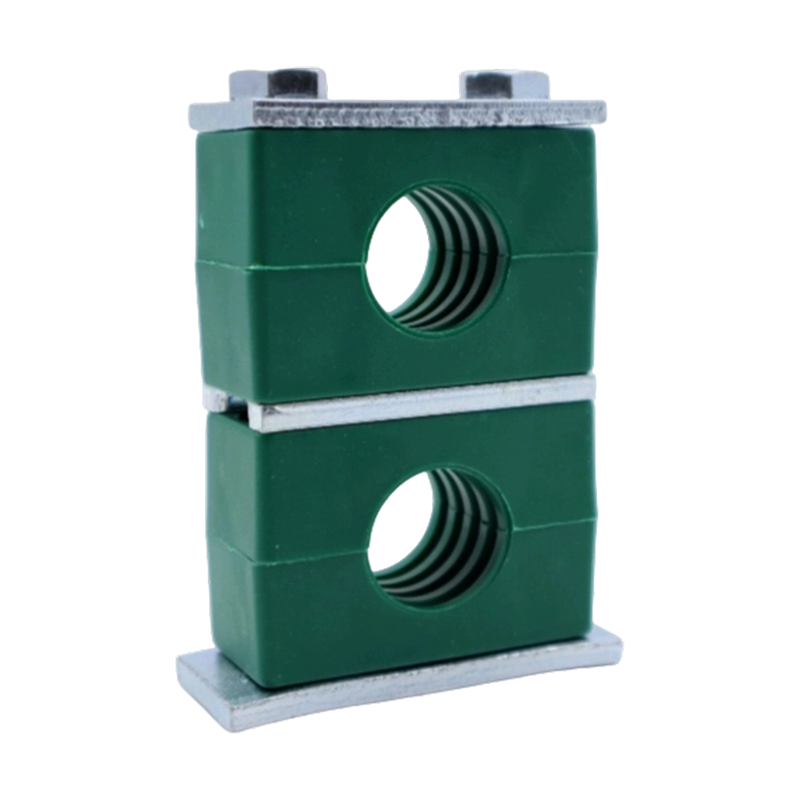
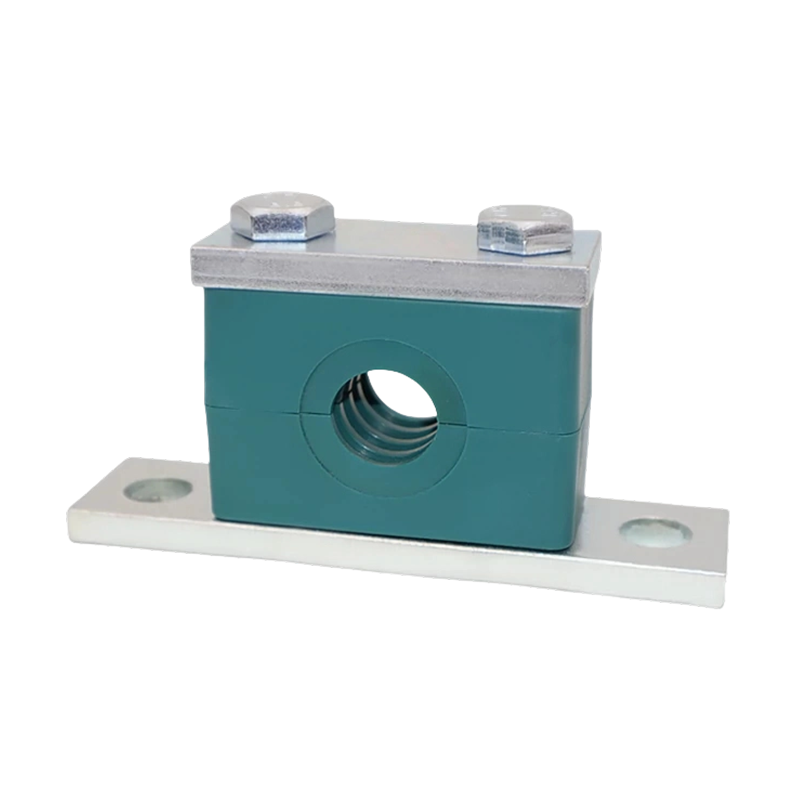
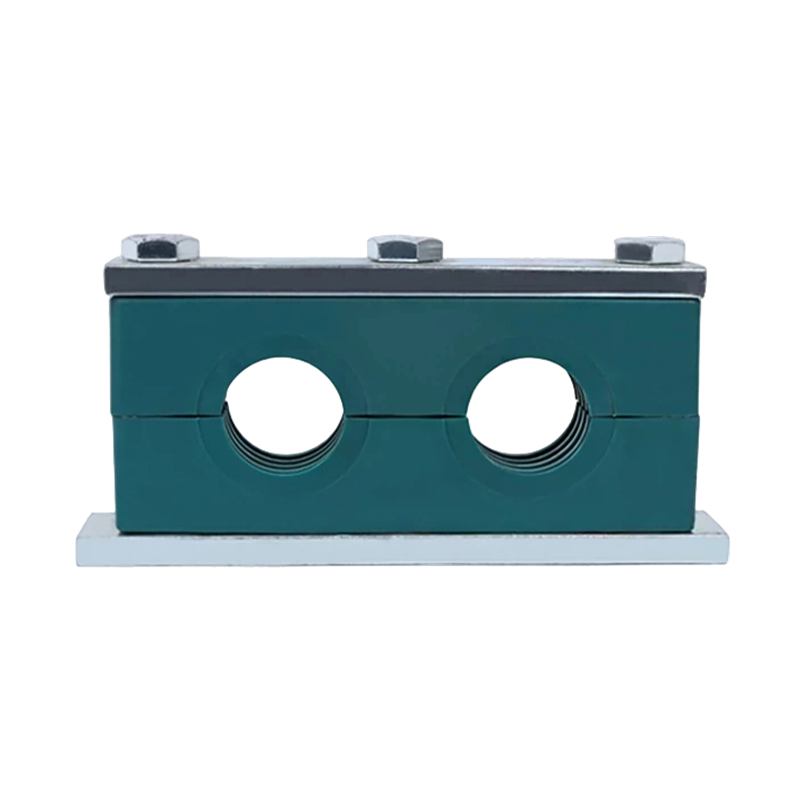
The main function of pipe clamp is to fix pipes or other components, such as water pipes, gas pipes, cables, wires, etc., to ensure the stability and safety of the pipeline system.
Advantages:
1. Strong adaptability: The design is diverse and can adapt to pipes of different diameters, materials and shapes. Its clamping part usually adopts a threaded or snap-on design to provide an adjustable clamping force to ensure that the clamping force is evenly distributed to avoid damage or deformation to the pipe.
2. Easy installation: The installation process is relatively simple and does not require complex tools or equipment. Usually, just fix the pipe clamp in the desired position and then tighten it with bolts, nuts or other fixings. This greatly shortens the construction period and improves work efficiency.
3. Good stability: The fixed part of the pipe clamp is usually made of high-strength and corrosion-resistant materials, such as stainless steel, aluminum alloy, etc. These materials have excellent mechanical properties and corrosion resistance, which can ensure that they will not loosen or rust during use, thereby providing stable support and fixing effects.
4. High safety: The use of pipe clamp can ensure the stability and safety of the pipeline system and avoid accidents caused by loosening or deformation of the pipeline. In the fields of industrial production, construction engineering, etc., it can effectively ensure the safety of equipment and personnel.
5. Easy maintenance: Because it is easy to install and easy to disassemble, it can be easily disassembled and replaced during the maintenance and inspection of the pipeline system, reducing maintenance costs and time.
In addition, there are a variety of types to choose from for different environments and needs, such as light series, double series and heavy series, etc., to meet the fixing needs in different scenarios. At the same time, some specially designed pipe clamps also have functions such as shockproof, vibration reduction and anti-slip, which further improves its stability and safety.
The pipe clamp has the advantages of strong adaptability, easy installation, good stability, high safety and easy maintenance, and plays an important role in industrial production, construction engineering and other fields.
The Three Types of Ball Valves: A Direct Answer Ball valves are categorized into three primary types based on their bore design: full port (full bore), reduced port (standard bore), and V-port ball v...
View MoreDirect Answer: The Most Frequent Issues with Ball Valves While ball valves are among the most durable plumbing components, they primarily fail due to internal seat leakage, stem packing leaks, or bec...
View MoreQuick Answer: The Best Locations for a Ball Valve You should use a ball valve in any scenario that requires a reliable, leak-proof shut-off point for liquids or gases. They are the go-to choice for m...
View MoreDirect Answer: Why Ball Valves are Ideal for Water Systems Yes, ball valves are widely considered the best choice for water-based applications, ranging from residential plumbing to large-scale indust...
View More
Copyright © Yancheng Yanye Hydraulic Parts Co., Ltd. All Rights Reserved
China Light Pipe Clamp Manufacturers




 English
  русский
  Español