2026-02-23
Content
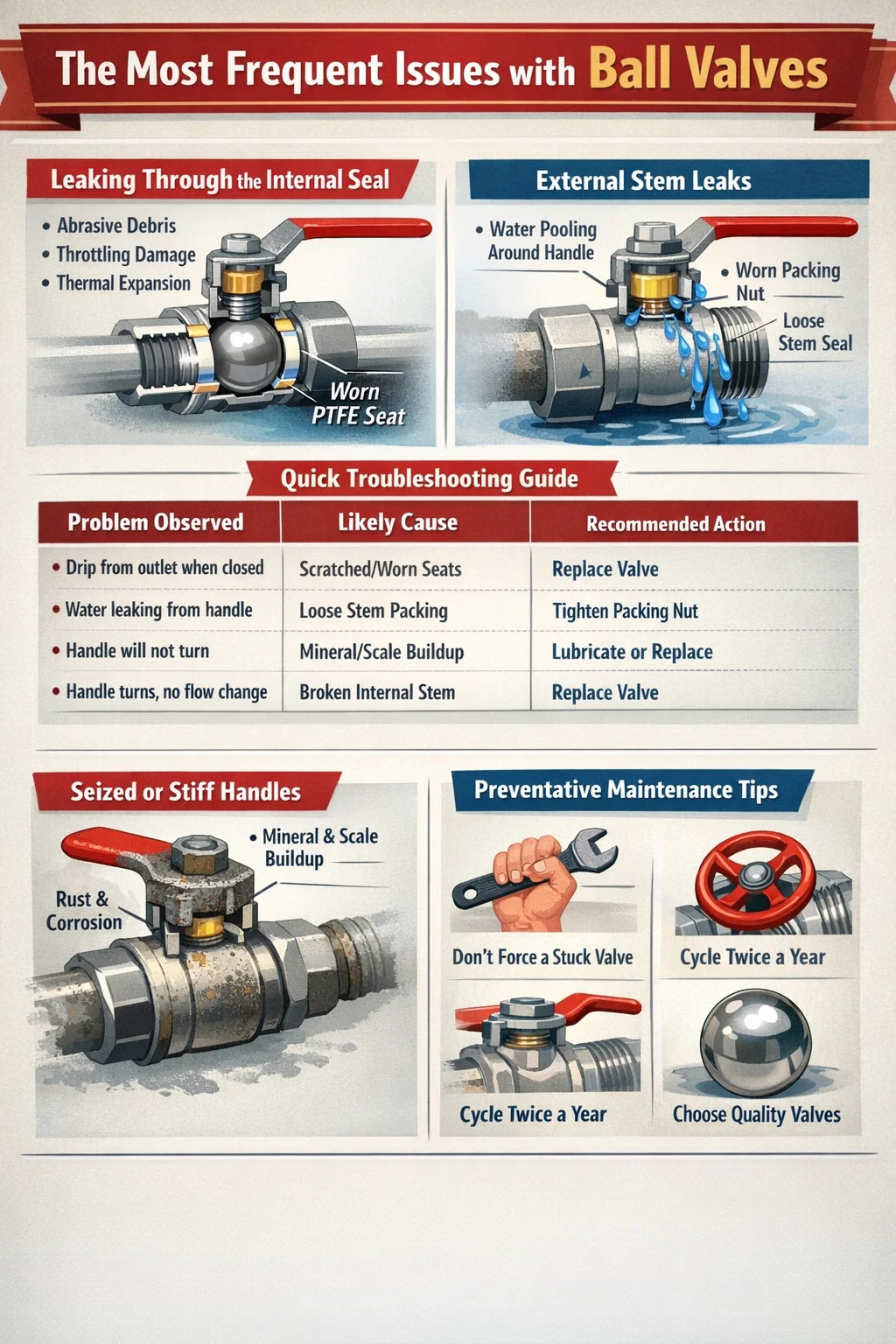
While ball valves are among the most durable plumbing components, they primarily fail due to internal seat leakage, stem packing leaks, or becoming seized from mineral buildup. The most common sign of trouble is water continuing to drip even when the handle is in the fully closed position, or a handle that refuses to budge after months of inactivity. Because the internal ball is constantly in contact with the fluid, debris and chemical reactions are the main culprits behind these mechanical failures.
Internal leakage, often called "passing," occurs when the ball valves fail to shut off the flow completely. This is usually not a problem with the metal ball itself but with the soft "seats" (usually made of Teflon or PTFE) that cradle the ball.
If you see water pooling around the handle or dripping from the neck of the valve, you are dealing with a stem leak. This is an external leak where water escapes through the shaft that connects the handle to the internal ball.
Most high-quality ball valves feature a "packing nut" located just beneath the handle. Over years of operation, the friction of turning the valve wears down the internal packing material. Fortunately, this is often fixed by a simple 1/8th turn of the packing nut with a wrench, which compresses the seal back against the stem.
A ball valve that hasn't been turned in three or four years may become "frozen" in place. This is especially common in areas with hard water containing high levels of calcium or magnesium.
When the valve sits idle, minerals precipitate out of the water and crystallize in the tiny gap between the ball and the valve body. In cheaper ball valves made of low-grade brass, "dezincification" can occur, where the metal itself becomes brittle and rough, effectively welding the ball to the housing. To prevent this, professionals recommend "exercising" the valve by opening and closing it twice a year.
Use this table to quickly identify the likely cause and fix for your ball valves:
| Problem Observed | Likely Cause | Recommended Action |
|---|---|---|
| Drip from outlet when closed | Scratched or worn seats | Replace entire valve |
| Water leaking from under handle | Loose or worn stem packing | Tighten packing nut |
| Handle will not turn | Mineral/Scale buildup | Apply lubricant or replace |
| Handle turns but no flow change | Snapped internal stem | Immediate replacement |
In rare cases, the physical components of ball valves can snap. This usually happens when someone tries to force a seized valve with a long pipe wrench, applying too much torque and shearing the stem.
Because ball valves close so quickly, they can cause "water hammer"—a loud thumping noise caused by a shockwave in the pipes. If this happens repeatedly, the pressure spike can reach several hundred PSI, eventually cracking the valve body or damaging surrounding pipe joints. It is always best to close the handle in a controlled, smooth motion rather than slamming it shut.
To avoid the most common pitfalls with your ball valves, keep these three tips in mind:
Recommended Products
Copyright © Yancheng Yanye Hydraulic Parts Co., Ltd. All Rights Reserved
Custom Ball Valve Factory
China Ball Valve Manufacturers




 English
  русский
  Español