2026-08-03
Content
A valve is a mechanical device that controls the flow, pressure, and direction of a liquid, gas, or slurry moving through a pipe or duct by opening, closing, or partially obstructing a passageway. In practical terms, a valve acts as a gatekeeper inside a piping system: it starts flow, stops flow, throttles flow to a set rate, or redirects flow between different lines. Almost every industrial process that moves fluid, from municipal water networks to chemical plants, depends on valves to operate safely and predictably.
Valves are generally grouped by how they achieve this control. A ball valve, for example, uses a rotating sphere with a bore through its center to allow or block flow with a quarter turn, while a gate valve raises or lowers a flat wedge to open or close the passage. Each design trades off speed of operation, sealing tightness, pressure drop, and cost, which is why selecting the correct valve type for an application matters as much as selecting the correct pipe size.
Without valves, a piping network would be a fixed, uncontrollable conduit. Every time a system needs to be isolated for maintenance, redirected to a different tank, protected from overpressure, or metered to a specific flow rate, a valve is the component performing that job. This is why valves are treated as critical safety and control equipment rather than simple pipe fittings, and why engineers spend significant time selecting the correct type, material, and size for each point in a system.
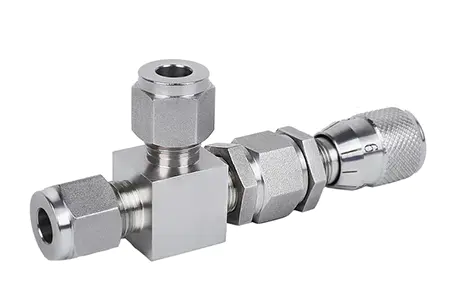
Piping systems move fluid from one point to another, but flow itself is rarely meant to run unrestricted and uninterrupted forever. Production schedules change, equipment needs to be taken offline for repair, safety limits must be enforced, and different process stages require different flow rates. Valves are the interface between a rigid pipe network and the dynamic, constantly changing needs of a real operation.
Beyond simple on/off control, valves perform several distinct functions across a typical system:
A single industrial facility may contain thousands of valves performing these roles simultaneously, from large isolation valves on main headers down to small instrumentation valves on individual sensor lines. The reliability of the entire operation depends heavily on each of these valves performing its intended function correctly.
Every valve, regardless of type, shares three basic functional parts: a body that connects to the pipeline and contains the internal flow passage, a closure element (a disc, ball, gate, plug, or diaphragm) that physically blocks or opens the passage, and an actuation mechanism such as a handle, gear, or motorized actuator that moves the closure element.
When the closure element is fully withdrawn from the flow path, resistance is minimal and the valve is considered fully open. As the element moves into the path, it restricts the cross-sectional area available to the fluid, which increases velocity and pressure drop at that point. This is the principle used for throttling control. When the element fully blocks the passage and forms a tight seal against a seat, the valve is closed, and pressure differential across the valve is contained.
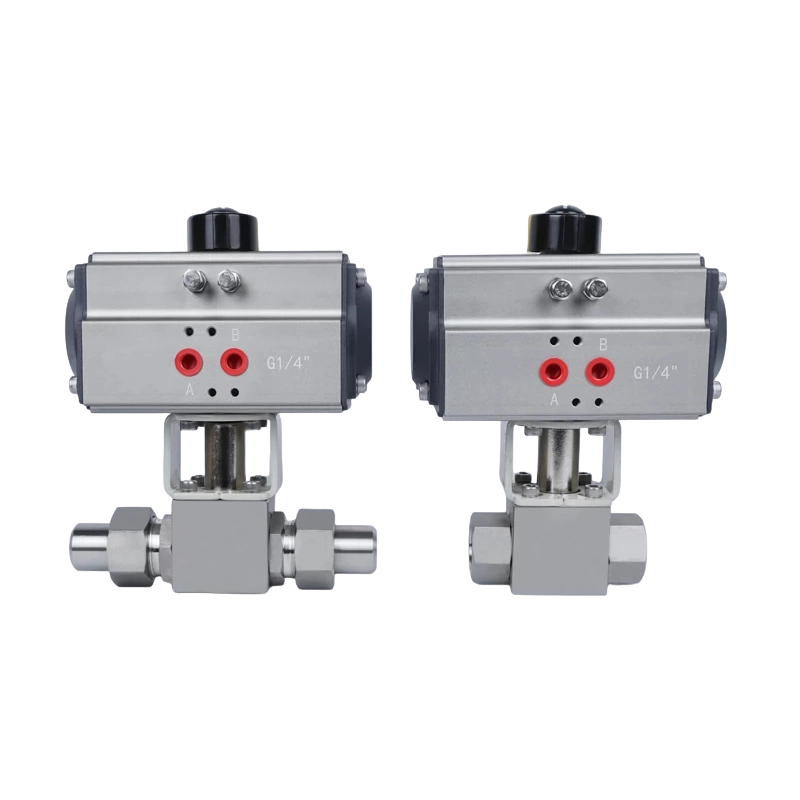
Smaller valves are often operated manually through a lever, handwheel, or gear operator. Larger valves, or valves that must respond quickly to process changes, are typically fitted with an actuator — pneumatic, electric, or hydraulic — that moves the closure element automatically in response to a control signal. Automated valves are common wherever remote operation, fast response time, or integration with a control system (such as a PLC or SCADA network) is required.
There is no single valve design that performs best in every situation. Engineers typically choose among the following families based on flow rate, pressure class, media type, and how often the valve needs to cycle.
| Valve Type | Operation | Best Suited For |
|---|---|---|
| Ball Valve | Quarter-turn rotation of a bored sphere | Fast on/off shutoff, tight sealing, frequent cycling |
| Gate Valve | Multi-turn raising or lowering of a wedge | Fully open or fully closed service, low pressure drop |
| Globe Valve | Multi-turn linear movement of a disc against a seat | Precise throttling and flow regulation |
| Butterfly Valve | Quarter-turn rotation of a disc on a central shaft | Large diameter lines, lightweight and compact installs |
| Check Valve | Automatic, flow-direction driven | Preventing backflow without manual operation |
| Diaphragm Valve | Flexible membrane pressed against a weir | Corrosive, abrasive, or hygienic media |
| Plug Valve | Quarter-turn rotation of a tapered or cylindrical plug | Slurries and viscous media resistant to clogging |
| Pressure Relief Valve | Automatic, spring-loaded response to overpressure | Protecting vessels and piping from overpressure events |
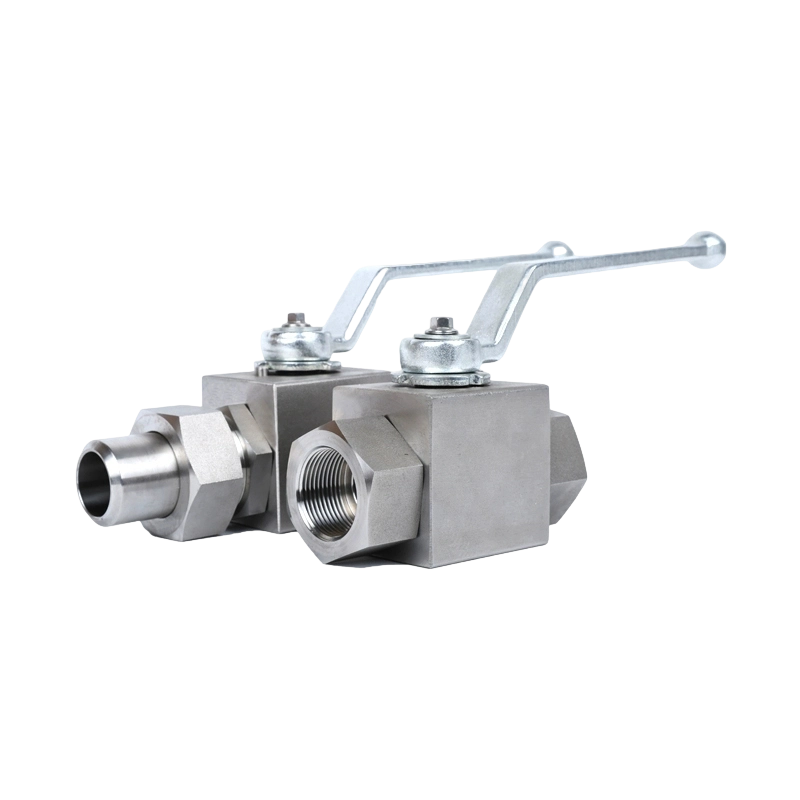
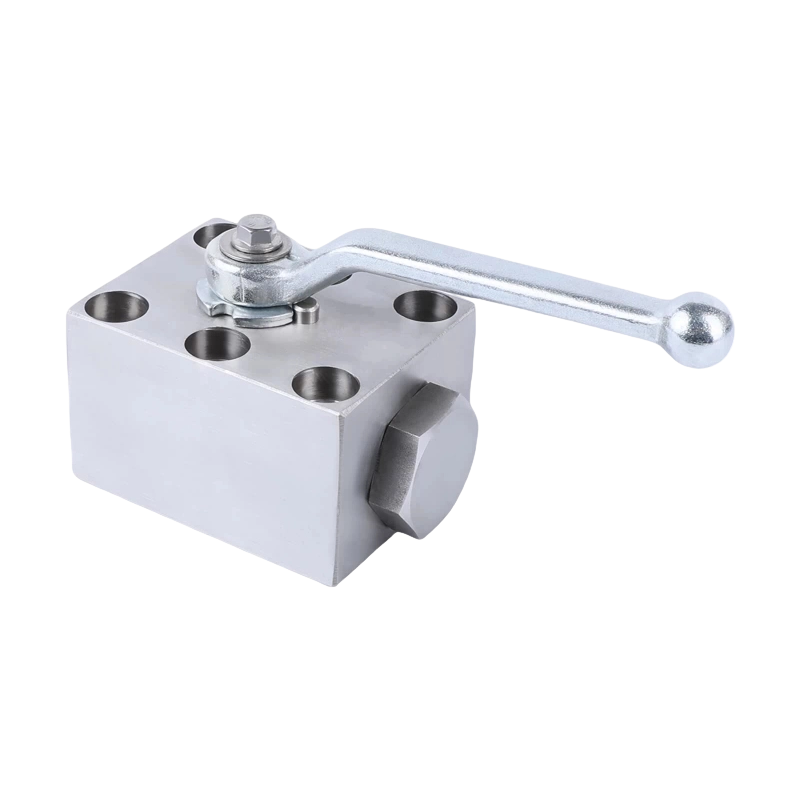
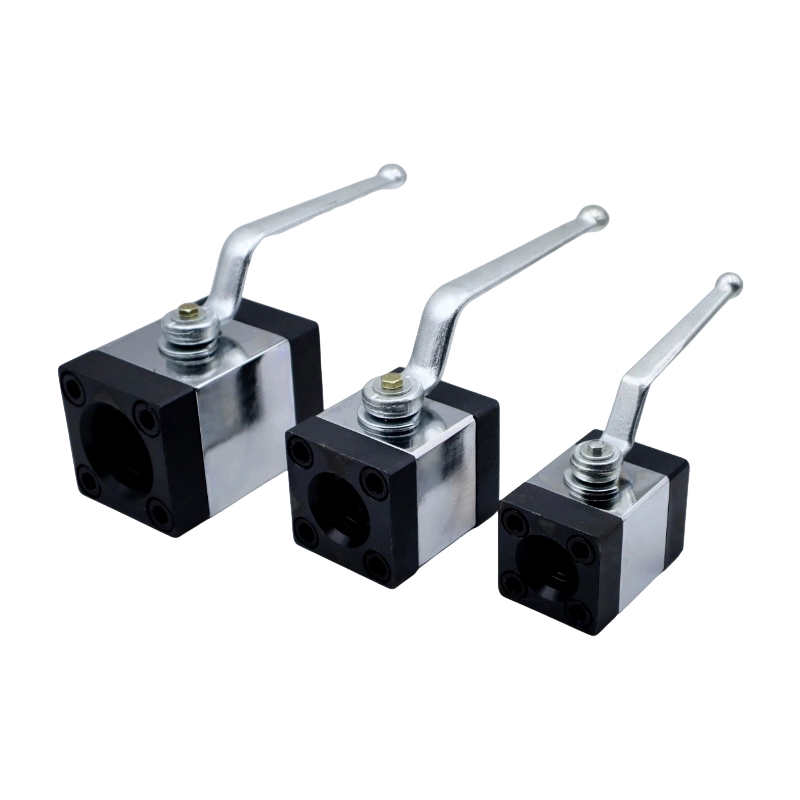
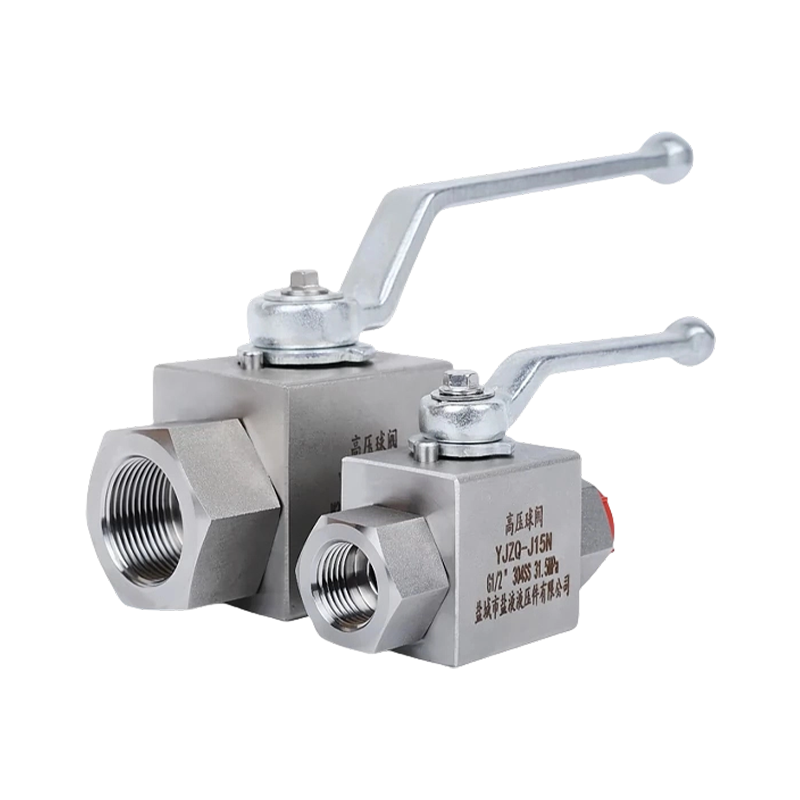
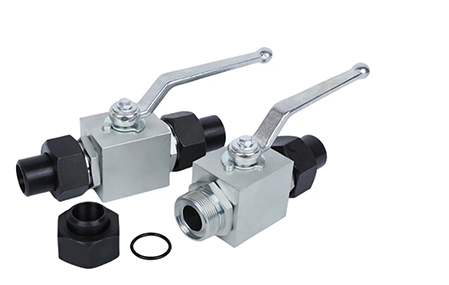
Among all valve types, the ball valve is the most widely specified for on/off shutoff duty across water treatment, oil and gas, HVAC, and industrial gas systems. Its closure element is a sphere with a machined bore matching the pipe diameter. When the bore aligns with the pipe, flow passes through with minimal restriction; a quarter turn rotates the bore perpendicular to the flow path, sealing it off almost instantly.
Because the sealing surfaces (the ball and its seats) are relatively small and precisely machined, a ball valve typically achieves bubble-tight shutoff, meaning essentially zero leakage across the closed valve. Full-port ball valves, where the bore diameter matches the internal pipe diameter, produce almost no pressure drop when open, which is why they are favored in systems where flow efficiency matters as much as shutoff reliability.
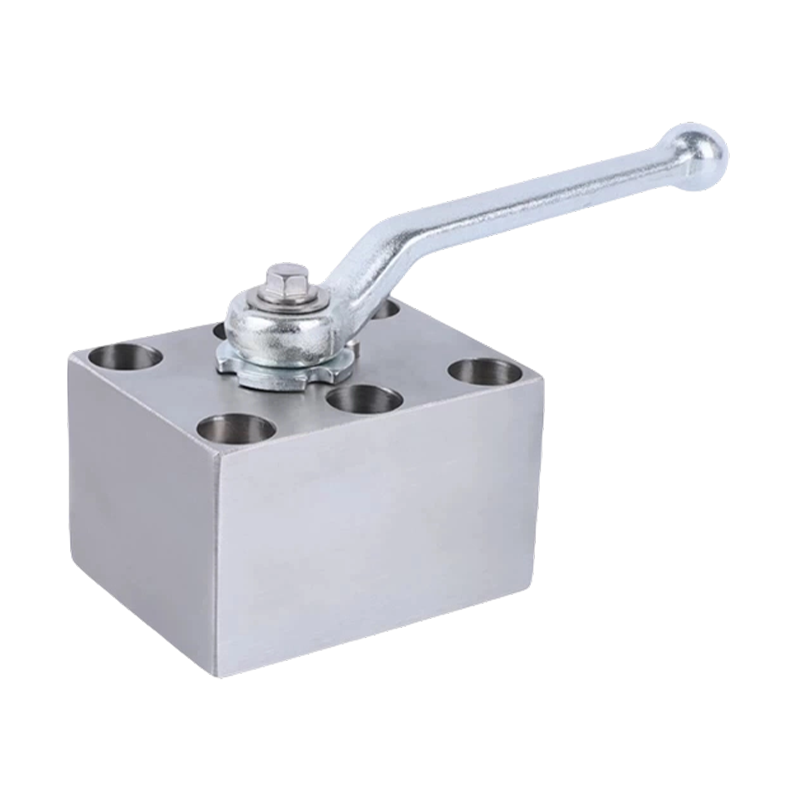
Ball valves are manufactured in several body styles, each suited to a slightly different installation or maintenance need:
Ball valves are not usually chosen for fine throttling. Because flow area changes very sharply once the ball rotates away from full-open, the relationship between handle position and flow rate is non-linear, and partial-open operation can accelerate seat wear. For that reason, ball valves are generally specified for full-open or full-closed duty, while globe or control valves handle applications needing precise, linear flow modulation.
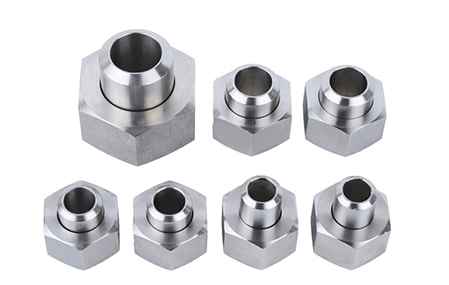
Valve body and trim materials are selected based on the media being handled, operating temperature, and required corrosion resistance. Common material families include:
Pressure ratings are commonly expressed using the ANSI/ASME class system (Class 150, 300, 600, and higher) or PN designations (PN10, PN16, PN25, and so on) under ISO/EN standards. A valve rated Class 150, for instance, is generally suitable for pressures up to roughly 19.6 bar at ambient temperature, though the exact allowable pressure decreases as operating temperature rises, per standard pressure-temperature rating tables.
The body material determines structural strength, but seat and seal materials determine sealing performance and chemical compatibility. PTFE (Teflon) seats are common because of their low friction and broad chemical resistance, but they have temperature limits, typically well below what a metal-seated valve can withstand. For high-temperature or abrasive service, metal seats or reinforced composite seats are used instead, generally at the cost of a slightly less perfect seal.
Manual operation is sufficient for valves that are rarely adjusted, but many modern systems rely on actuators to open, close, or modulate valves automatically. The three most common actuator types are:
Automated valves are typically integrated with a control system so that operators can monitor and adjust flow remotely, log valve position history, and trigger automatic shutdowns in response to abnormal conditions such as a pressure spike or leak detection signal.
The same underlying valve principles apply across very different industries, but the specific requirements, standards, and preferred materials shift depending on the sector.
Municipal water systems rely heavily on gate and butterfly valves for large-diameter isolation, along with ball valves and check valves throughout distribution networks and pump stations. Corrosion resistance and long-term reliability under near-constant submersion or burial are primary concerns.
High-pressure ball, gate, and check valves are standard in upstream and midstream oil and gas infrastructure, often built to API standards with fire-safe design and low-emission stem packing to control fugitive emissions in flammable service.
Diaphragm and sanitary ball valves dominate here, with polished stainless steel surfaces, crevice-free designs, and seals compatible with clean-in-place (CIP) and steam-in-place (SIP) procedures to prevent contamination.
Ball and butterfly valves are common on chilled water, hot water, and steam lines for isolation and balancing, often paired with actuators tied into building management systems for automated temperature control.
Choosing between a ball valve, gate valve, or another type comes down to answering a few practical questions before specifying a part number:
As a general rule of thumb used across process engineering: specify a ball valve for fast, tight, frequent shutoff; a gate valve for infrequent full-open/full-closed isolation with minimal pressure drop; a globe valve for regulated throttling; and a check valve anywhere backflow must be prevented automatically.
A correctly specified valve can still underperform if it is installed incorrectly. A few installation factors consistently affect long-term reliability:
Even a well-specified valve will eventually need maintenance. The most frequently reported failure modes in field service include seat wear from repeated cycling, stem packing degradation leading to external leakage, and internal corrosion or erosion from abrasive or chemically aggressive media.
Operators who catch small problems early generally avoid the larger repair costs associated with full valve replacement. Increasing handle or actuator torque required to operate a valve, visible weeping at the stem or body joints, and inconsistent shutoff (where the valve no longer holds a tight seal in the closed position) are all signals that maintenance should be scheduled before the issue worsens into an unplanned shutdown.
A short reference for terms commonly encountered when specifying or discussing valves:
| Term | Meaning |
|---|---|
| Seat | The surface the closure element presses against to form a seal |
| Stem | The shaft that transmits motion from the handle or actuator to the closure element |
| Full port | A bore diameter equal to the connecting pipe's internal diameter |
| Cv value | A flow coefficient describing how much flow a valve passes at a given pressure drop |
| Fire-safe design | A valve construction that maintains shutoff even if soft seats are destroyed by fire |
| Bubble-tight | A shutoff standard describing essentially zero measurable leakage |
A faucet is a type of valve designed specifically for point-of-use water dispensing, usually operated by hand at a sink or fixture. A valve is the broader engineering term covering any device that regulates flow anywhere in a piping system, including inside walls, underground, or deep within industrial process lines.
Neither is universally better; they serve different priorities. A ball valve generally offers faster operation, a tighter seal, and better durability under frequent cycling. A gate valve typically offers a very low pressure drop when fully open and is often preferred for larger diameter, infrequently operated isolation points.
Standard ball valves are not ideal for continuous throttling because flow response is highly non-linear near the closed position, which accelerates seat wear. Specially designed characterized-ball or V-port ball valves exist for throttling duty, but a standard full-port ball valve is best reserved for full-open or full-closed service.
Service life varies widely with media, cycling frequency, and material selection, but a properly specified and maintained ball valve in clean service commonly performs reliably for many years before seat or seal replacement is needed. Harsh media, high cycle counts, or poor material matching can shorten this significantly.
Full port, sometimes called full bore, means the diameter of the bore through the ball matches the internal diameter of the connecting pipe, so flow passes through the open valve with virtually no restriction. A reduced port (or standard port) ball valve has a smaller bore than the pipe, which introduces some additional pressure drop but typically costs less.
Trunnion-mounted ball valves fix the ball's position with top and bottom supports, so the ball does not need to rest against the seat to stay centered. This reduces the torque needed to rotate the ball, which becomes important as valve size and pressure class increase, making trunnion designs the common choice for large-diameter, high-pressure pipelines.
Internal leakage in the closed position is most often caused by worn or damaged seats, debris trapped between the closure element and the seat, or seal material that has degraded due to chemical incompatibility or excessive temperature. Regular inspection and correct material selection at the specification stage are the most effective ways to prevent this.
No. Many valves, particularly smaller ones or those operated infrequently, are perfectly suited to manual handles or handwheels. Actuators are added when remote operation, fast response, integration with automated control systems, or high operating torque makes manual operation impractical.
Recommended Products
Copyright © Yancheng Yanye Hydraulic Parts Co., Ltd. All Rights Reserved
Custom Ball Valve Factory
China Ball Valve Manufacturers




 English
  русский
  Español