HOME / NEWS / Industry News / Pneumatic Pressure Control Valve: How It Works, Types, and Selection Guide
2026-08-10
Content
A pneumatic pressure control valve is a control valve that uses compressed air as its actuating medium to automatically regulate the pressure of a process fluid. In plain terms, it constantly compares the actual downstream pressure with a setpoint and adjusts its opening to hold that setpoint. The valve body carries the process fluid, while the pneumatic actuator and positioner do the thinking and moving. That combination is why these valves appear everywhere that air, nitrogen, natural gas, steam, or hydraulic oil must be kept at a stable pressure without an operator standing by.
The typical control signal is a 3–15 psi pneumatic signal or a 4–20 mA electric signal converted by an I/P positioner. According to the common control valve standard IEC 60534, the valve is expected to reproduce the commanded position within a stated hysteresis and dead band. When pressure drifts above the setpoint, the actuator moves the valve stem toward a smaller opening; when pressure drops below the setpoint, it opens further. This closed-loop reaction happens continuously, which is why pneumatic pressure control remains one of the most reliable methods for industrial fluid systems.
The working sequence starts with a pressure signal. A pressure transmitter reads the downstream pressure and sends a signal to the controller. The controller compares that value with the setpoint and outputs a pneumatic or electric command. In a fully pneumatic system, the command is usually a 3–15 psi air signal applied directly to the actuator diaphragm. In an electronic system, an I/P positioner converts the 4–20 mA current into a pneumatic pressure that pushes the actuator.
The actuator is a spring-loaded diaphragm or piston that pushes the valve stem. If the air pressure increases, the stem moves either down or up depending on the actuator type. This motion changes the opening area between the valve seat and the plug, which in turn changes the flow rate and the pressure drop across the valve. The valve body itself can be a globe valve, angle valve, ball valve, butterfly valve, or needle valve.
The safest failure mode is decided by the process, not by comfort. An air-to-open valve closes when air is lost, which protects downstream equipment from overpressure. An air-to-close valve opens when air is lost, which is used when the priority is to vent or drain the line. The same valve body can be assembled with both actuator versions. For high-pressure air, nitrogen, or natural gas service, the actual force needed to overcome upstream pressure must be checked before selecting the spring range.
It is easy to confuse a solenoid valve with a pneumatic pressure control valve. A solenoid valve simply opens or closes, while a pressure control valve modulates continuously. Within the modulating category, there are four designs worth separating because they differ in cost, speed, and precision.
| Type | Actuation | Best suited for | Typical accuracy |
|---|---|---|---|
| Spring-loaded diaphragm | 3–15 psi air signal | Small and medium lines | ±1.5% of span |
| Piston actuator | Higher pressure air forces | Large valves, high pressure drop | ±1.0% of span |
| Pilot-operated | Small pilot valve boosts pressure | High-flow gas and steam systems | ±2.0% of span |
| Self-operated | No external power source | Remote sites, simple setpoint control | ±3.0% of span |
For very high pressure gas or nitrogen systems, the valve body must be selected with the same care as the actuator. If the process demands a quarter-turn valve, a pneumatic actuator can be mounted on a high-pressure ball valve to provide remote open-close control rather than throttling. In those cases, the ball valve is not the regulating element itself, but it works beside the pressure control valve for isolation or emergency shutdown. To understand how high-pressure ball valves are built and tested, the definition and working principle of high-pressure ball valves provides a useful technical baseline.
Selection is a process of eliminating options, not a single calculation. The first question is whether the valve will reduce pressure, sustain back pressure, or serve as a safety relief. The second is the required flow coefficient, Cv, which defines how much fluid passes at a given pressure drop. While the full sizing method follows IEC 60534 or similar engineering standards, a buyer should collect seven core items before contacting any supplier.
A control valve with too low a Cv cannot pass the required flow at the available pressure drop. A valve with too high a Cv operates near the closed position and becomes difficult to control accurately. The flow characteristic, linear or equal-percentage, should be matched to the process. For pressure control on compressible gases, an equal-percentage characteristic is commonly selected because it provides finer resolution at small openings.
Stainless steel alloys such as 304 and 316L give predictable corrosion resistance in chemical, marine, and high-humidity environments. The body rating must never be lower than the maximum upstream pressure. When the valve is used in a hydraulic or gas system, the pressure class should be marked clearly on the nameplate. For more about the selection factors applied to high-pressure fluid components, the comprehensive buyer knowledge base for hydraulic ball valves covers material, connection, and pressure-rating issues that apply to surrounding hardware as well.
A control valve is often installed correctly and then forgotten. That can work for a while, but a pneumatic system will drift. Supply air quality is the first point to inspect. Compressed air that contains water, oil, or solid particles will damage the positioner and wear the actuator seals. According to ISO 8573-1, a reasonable target for control air is at least Class 5.5.4: solid particles below 5 µm, pressure dew point below 10 °C, and oil content below 1 mg/m³.
| Symptom | Most likely cause | Check first |
|---|---|---|
| Output pressure creeps upward | Positioner air leakage or valve seat erosion | Check supply pressure and seat contact area |
| Hunting or oscillation | Actuator friction, wrong PID tuning, or oversized valve | Check bench set range and actuator travel |
| Valve stuck in closed position | Blocked pilot line or frozen moisture | Verify pilot air dryness and filter condition |
Calibration should be performed at regular intervals, not only after a failure. Set the zero point, check the span, and record the hysteresis. A straightforward method is to install a pressure gauge immediately downstream of the valve and compare the gauge reading against the controller output. If the difference exceeds the manufacturer’s stated accuracy, the positioner should be recalibrated.
Pneumatic pressure control valves are rarely installed alone. A typical gas panel includes an inlet isolation valve, a filter, the pressure control valve, a downstream pressure gauge, and a manual vent valve. In petrochemical plants and gas stations, the control valve holds the pressure to a safe setpoint while the surrounding valves provide isolation and fine adjustment.
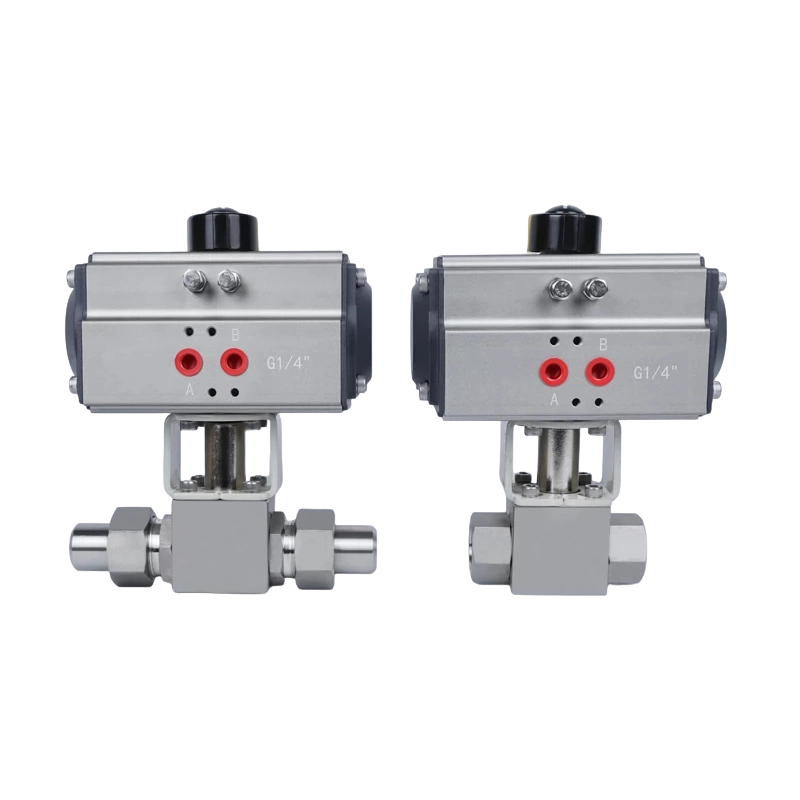
For example, a nitrogen ring line that supplies several analyzers may use a pneumatic pressure control valve to keep the distribution pressure at 0.6 MPa. When one analyzer needs maintenance, a pneumatic high-pressure nitrogen ball valve allows the operator to isolate the branch remotely. Compared with a manual ball valve, the pneumatic version gives fast closing under emergency conditions and can be operated from a control room.
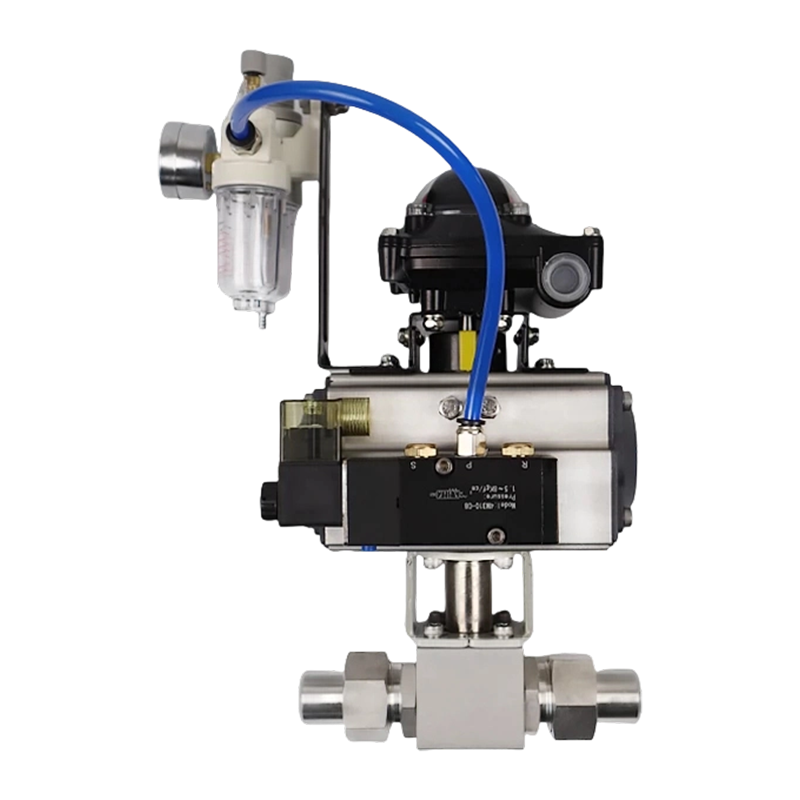 304 Pneumatic High-Pressure Nitrogen Ball Valve Suppliers, FactoryYancheng Yanye Hydraulic Parts Co., Ltd is China KHB-YJZQ series 304 pneumatic high-pressure nitrogen ball valve (internal/external threa...View Product →
On the instrument side, a pressure gauge needs a block-and-bleed valve for safe removal. A high-temperature high-pressure needle valve with 304 stainless steel construction, such as the J23W-320P stainless steel needle valve, is a common choice because it isolates the gauge and provides a small enough opening for the pressure sensing line. For calibration benches that require very fine flow adjustment, a needle valve with a long stem travel is not always sufficient; a WL24H-320P fine-adjustment valve with barbed or ferrule connections gives more resolution at low flow rates because its taper is ground for gradual, repeatable changes.
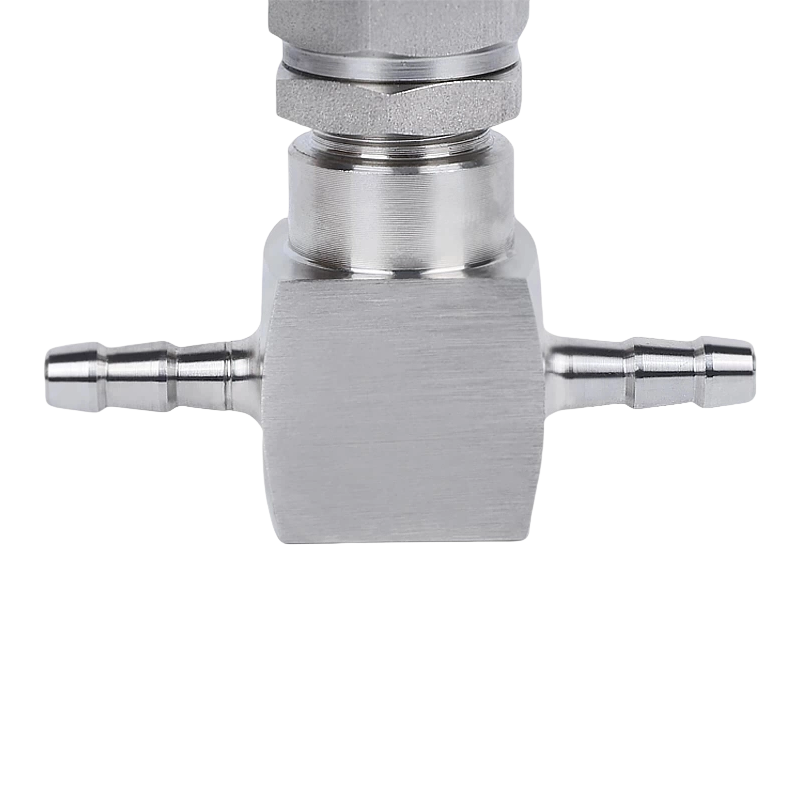 Wholesale WL24H-320P 304/316L Stainless Steel Fine Adjustment Valve with Barbed Yancheng Yanye Hydraulic Parts Co., Ltd is China Custom WL24H-320P 304/316L Stainless Steel Fine Adjustment Valve with Barbed Connectors ...View Product →
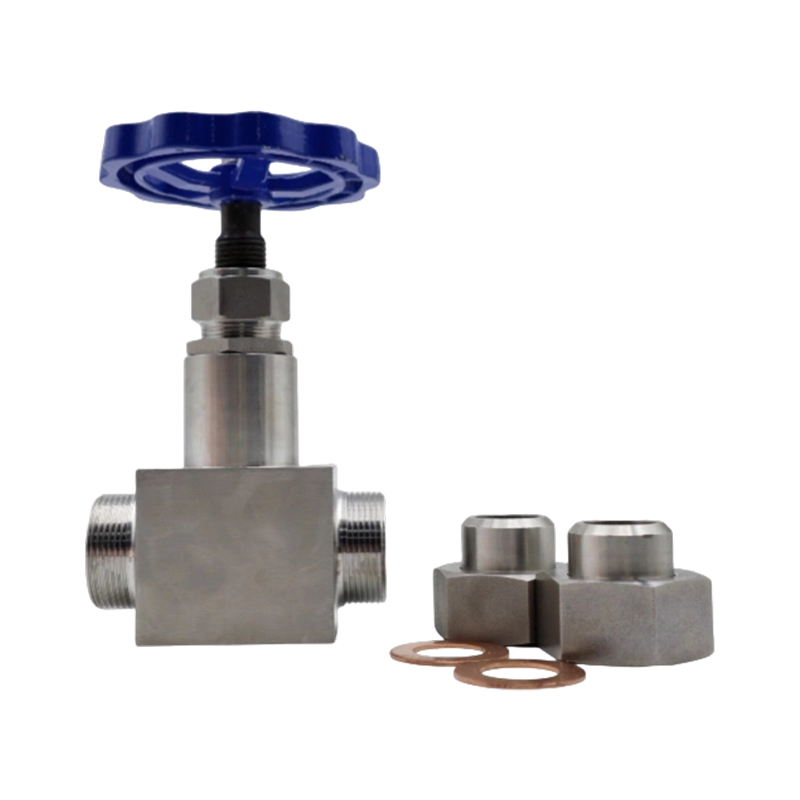 Wholesale J23W-320P 304 Stainless Steel Needle Valve, High Temperature & High PrYancheng Yanye Hydraulic Parts Co., Ltd is China Custom J23W-320P 304 Stainless Steel Needle Valve, High Temperature & High Pressure Exte...View Product →
In petroleum and chemical applications, the valve package must also satisfy the material traceability and inspection requirements of the project. Trade shows such as the Shanghai petroleum and chemical pump valve and pipeline event have shown a clear trend toward modular skids where the control valve, isolation valves, and instrumentation are assembled into one unit before delivery.
A pneumatic solenoid valve is normally a two-position device used to start, stop, or switch air flow in the actuation line. A pneumatic pressure control valve is a modulating device that continuously changes its opening to hold a pressure setpoint. Many control loops use solenoid valves as pilot devices because a small solenoid valve cannot handle the main flow but can easily shift a larger pilot valve.
It depends on the spring configuration. In an air-to-open valve, loss of air allows the spring to close the valve, which protects downstream equipment from overpressure. In an air-to-close valve, loss of air lets the spring open the valve, which may be desirable for venting or for keeping a minimum flow. A lock-up valve can also trap the actuator signal and hold the last position.
Cv is the number of US gallons per minute of 60 °F water that flow through the fully open valve under a pressure drop of one pound per square inch. For gas and steam, the calculation uses correction factors and the formulas from IEC 60534. A higher Cv means higher flow capacity for the same pressure drop.
A standard high-pressure ball valve is designed for open-close service. When used as a throttling element at partial opening, it can create high turbulence, noise, and seat erosion. For continuous pressure adjustment, a globe-style control valve is better. A pneumatic ball valve is more appropriate for isolation, emergency shutdown, or two-position switching in the same system.
For most industrial plants, an annual calibration is a reasonable starting point. If the valve is on a critical control loop with tight pressure tolerances, calibration may be done every six months. The useful check points are zero, 25%, 50%, 75%, and 100% of stroke, with both increasing and decreasing signal directions to identify hysteresis.
A pneumatic pressure control valve performs well when four conditions are satisfied: the actuator is sized correctly, the Cv matches the process, the air supply is clean and dry, and the fail-safe position matches the safety philosophy of the plant. Start with the process data, confirm the pressure class and materials, then consider how the valve will be isolated and calibrated. Getting these basics right will save more time in maintenance than any additional control feature.
Recommended Products
Copyright © Yancheng Yanye Hydraulic Parts Co., Ltd. All Rights Reserved
Custom Ball Valve Factory
China Ball Valve Manufacturers




 English
  русский
  Español