HOME / NEWS / Industry News / Gas Flow Control Valve Types: A Practical Guide for Choosing the Right Valve
2026-08-17
Content
If you are specifying a valve for natural gas, CNG, LNG, compressed air, or nitrogen service, you do not need to compare hundreds of catalog entries. The practical list is shorter than most suppliers suggest: five structural families (ball, needle/globe, gate, butterfly, and check) plus the slam-shut safety valve cover nearly every gas job you will face. Ball valves give the most reliable bubble-tight shutoff at high pressure; needle and globe valves give the most precise throttling; check valves stop backflow; gate valves isolate with minimal pressure loss; butterfly valves handle large volumes at low cost. The right choice is the type that matches the primary function, the pressure class, and the flow coefficient of your line.
Use this quick rule to shortlist your options:
The sections below explain why these rules work, what happens when you violate them, and how to size a gas flow control valve so it survives real plant conditions rather than just passing a quotation checklist.
Gas is compressible, so its behavior inside a valve is fundamentally different from hydraulic oil or water. As gas passes through the restriction, pressure drops and the gas expands. Velocity rises sharply at the vena contracta, the narrowest point of the flow path. That single phenomenon drives sizing, noise, erosion, and seat damage in gas systems.
Per the ISA/IEC gas sizing equations (IEC 60534-2-1), the governing parameter is the pressure drop ratio x = dp / p1. When x reaches the terminal pressure drop ratio xT for that valve type, flow becomes choked. Raising upstream pressure after that point will not increase flow rate unless the valve type or trim is changed.
Choked flow explains why matching only the pipe size is not enough. A 25 mm valve in a 25 mm line may be too small if the pressure drop ratio pushes you into the choked region; a physically larger valve with a higher xT can pass more actual volumetric flow. The expansion factor Y corrects for gas density change and vena contracta enlargement, which is why manufacturers publish Cv and xT rather than only bore diameter.
Trim geometry also determines the installed flow characteristic:
If a buyer skips this step, the installed characteristic can become nearly all-or-nothing even when the valve body is correctly rated for pressure. That is why the same valve type can perform brilliantly in one gas line and poorly in another.
We manufacture these valve families, so the notes below reflect production realities as well as selection theory. Each family has a defined strength; none of them does everything well.
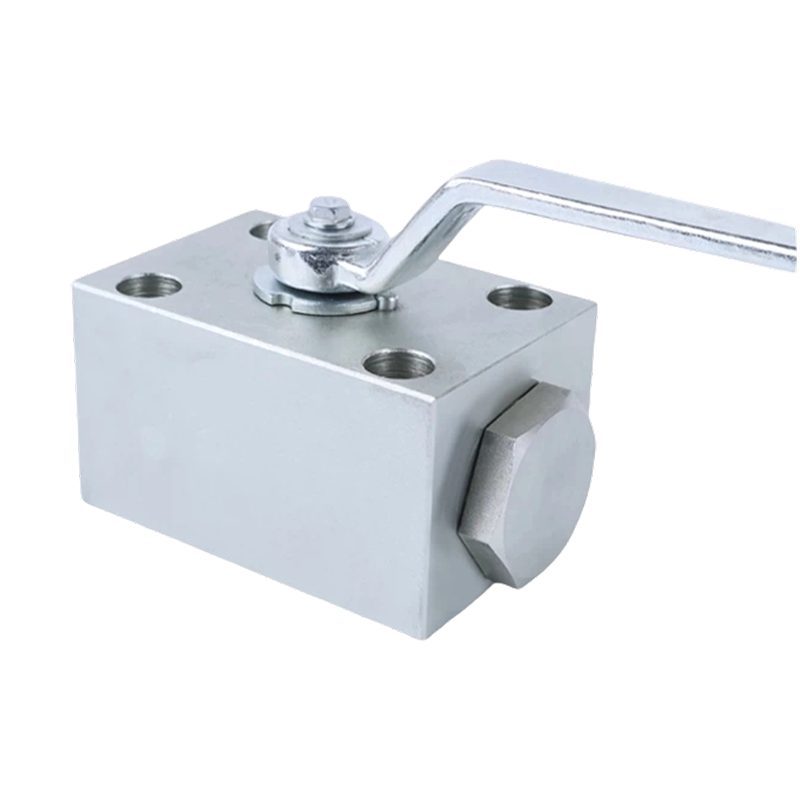
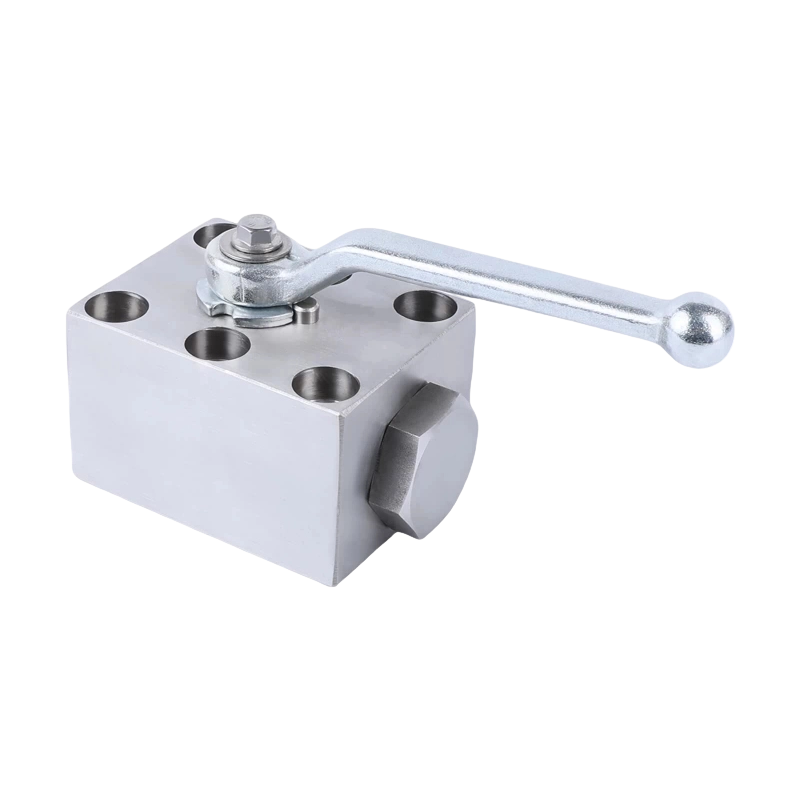
A ball valve uses a rotating ball with a bore through the center. A 90-degree rotation moves from fully open to fully closed. In gas service, the dominant advantage is a soft-seated, bubble-tight seal that does not rely on line pressure to seat. Floating-ball designs suit smaller sizes and moderate pressure; trunnion-mounted designs suit larger sizes and high pressure classes.
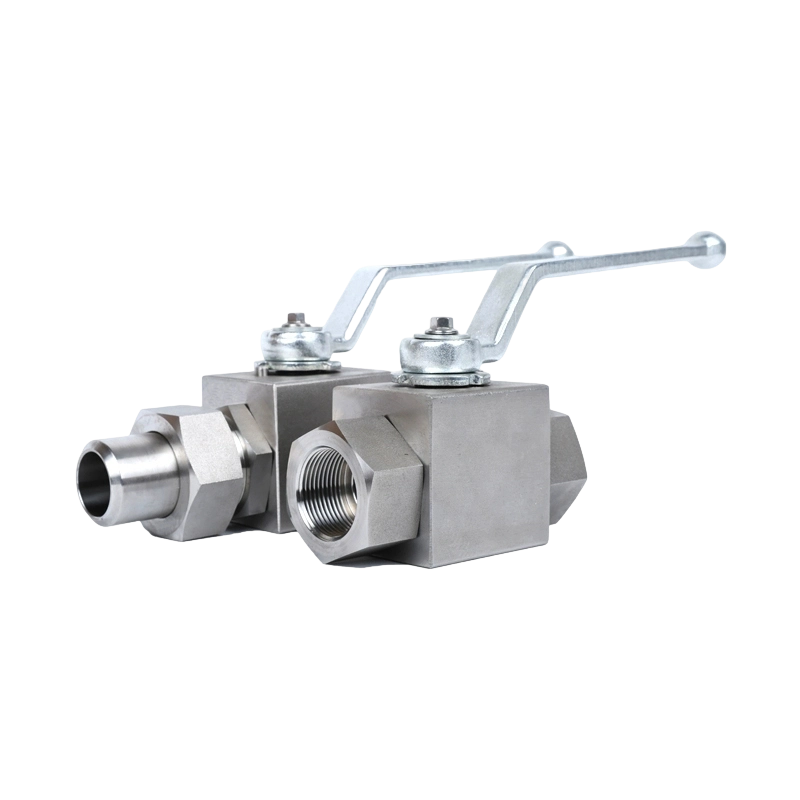
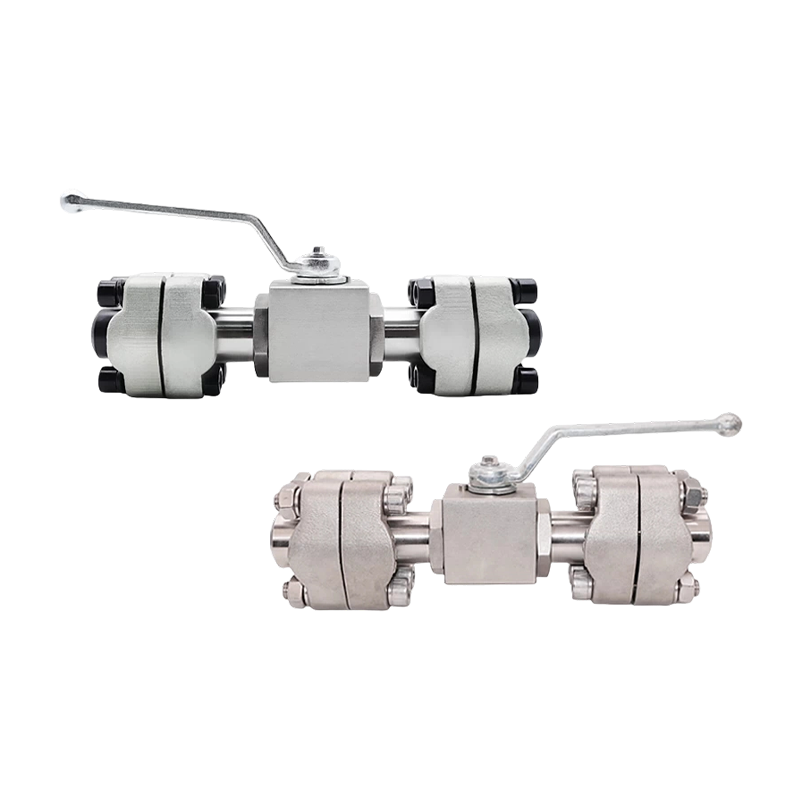
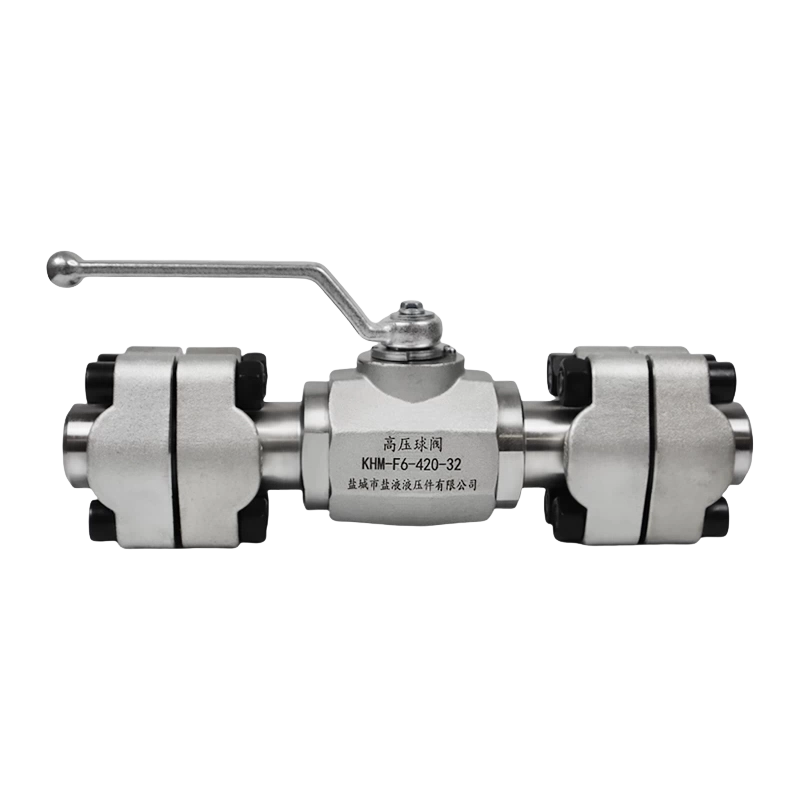
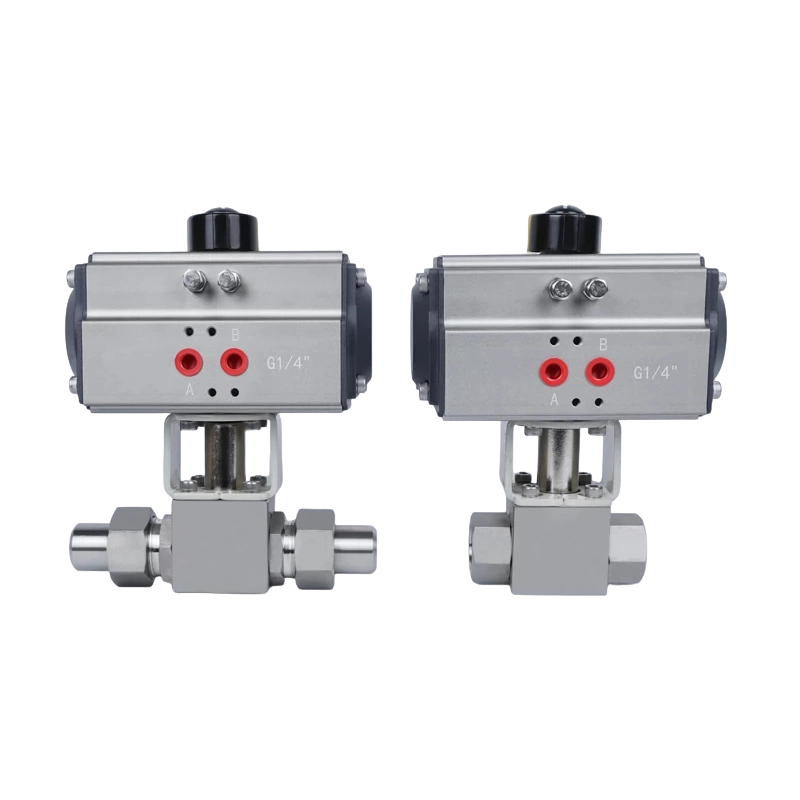
For example, our KHB/YJZQ high-pressure ball valve is available with internal thread, external thread, and welded connections in 304 or 316L stainless and carbon steel, rated to 32 MPa (about 4,640 psi). The same family includes a three-way variant that switches flow between two lines without an extra tee, and a pneumatic version for remote on/off in nitrogen service. To compare the full set of configurations, review our high-pressure ball valve range before writing your specification.
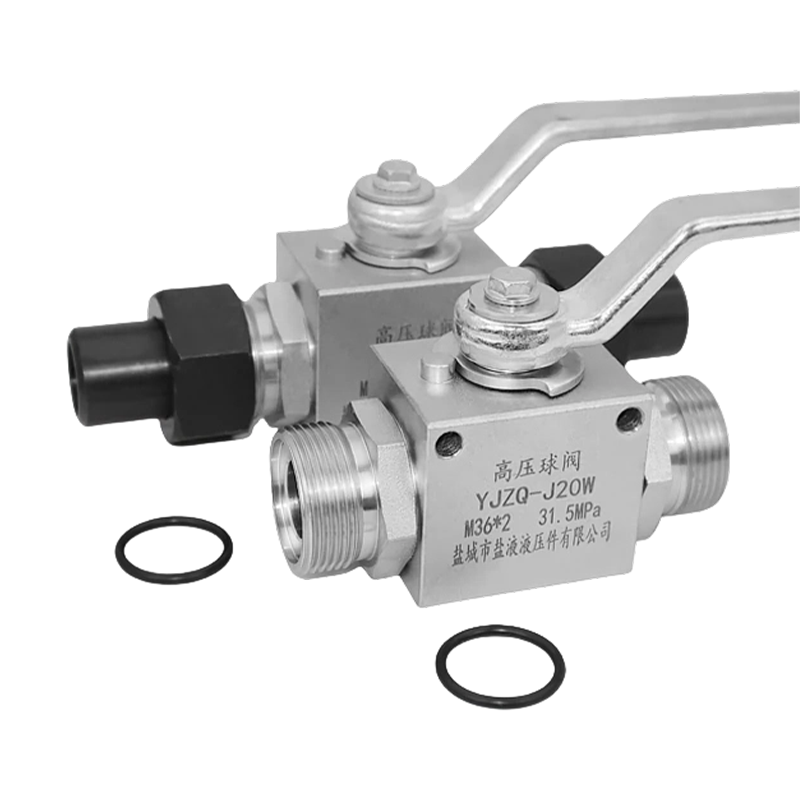 Wholesale KHB Hydraulic High-Pressure Ball Valve YJZQ Internal/External Thread WYancheng Yanye Hydraulic Parts Co., Ltd is China Custom KHB Hydraulic High-Pressure Ball Valve YJZQ Internal/External Thread Welded Ball ...View Product →
Needle valves use a slender tapered stem that travels in fine threads, producing very small incremental changes in flow area. Globe valves use a disc moving perpendicular to the seat; the internal S-shaped path provides a smooth linear or equal-percentage characteristic that is easier to predict in a control loop.
For manual metering on instrument roots and sample lines, a J23W-320P stainless steel needle valve rated to 32 MPa is a common starting point; the same body style is produced at 40 MPa (about 5,800 psi) as the J23W-400P. When the set point must be repeatable between shifts, a calibrated ferrule-type metering needle valve with a scale is the better choice than a plain valve.
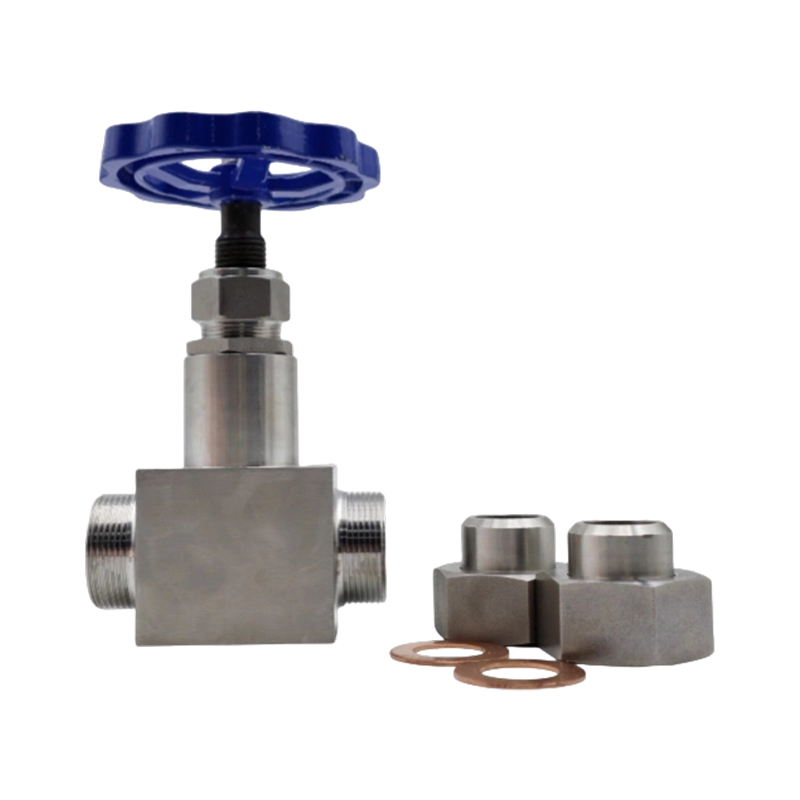 Wholesale J23W-320P 304 Stainless Steel Needle Valve, High Temperature & High PrYancheng Yanye Hydraulic Parts Co., Ltd is China Custom J23W-320P 304 Stainless Steel Needle Valve, High Temperature & High Pressure Exte...View Product →
A check valve closes automatically whenever downstream pressure exceeds upstream pressure. Spring-loaded designs respond quickly and can be mounted in any orientation; swing-type checks have lower pressure drop but can chatter in gas lines with pulsating flow. The cracking pressure must sit below the minimum differential pressure the system sees in normal operation, otherwise the valve never fully opens and the disc hammers against the seat.
For welded high-pressure gas and hydraulic lines, our straight-through welded high-pressure check valve in stainless steel removes the leak path of a threaded joint, which matters when you are protecting compressors, meters, and pressure regulators from reverse flow.
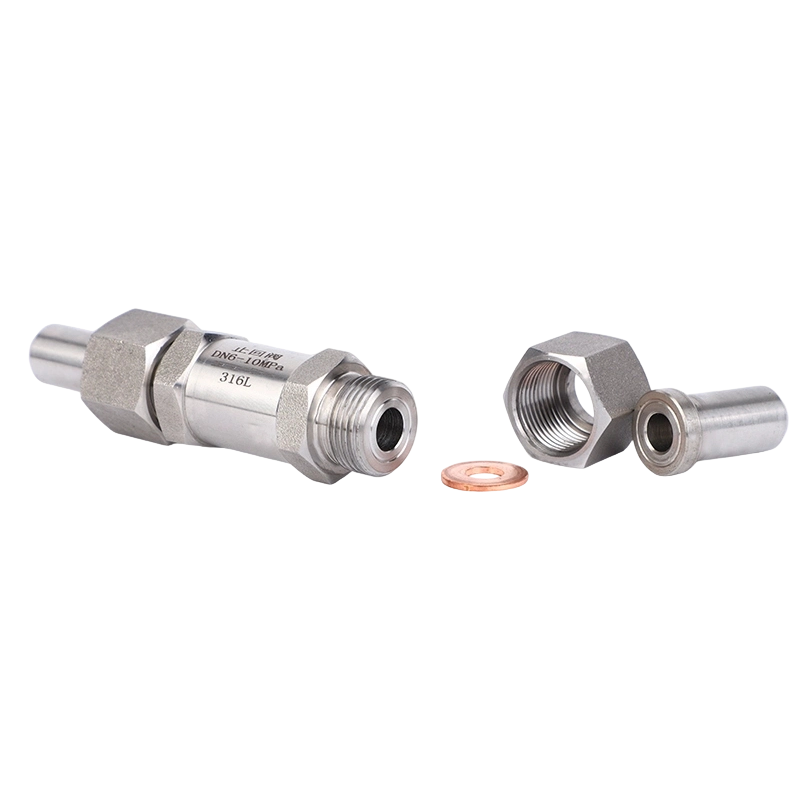 Wholesale Stainless Steel Check Valve, Straight Through Welded High-Pressure CheYancheng Yanye Hydraulic Parts Co., Ltd is China Custom Stainless Steel Check Valve, Straight Through Welded High-Pressure Check Valve, Z...View Product →
Gate valves raise a wedge perpendicular to the flow path, leaving a full-bore opening when fully open. Pressure drop in the open position is close to zero, which is why they remain popular on gas headers, pig launchers, and upstream isolation points. But a partially open gate creates wire-draw erosion on the seat faces. Never use a gate valve for throttling gas; the seat will erode in weeks, not years.
Butterfly valves use a rotating disc across the bore. In low-pressure gas distribution, lug and wafer types save weight and space compared with flanged ball valves. With a positioner and an eccentric disc, a butterfly valve can perform reasonable throttling. The trade-off is lower shutoff integrity at high pressure, so they rarely appear above about 4 MPa in gas service.
Plug valves are a quarter-turn alternative to ball valves in some gas applications; they are easy to service but many designs require lubrication. Diaphragm valves are specified where the gas must not contact the operating mechanism, such as analytical or high-purity gas systems. Slam-shut valves are spring-loaded safety devices that close instantly when downstream pressure rises or falls beyond a set limit; they must be reset manually and are typically paired with a pressure regulator.
The most common specification error in gas valve buying is choosing a valve for one duty and operating it in another. A gate valve throttling a gas line erodes its seats quickly. A standard ball valve opened 20 percent produces a tight jet that causes noise, vibration, and seat damage even though the ball was intended only for shutoff.
If the line needs both functions, choose a gas flow control valve type designed for both: a V-port ball valve or a characterized-trim globe valve. These give moderate throttling with tight shutoff, and the Cv curve remains predictable across the travel range.
| Valve Type | Primary Function | Throttling Quality | Shutoff Integrity | Typical Gas Use |
|---|---|---|---|---|
| Ball | On/off isolation | Poor near closed; V-port acceptable | Bubble-tight with soft seat | CNG, LNG, nitrogen, plant air |
| Needle | Fine metering | Excellent for low flow | Good, metal or soft seat | Sample lines, purge lines, calibration |
| Globe | Modulating control | Good, linear or equal percentage | Good | Control loops, bypass lines |
| Gate | Isolation | Not suitable | Good, metal seat | Headers, upstream isolation |
| Butterfly | Large-volume control | Acceptable with positioner | Depends on seat | Low-pressure distribution, utility air |
| Check | Backflow prevention | Not applicable | Automatic closing | Compressor discharge, meter protection |
The same valve body behaves differently depending on how it is actuated. Actuation determines response time, fail-safe behavior, and whether the valve can be operated remotely.
Mounting pads follow ISO 5211 for most industrial actuators, so a valve intended for future automation should be ordered with the correct pad and stem extension. When you request pricing, specify the fail position as part of the gas flow control valve type, not as an afterthought.
Before sending a request for quotation, collect these parameters. A complete datasheet shortens the supplier's response time and prevents mismatched valve internals.
| Parameter | What to Verify | Why It Matters |
|---|---|---|
| Media composition | Dry gas, wet gas, condensate, particulates | Determines body material, seat material, and trim design |
| Maximum / minimum pressure | Upstream and downstream values at the valve | Selects body rating, e.g., 32 MPa versus 40 MPa class |
| Temperature range | Process and ambient, including winter conditions | Soft seats have temperature limits near 200 C (392 F) for PTFE |
| Flow requirement | Normal and maximum SCFH or Nm3/h | Determines Cv and whether the flow is choked |
| Pressure differential | dp at design flow | Controls x = dp / p1 and whether choking is a risk |
| End connections | Threaded, welded, flanged, ferrule | Welded ends eliminate leak paths at 32 MPa and above |
| Shutoff requirement | Bubble-tight or acceptable seat leakage | Soft seat for gas-tight isolation, metal seat for high temperature |
| Actuation and fail position | Manual, pneumatic spring return, electric | Fail-closed for fuel gas, fail-open for vent lines |
A valve that is perfectly sized can still fail if the piping around it is wrong. For control valves in gas service, a common plant rule is 10 pipe diameters of straight run upstream and 5 downstream to keep the flow profile stable and to make the valve's published flow coefficient meaningful.
Heavy valves and actuated assemblies must be supported independently. An unsupported actuator arm can transmit bending loads that crack the valve body neck or distort the flange joint. Use the correct pipe support system for the tube or pipe diameter rather than clamping the valve body directly. Our hydraulic pipe clamps cover single, double-layer, and marine hydraulic installations, and they absorb vibration before it reaches the valve.
Connection choice is a safety issue in gas lines. At 32 MPa and above, welded ends are preferred because they remove the leak path that a threaded joint can develop under thermal cycling. If threaded ends must be used, apply the correct thread sealant and verify engagement length; a joint that looks tight may still leak gas at high pressure.
A gas flow control valve is a mechanical device that starts, stops, or regulates the flow of a compressible gas by varying the size of the flow passage. In gas service the valve must also manage the expansion and velocity change of the gas, which is why selection depends on the pressure drop ratio as well as the bore size.
Needle and globe valves give the most precise control. Needle valves are best for small flows and manual metering because the fine stem threads translate each turn into a tiny change in flow area. Globe valves are best for automated control loops because their linear or equal-percentage characteristic is easier to model.
No. A standard ball valve is designed for on/off service. When it is held partially open, the gas forms a high-velocity jet that erodes the soft seat and creates noise. If you need both throttling and tight shutoff, use a V-port ball valve or a globe valve with characterized trim.
Cv is the flow coefficient of the valve: the number of US gallons per minute of 60 F water that passes through the valve at a 1 psi pressure drop. For gas, sizing uses the same Cv but corrects for compressibility, the expansion factor Y, and the pressure drop ratio x. This is why gas valve sizing is not a simple pipe-size match.
A flow control valve regulates how much gas passes through the line by adjusting the opening area. A pressure regulator senses downstream pressure and adjusts its own opening to keep that pressure constant even when demand changes. The two are often installed together: a regulator stabilizes pressure, and a control valve then sets the flow rate.
Use a soft seat (PTFE, PPL, or nylon) when you need bubble-tight shutoff and the process temperature stays within the seat material limit, typically up to about 200 C (392 F) for PTFE. Use a metal seat when the gas is hot, contains abrasive particulates, or requires a fire-safe design. The trade-off is that metal seats allow a small, measurable seat leakage.
A three-way ball valve is useful when you need to switch flow between two destinations or alternate between two supply sources without adding separate valves and a tee. It is common in gas sampling, purge-gas switching, and cylinder changeover applications. It also reduces the number of potential leak points compared with a two-valve arrangement.
Gas flow control valve types are not interchangeable shortcuts. The difference between a reliable gas plant and a problem installation is usually a small set of decisions: selecting a ball valve for shutoff, a needle or globe valve for throttling, a check valve for backflow protection, and matching the pressure class, Cv, and end connection to the real operating conditions.
We are Yancheng Yanye Hydraulic Parts Co., Ltd., a manufacturer based in Funing, Jiangsu, producing high-pressure ball valves, needle and globe valves, check valves, fine-adjustment valves, and pipe clamps for gas, hydraulic, and high-pressure fluid systems. If you work mainly with hydraulic oil lines rather than gas, our hydraulic ball valve buyer knowledge base covers the key differences in that medium. For gas applications, our manufacturing range also includes three-way ball valves, pneumatic high-pressure nitrogen ball valves, and welding accessories for complete pipeline assembly.
The fastest way to a correct specification is to send your media, operating pressure, temperature, required flow rate, and connection type to our engineering team. With those four values, we can narrow the options to one or two gas flow control valve types that will perform reliably for the life of your system.
Recommended Products
Copyright © Yancheng Yanye Hydraulic Parts Co., Ltd. All Rights Reserved
Custom Ball Valve Factory
China Ball Valve Manufacturers




 English
  русский
  Español