HOME / NEWS / Industry News / 3 Way Control Valve Manufacturers: A Practical Selection Guide for Industrial Buyers
2026-09-21
Content
Finding a reliable 3 way control valve manufacturer comes down to three measurable factors: pressure class, body material, and connection type. These three variables cause the majority of early-life valve failures in industrial service. For example, a hydraulic test bench running at 31.5 MPa will quickly destroy a valve rated for only 16 MPa. Once the ball seat extrudes, the valve passes pressure internally, and the operator loses both flow control and shutoff capability. Repairing that circuit can cost between USD 300 and USD 1,200 in downtime, plus the cost of replacement parts. The sections below explain what a 3-way control valve is, how to compare manufacturers, and which procurement mistakes to avoid.
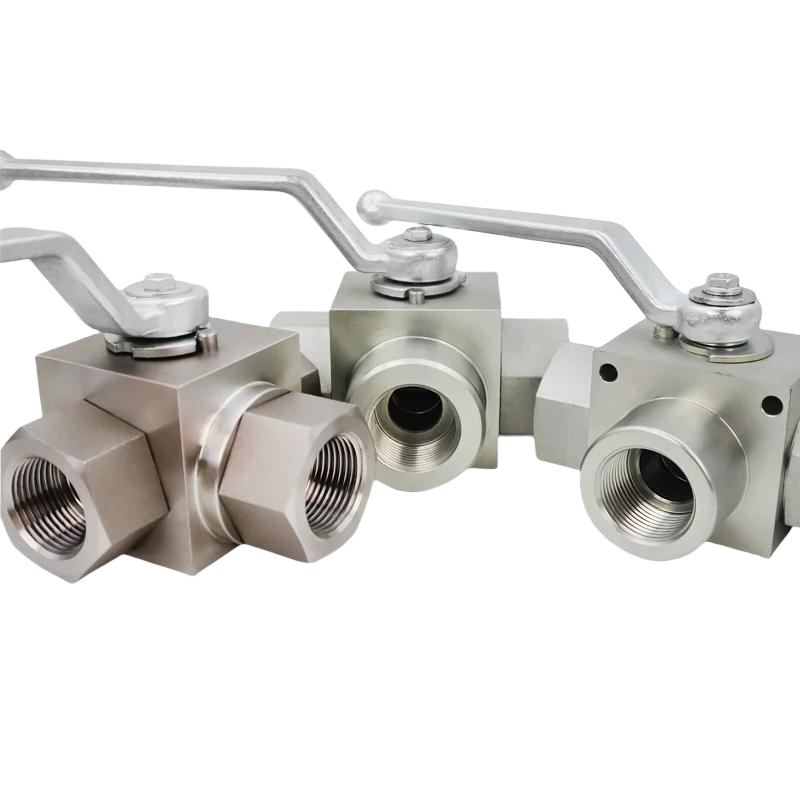
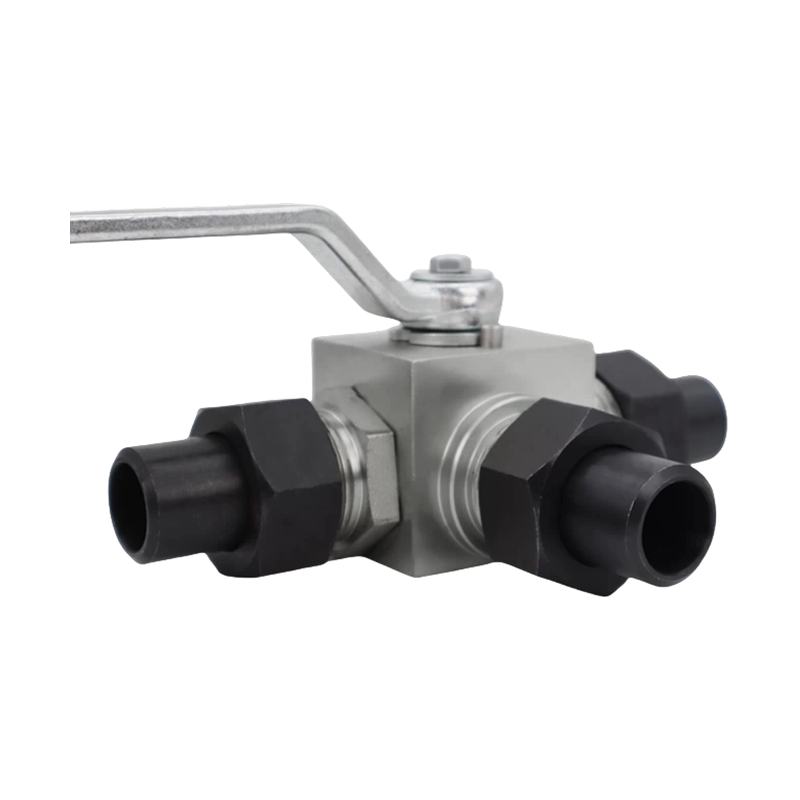 High Pressure 3 Way Ball Valve ManufacturersView More KHB-3K Carbon Steel 304/316L Stainless Steel High-Pressure Three-Way Ball Valve with Mounting Holes (T-Port & L-Port) On/Off ValveView Product →
A 3-way control valve is a three-port valve that directs flow from one inlet to either of two outlets, or blends two inflows into one common outlet. The most common industrial version is the 3-way ball valve with an L-shaped or T-shaped bore through the ball. With an L-bore, the centre port always stays connected to one side port. A 90-degree turn switches the flow to the other side port. With a T-bore, the operator can connect all three ports simultaneously, which is useful for venting or mixing two process lines.
In high-pressure hydraulic and pneumatic systems, the 3-way high pressure ball valve is often preferred over a globe-style control valve because it offers a nearly full-bore flow path. A globe valve throttles flow and creates a much higher pressure drop, whereas a ball valve in the open position creates a straight channel that barely restricts flow. That characteristic matters when the system needs to move large volumes of hydraulic fluid quickly.
The manufacturer matters because the body of the valve is machined from a solid bar or forging. The tolerance around the ball seat and the surface finish of the ball directly determine how long the valve will seal without weeping. Valves from a manufacturer that uses CNC turning and grinding cells typically achieve ball roundness within 0.005 mm. Valves from a facility that relies on manual lathes usually have higher runout, which shows up as a growing leak path after 2,000 to 3,000 operating cycles.
Another reason to study the manufacturer is sealing material selection. A 3-way control valve handling mineral hydraulic oil requires a different seal compound than one handling natural gas or CNG service. A manufacturer with an in-house product range often compensates for the sealing compound by adjusting the seat geometry. That level of engineering cannot be replicated by a reseller who simply buys standard valves and repaints them for the local market.
 KHB-3K Carbon Steel 304/316L Stainless Steel High-Pressure Three-Way Ball Valve with MountFirst-Class 3-Way Control: A single valve realizes control of three fluid paths, which can replace the combination of multiple 2-way valves and simplify pipeline design.View Product →
Before you request a quotation, prepare a specification sheet that covers the following three points. Doing this prevents the most common mismatch problems and shortens the evaluation cycle from days to hours.
Manufacturers in China commonly express pressure ratings as 320P, 400P and similar codes. The first three digits followed by P represent a static working pressure in megapascals. A 320P classification is 32.0 MPa, and a 400P classification is 40.0 MPa. These ratings assume the body material can withstand that pressure at room temperature. For temperatures above 100 degrees Celsius, the working pressure decreases roughly 10 to 20 percent depending on the seal compound.
Choosing a valve with a pressure class too close to the system maximum is a common reliability risk. If the pump pressure peaks at 31.5 MPa, a 320P valve offers a very small margin because pumps commonly overshoot by 4 to 6 percent during pressure spikes. Many buyers order the 400P version for the same mounting dimensions, adding less than USD 30 to the unit price while extending service life significantly.
304 stainless steel is the default material for hydraulic oil, compressed air and freshwater service because it offers good corrosion resistance at a moderate cost. 316L stainless steel adds 2 to 3 percent molybdenum, which improves resistance to chloride erosion and pitting. For media containing saltwater, caustics or trace chlorine, 316L is strongly recommended. Carbon steel is the lowest-cost option for dry gas or mineral oil systems, but it requires a protective coating and is not suitable for high-humidity environments.
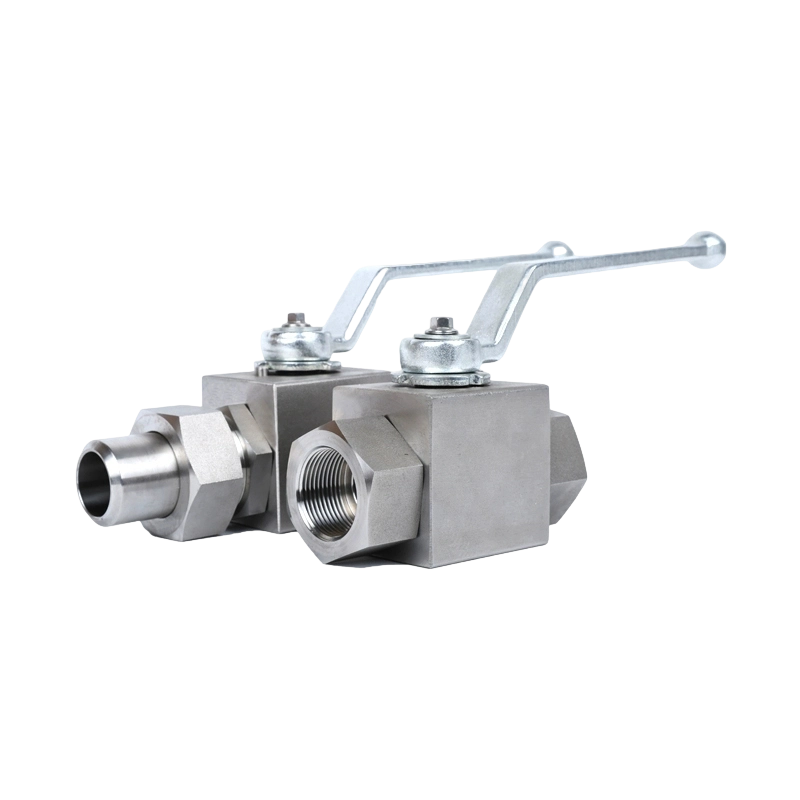
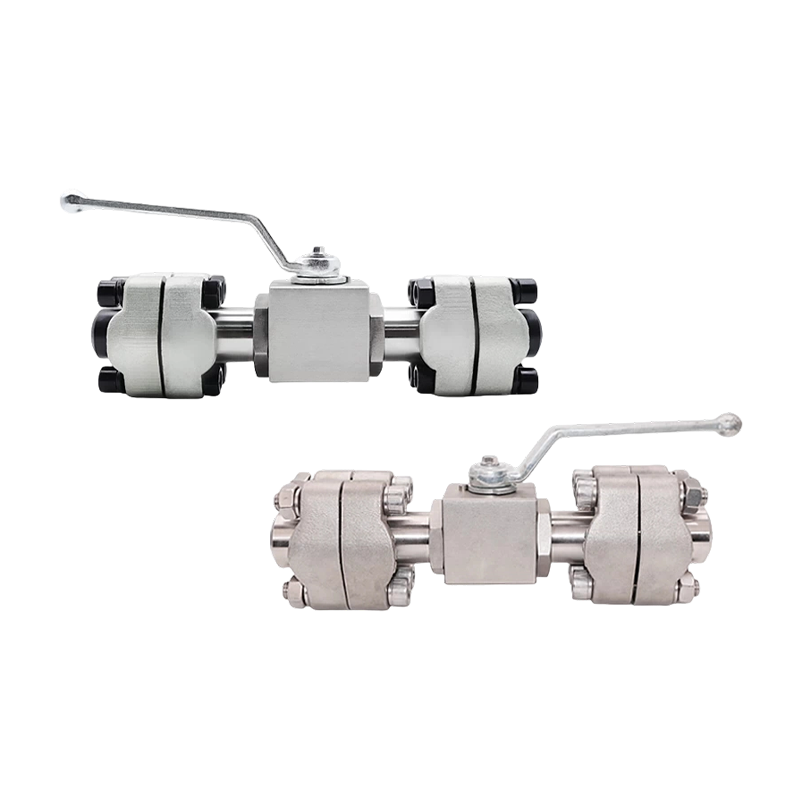
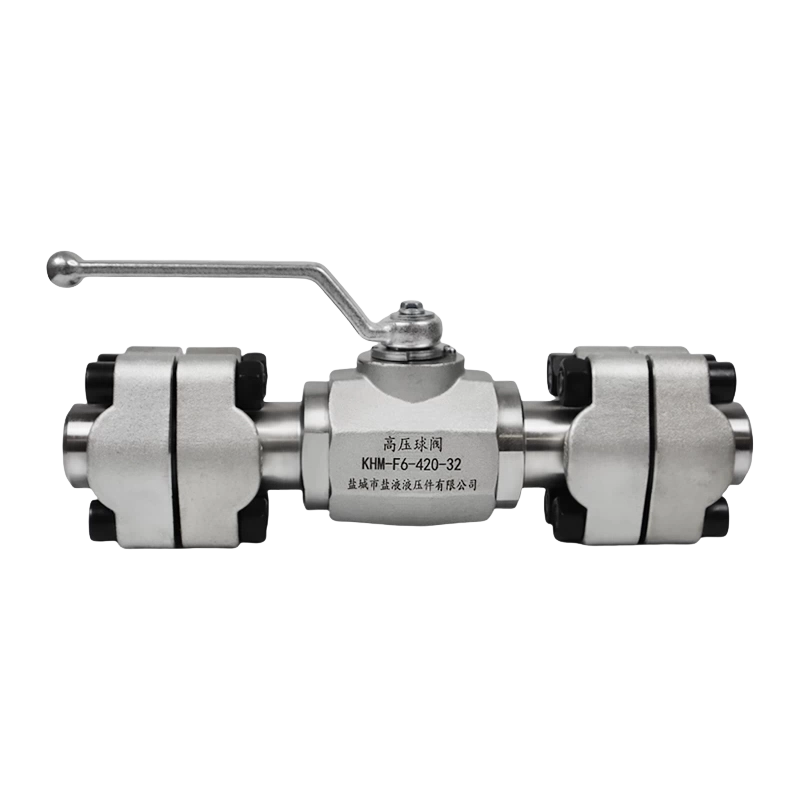
The valve connection has to be physically compatible with the existing piping and compatible with the pressure level of the circuit. Internal thread connections are common for small valves in hydraulic rigs. Ferrule-type connections are standard in instrumentation lines because they can be loosened and retightened without welding. SAE flange connections are the standard choice for 20 mm and larger ports in mobile hydraulic systems. Welded connections are ideal for permanently assembled chemical skids. Plate-type connections are used in manifold blocks where space is constrained.
If the manufacturer can supply more than one connection version for the same valve body, project planning becomes easier because the same valve can be adapted to different pipe sections without a redesign.
Once a supplier passes the basic specification check, the next step is evaluating its actual production quality. A few straightforward questions will reveal whether the factory is a genuine manufacturer or just a trading company with a warehouse.
Ask about CNC machining capability. A valve body that is turned and milled on CNC equipment will have consistent wall thickness, accurate bore centres and smooth thread seats. A factory with at least four CNC turning centres and two machining centres can hold critical tolerances and respond to custom orders. A workshop dependent on manual lathes may still assemble acceptable parts but will struggle with repeatability.
Ask about the pressure test procedure. Every 3-way valve intended for high-pressure service should be hydrostatically tested at 1.5 times the rated pressure. For a 320P valve, that means 48 MPa test pressure. Some manufacturers also perform a low-pressure air leak test to confirm the seat wipe. If the supplier claims to use a 1.5-times test but cannot describe the test adapter or the step-by-step process, request a video of the test bench in operation.
Ask about custom machining and modification service. Industrial installations frequently require non-standard items such as long valve stems, special thread forms, extra-long extension fittings or modified bracket mounting holes. A manufacturer with its own production equipment can turn these custom jobs around. A trading company will have to order a minimum batch, which usually leads to extra purchase cost and total lead time extension.
Ask about the supporting piping components the same factory supplies. When a valve supplier also provides matching tube nuts, welding sockets and pipe clamps, the whole installation is much cleaner. The wall thickness of a welded tube nut, the plating of a pipe clamp and the material grade of a socket all have to align with the valve body pressure rating. A single supplier who can deliver these parts together removes the risk of dimensional mismatch at the interface.
In practice, a manufacturer that can demonstrate a comprehensive in-house design, machining and assembly flow is more likely to control product consistency from batch to batch than an outsourcing company.
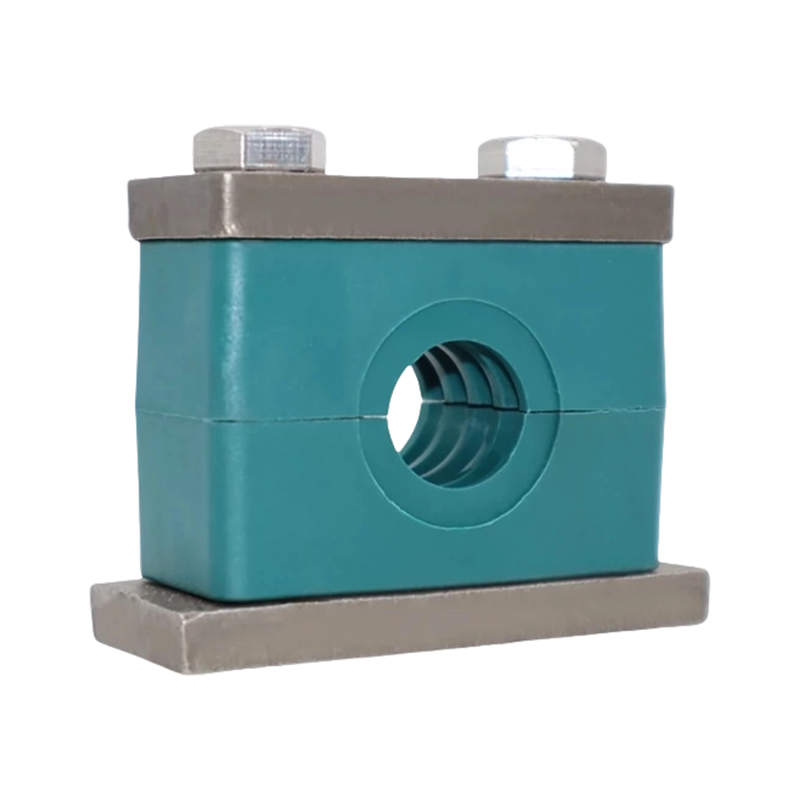 Pipe Clamp ManufacturersView More THPG1 Heavy Duty 304 Stainless Steel R/U Pipe Clamp, Plastic Water Oil Tube ClipView Product →
There are specific applications where a 3-way high pressure ball valve outperforms a conventional axial globe control valve. The strongest argument is pressure loss. When hydraulic oil flows through a ball valve with a full bore, the pressure loss is around 0.1 to 0.2 MPa at common flow rates. A conventional control valve with an internal trim and throttling plug can lose 1 to 2 MPa under the same conditions. In a system that runs continuously, this pressure loss converts directly into higher pump energy and additional heat generation.
Direction switching is another strong reason. A 3-way ball valve swaps flow paths with a single quarter-turn of the handle. On a clamp connection system or a test rig, this operation takes less than a second. A globe-style control valve with an actuator and positioner needs a full travel cycle, which can take several seconds and adds control loop complexity.
For gas applications such as CNG or LNG small-scale distribution skids, the ball valve has an advantage against contamination. Compressed natural gas may carry fine fouling particles that can lodge in the small trim of a globe valve and reduce its stroke. The large, sweeping sealing surface of a ball valve wipes the ball clean on each rotation, so the valve is less likely to stick.
There are, however, cases where a traditional control valve remains the better choice. For continuous modulation of flow in a steam heating coil or a process blending station, a straight vertical globe valve with an exact output curve gives better regulation precision than a quarter-turn ball valve. If a buyer needs to modulate flow rather than just switch it, the ball valve should not be forced into the application.
For a wider view of how to compare ball valve suppliers beyond this topic, consult the complete ball valve buyers guide for a step-by-step sourcing checklist.
Industrial procurement teams tend to repeat the same errors when they buy directional control valves for the first time. The following mistakes are the most costly in practice.
Hydraulic systems with solenoid directional valves or accumulator circuits generate short pressure peaks that may exceed the nominal pump setting by 5 to 8 percent. If the system nominal pressure is 28 MPa and the pump delivers 31.5 MPa during peak compensation, a 316P valve is not enough. Many failures occur in the first week because the seal ring is forced into a gap that grows with each spike.
304 stainless steel offers good resistance to many industrial fluids, but it is not suitable for seawater, chlorine-dosed cooling water or salt-laden coastal atmospheres. In those environments, 316L is consistently the correct choice. The molybdenum content in 316L creates a stronger chromium oxide layer that resists pitting and crevice corrosion. A valve that lasts 18 months in 304 may be replaced after three months in 316L service, and the total cost difference is normally less than the single valve replacement expense.
Unit price is a strong negotiation tool, but it does not include installation cost, fitting cost, or the hidden cost of replacing a leaky valve. A valve that arrives with a slightly misaligned thread can take two days to install because the technician needs to cut and re-thread the upstream pipe. That installation time costs several times more than the valve itself.
High-pressure three-way valves apply a certain reaction torque to the pipeline when the ball rotates under pressure. A robust support point needs to hold both the valve body and the connecting pipe rigid. If the piping system is not fitted with a suitable heavy-duty pipe clamp near the valve, vibration can fatigue the thread or weld seam. Matching aluminium or nylon pipe clamps from the same manufacturer help maintain the correct alignment.
| Body Material | Typical Pressure Class | Best Suited Application | Key Advantage | Main Limitation |
|---|---|---|---|---|
| Carbon Steel | 320P to 400P | Dry hydraulic oil systems, pneumatic circuits, non-condensing gas lines | Lowest raw material cost; high strength for dynamic load | Needs protective coating; not suitable for corrosive media |
| 304 Stainless Steel | 320P to 400P | Water, mineral oil, compressed air, mild chemicals | Good corrosion resistance; broad compatibility | Chloride pitting risk |
| 316L Stainless Steel | 320P to 400P | Offshore, chemical, natural gas with possible water | Excellent pitting resistance; long service life in salt water | Higher material cost; more difficult to machine |
| 304/316L with PU Seal | 320P | Natural gas and CNG skids | Good high-pressure sealing and self-cleaning effect | PU not recommended for high-temperature steam |
| 316L with PTFE/PEEK Seal | 400P | Chemical dosing lines, equipment requiring very low leakage | Chemical compatibility across many acids and bases | PTFE creep under cyclic load |
A 3-way control valve is a broader category that may use a globe-style plug or a ball for flow control. A 3-way ball valve is a specific type where the flow path is switched by rotating a ball with a perforation. In many industrial hydraulic and pneumatic systems, the ball type is chosen because it gives a straight full-bore flow and requires only a quarter-turn.
Start with the maximum system pressure, then add a 15 to 25 percent safety margin. If the system pumps at 28 MPa, select a valve rated at 320P, which is 32 MPa. If the system includes an accumulator or a pressure spike of 5 percent, move up to a 400P valve. It is always safer to choose one pressure class higher than the calculated worst case.
Yes, provided the valve body is made of stainless steel or suitable carbon steel and the seal compound is compatible with gas service. Many manufacturers now produce dedicated natural gas high pressure ball valves with PU or PEEK seals, which have passed clean gas tests for leak-free operation. Always check that the valve is pressure-tested with nitrogen before dispatch.
For seawater or chloride-containing media, 316L stainless steel is the minimum requirement. For very aggressive acid service, PTFE or PEEK seals are preferred because rubber compounds degrade quickly. If the temperature stays below 80 degrees Celsius, a 316L body with a PU seat works well in most chemical applications.
Reputable manufacturers can modify the body length, the thread form, the ball bore shape and the handle orientation. A true manufacturer will be able to provide a drawing and a production schedule for a small batch. Some factories also produce custom pipe clamps and tube nuts for the same project so that all parts arrive with one consistent quality level.
For offshore hydraulic systems, SAE split flange or welded connections are usually preferred because they resist vibration loading better than threaded connections. The flange bolt group should be tightened to the manufacturer torque spec, and a proper flange washer should be used to avoid crushing the body.
When you compare supplier proposals, evaluate the valve specification first. Build a table with pressure class, body material, connection type and seal material for each quotation. Then check whether the manufacturer can also deliver supporting components such as tube nuts, pipe clamps and weld sockets from the same production line. Finally, confirm that the factory can show a pressure test report for the exact batch being shipped, not just a product catalogue.
In practice, a manufacturer with a solid CNC machining base, a pressure test bench and a broad supporting product series will provide the lowest total cost of ownership. A valve that is correctly specified for the actual process conditions can operate for years without servicing, while a technically mismatched unit can fail within weeks. For industrial buyers, that single decision is worth more than any discount negotiated on the invoice.
Recommended Products
Copyright © Yancheng Yanye Hydraulic Parts Co., Ltd. All Rights Reserved
Custom Ball Valve Factory
China Ball Valve Manufacturers




 English
  русский
  Español