HOME / NEWS / Industry News / Ball Valve vs Globe Valve: Full Comparison, Applications and Selection Guide
2026-09-07
Content
The direct answer is straightforward: choose a ball valve when your primary goal is complete on/off isolation with minimal pressure drop, and choose a globe valve when your primary goal is flow regulation, throttling, or fine control. This single rule covers the vast majority of industrial applications.
Consider a natural gas compressing station that needs an emergency shutdown valve. The valve must close in under two seconds and provide bubble-tight, zero-leak isolation. Only a ball valve can deliver that level of performance. Now look at the bypass line in the same station: it must be cracked open just a few degrees to let a small, controlled amount of gas pass and stabilize the pressure. Here, a globe valve is the correct choice.
The reason for this difference is structural. A ball valve uses a rotating sphere with a center bore as its closing element. A globe valve uses a disc that moves up and down on a threaded stem, forcing media to follow an S-shaped path. These architectures produce very different flow characteristics that determine where each valve excels.
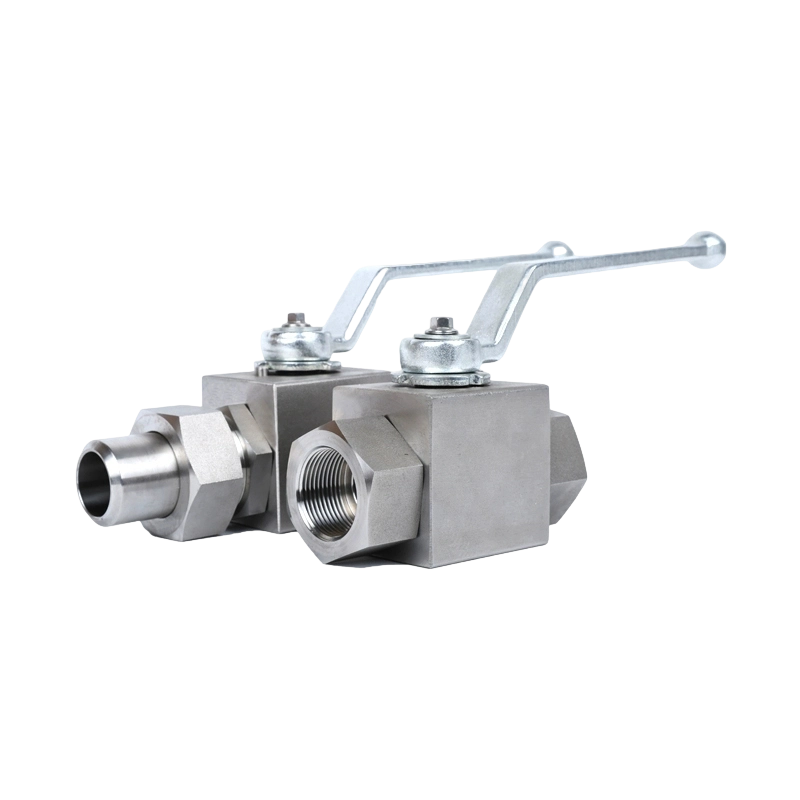
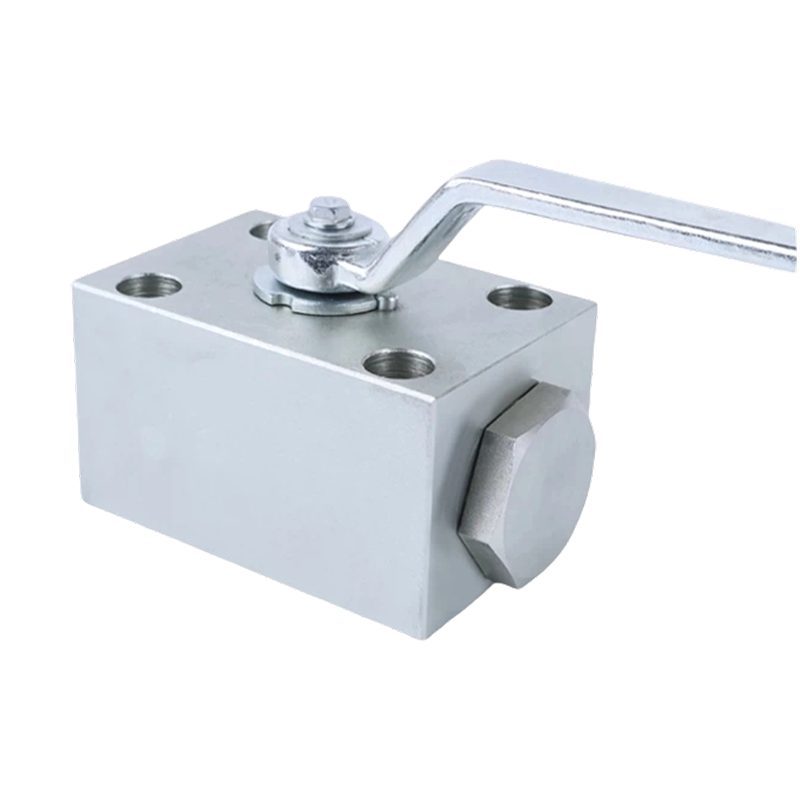
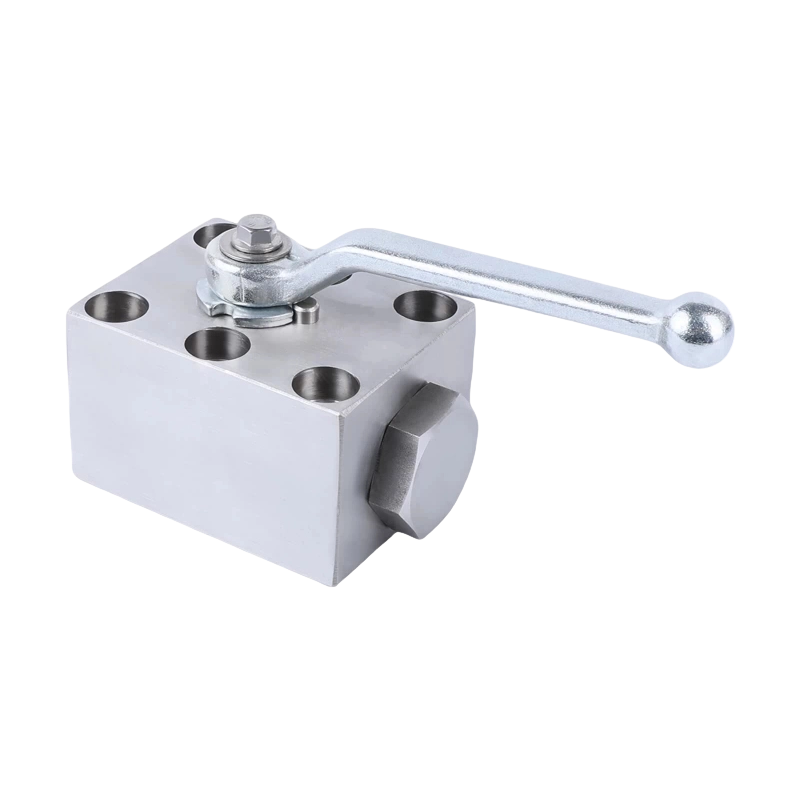
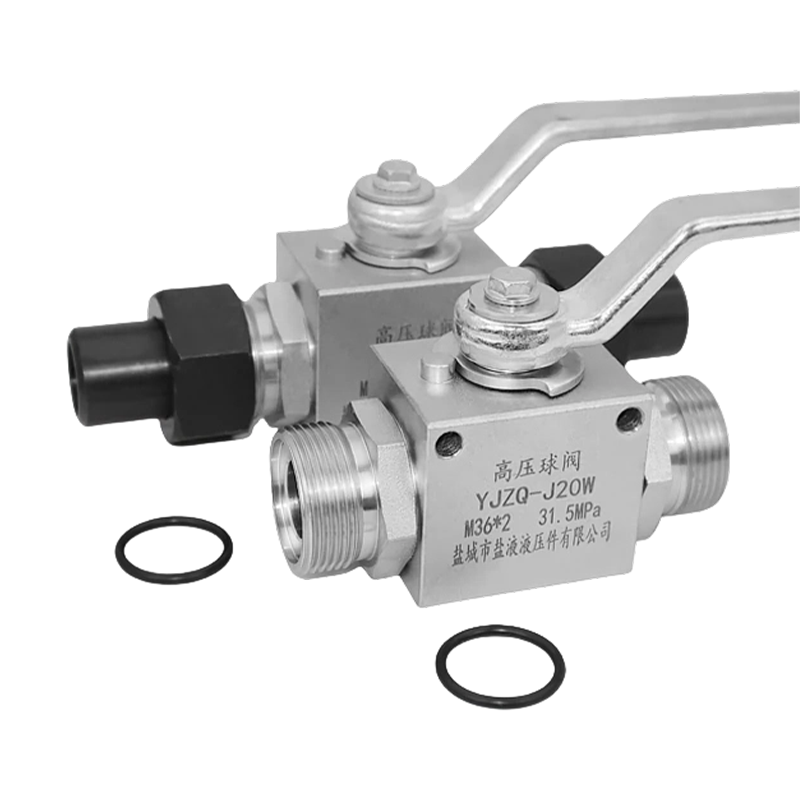 High-Pressure Stainless Steel Ball Valve with Pneumatic Actuator OptionThis valve suits high-pressure hydraulic systems, offering welded or threaded connections. Its stainless steel body ensures durability. The pneumatic option enables remote on/off control, making it versatile for demanding applications.View Product →
| Parameter | Ball Valve | Globe Valve |
|---|---|---|
| Operating Motion | Quarter-turn (90 degrees) | Multi-turn (three or more rotations) |
| Primary Function | Isolation / shutoff | Regulation / throttling |
| Flow Path | Straight line when open | S-shaped passage, always |
| Pressure Drop (open) | Very low, near zero | High, the S-passage creates resistance |
| Seating Material | PTFE, POM, or metal | Usually metal-to-metal |
| Typical Temperature Limit | Up to 200 degrees C with PTFE seats | Up to 425 degrees C with metal seats |
| Speed of Operation | Fast, under one second with actuator | Slow, several seconds or minutes |
A ball valve consists of a spherical ball with a cylindrical bore drilled through its center. The ball is supported between two seats inside the valve body. A stem connects the ball to the handle or actuator on top of the valve. When the operator turns the handle 90 degrees, the ball rotates and either aligns the bore with the flow path or turns perpendicular to completely block flow.
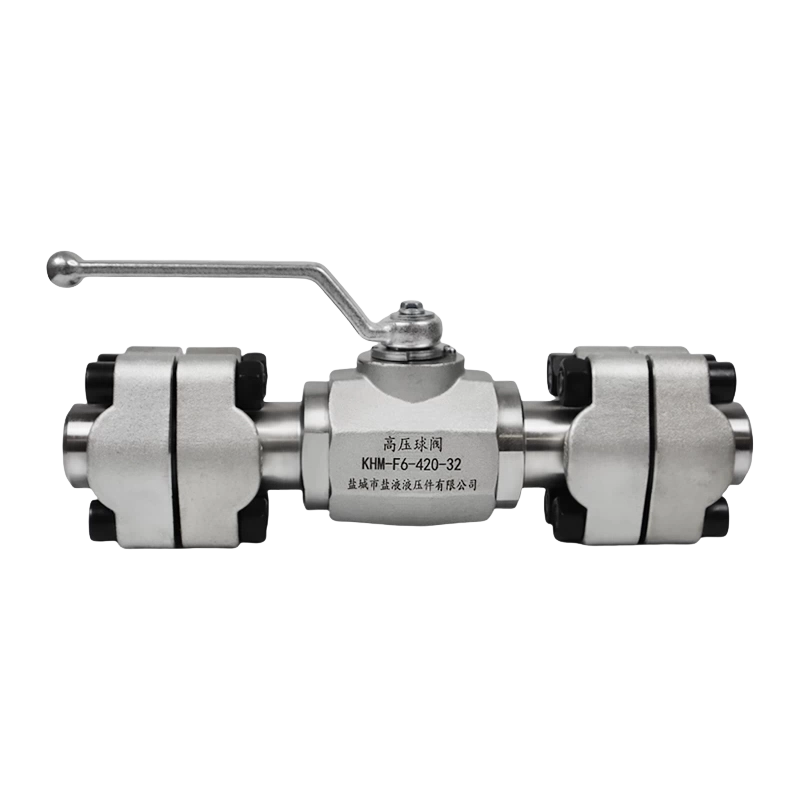
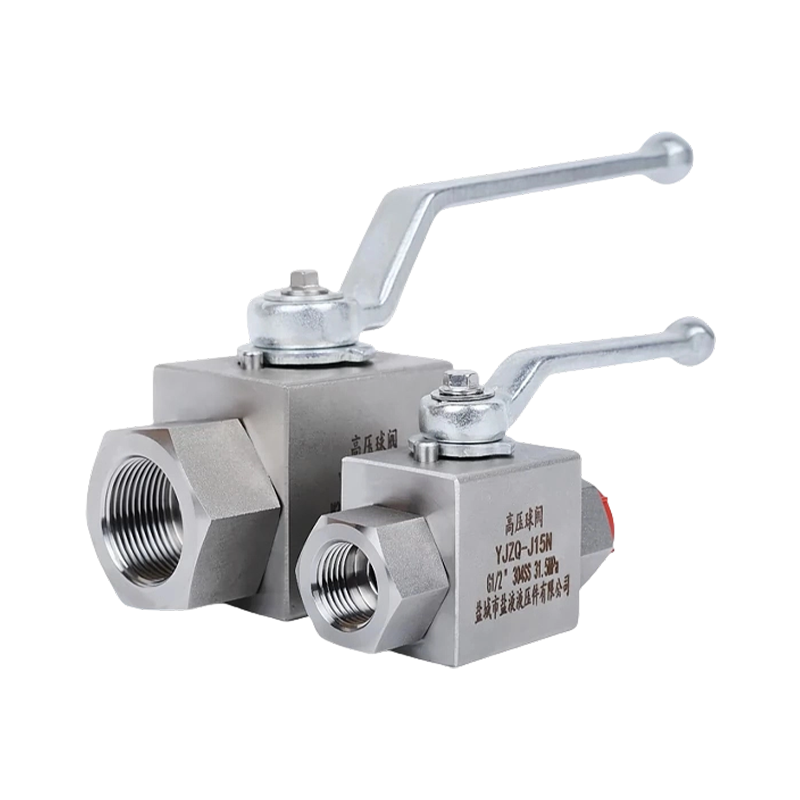
In high-pressure ball valve designs like the KHB/YJZQ series produced by this supplier, the ball is precisely machined from 304 or 316L stainless steel, and the body can be supplied in stainless steel or carbon steel. Connection options include internal threads, external threads, welding, SAE flange, and ferrule types. The KHM series adds split-flange configurations for higher pressure hydraulic systems. The KHP/PKH series covers plate-type high-pressure ball valves for manifold mounting.
When a ball valve is fully open, the bore diameter equals the internal diameter of the pipe. This full-bore design gives a straight, unobstructed flow path. The pressure drop through a full-open ball valve is so low that in most hydraulic and gas systems it can be treated as negligible, typically contributing less than 1 percent of the total system loss.
A globe valve has a body with an internal partition or septum that separates the inlet and outlet. Flow enters from below the seat, passes through the seat opening, then turns upward and exits. This forced direction change creates the S-shaped passage that gives the globe valve its characteristic flow resistance.
The closing element is a disc or plug attached to a threaded stem. Every full rotation of the handwheel advances the disc by the thread pitch, often only 2 to 4 millimeters. The J23W-320P needle valve is a perfect example of a globe-type valve where the closing element is a fine needle. This needle shape allows the operator to make extremely small adjustments to the flow rate, which is why this type of valve is used for instrument isolation, meter bypass, and sampling lines.
Because the disc travels perpendicular to the flow direction, the valve can stop at any position between fully open and fully closed. This makes the globe valve inherently good at throttling. The relationship between disc position and flow rate is far more linear than in a ball valve, which is a decisive advantage for any service where precise flow control matters.
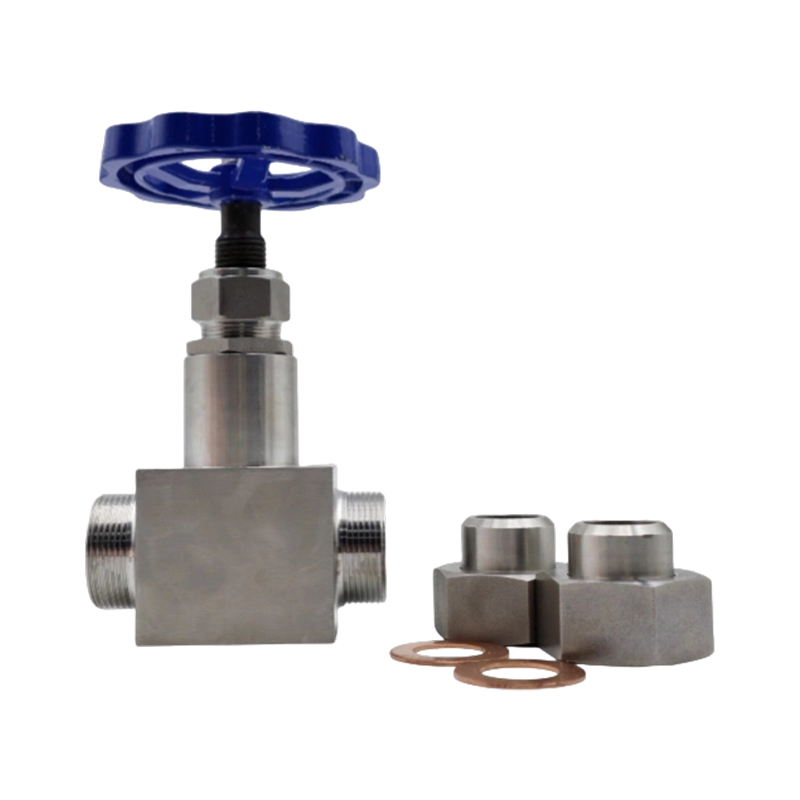 Stainless Steel Needle Valve for High-Pressure Gauge and Welded ConnectionsDesigned for high-temperature and high-pressure service, this needle valve features external threads and welded ends. It provides precise flow regulation and reliable sealing, ideal for gauge installations in demanding systems.View Product →
| Component | Ball Valve | Globe Valve |
|---|---|---|
| Closing Element | Spherical ball with bore | Flat disc, plug, or needle |
| Stem Motion | Rotary (90 degrees) | Linear, multi-turn threaded |
| Flow Path | Straight when open | S-shaped, changes direction within body |
| Typical Bonnet Style | Screwed, welded, or flanged | Screwed, bolted, or welded |
| Number of Ports | Two, three, or four | Two (inlet and outlet) |
The pressure drop through a valve is the most important operational metric for system designers. It directly affects pump sizing, operating cost, and the total flow capacity of the line. The two valve types differ substantially in this regard.
A full-bore ball valve offers an S-value nearly equal to the equivalent length of straight pipe. In standard industrial practice for hydraulic systems, the contribution of a fully open ball valve to total pipeline pressure loss is typically between 0.5 percent and 2 percent. This is why ball valves are the standard choice for the main isolation points in high-flow hydraulic and gas systems.
A globe valve, by contrast, introduces a permanent pressure loss even when fully open. The S-shaped internal passage forces the fluid to make two 90-degree turns, and the seat itself creates a vena contracta effect. For a typical globe valve, the full-open pressure drop is about 5 to 10 percent of the upstream pressure. In high-pressure systems above 300 bar, this is not just a matter of energy waste; it is also a factor that can limit the achievable flow rate of the entire line.
When you partially open a ball valve, the flow characteristic is highly nonlinear. The flow area changes dramatically only in the last 20 degrees of rotation. For example, a ball valve rotated to 45 degrees from close still has only a small opening, but by 30 degrees from close it is nearly fully open. This makes fine flow adjustment unreliable.
A globe valve has a far more predictable throttling characteristic. As the operator rotates the handwheel, the disc rises and the flow rate increases in a fairly linear fashion. This is why globe valves are universally used in bypass lines around isolation valves, in hydraulic cylinder speed controls, and in any process where the operator needs to set an exact flow rate by hand.
| Valve Position | Ball Valve Cv (Percent of Full Open) | Globe Valve Cv (Percent of Full Open) | Ball Valve Pressure Drop | Globe Valve Pressure Drop |
|---|---|---|---|---|
| 100% open | 100% | 100% | Minimal, below 2% of line pressure | 5-10% of line pressure |
| 75% open | 92% | 75% | Very low | Moderate increase |
| 50% open | 55% | 40% | Moderate | Significant |
| 25% open | 12% | 15% | High, very steep change | High, gradual change |
| 10% open | 1% | 4% | Extreme, effectively closed | Still controllable |
Note: The values in Table 3 are typical industry performance ranges based on standard flow coefficient engineering data from the valve industry. Actual values vary depending on the specific valve design, port size, and trim configuration.
Every valve body, stem, and sealing element has a design pressure that must not be exceeded. In high-pressure hydraulic and gas systems, the difference in pressure capability between ball valves and globe valves often decides which one is selected.
The manufacturer produces high-pressure ball valves in the KHB/YJZQ series with a pressure rating of 320 bar in standard form and up to 400 bar for specific configurations. The material options, 304 or 316L stainless steel and carbon steel, support these high pressures across a temperature range from minus 40 degrees C to 200 degrees C for polymer-seated versions. For natural gas, CNG, and LNG service, these ball valves are built for the quick shutoff and tight seating that gas handling requires.
The J23W-320P and J23W-400P needle valves are globe-type valves with 304 stainless steel construction rated at 320 bar and 400 bar respectively. The J61Y-320P is specifically described as a high-temperature stop valve with 304 or 316L stainless steel body. These globe-type valves with metal-to-metal seating can operate at media temperatures that would destroy a polymer-seated ball valve.
The seat material is the limiting factor for a ball valve. PTFE seats start to lose their elastic properties above 150 degrees C and are not recommended for continuous service above 200 degrees C. POM seats are rated slightly higher but still below 250 degrees C. Above these temperatures, the seat will deform and the valve will leak.
A globe valve with metal-to-metal seating does not have this limitation. The disc and seat are both machined from 304 or 316L stainless steel, so the media temperature is limited only by the body material and gaskets. For steam service at 425 degrees C, a metal-seated globe valve is the standard choice. This is exactly the service for which the J61Y-320P is designed.
| Valve Type | Material | Max Pressure | Max Temperature | Seat Type |
|---|---|---|---|---|
| KHB/YJZQ Ball Valve | 304/316L SS or CS | 320 bar | 200 degrees C | PTFE / POM |
| KHM Flange Ball Valve | 304/316L SS | 320-400 bar | 200 degrees C | PTFE / POM |
| J23W-320P Needle Valve | 304 SS | 320 bar | 300+ degrees C | Metal-to-metal |
| J61Y-320P Stop Valve | 304/316L SS | 320 bar | 425 degrees C | Metal-to-metal |
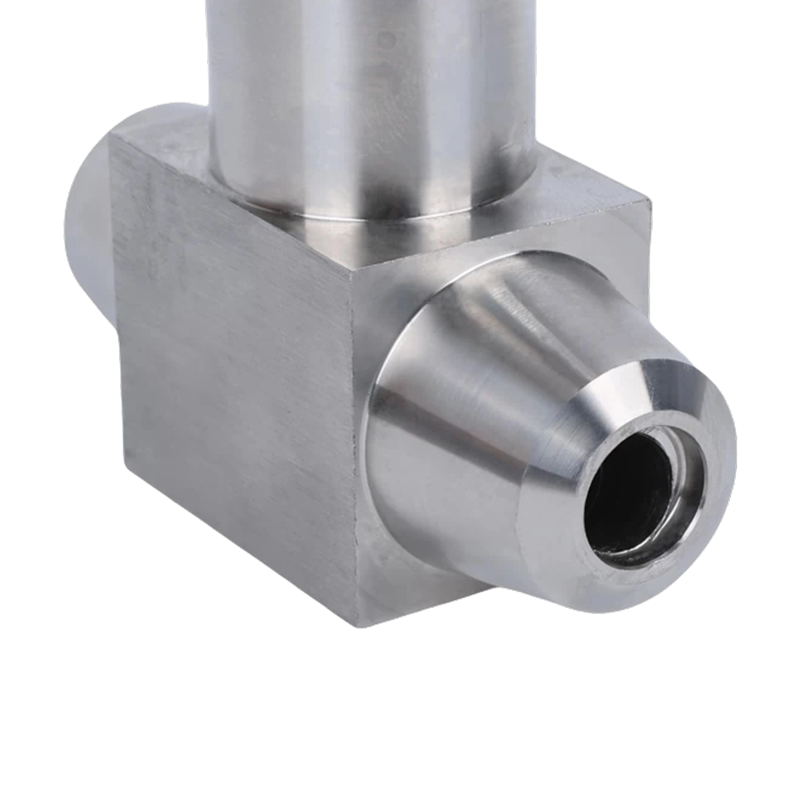 Ultra-High Pressure Socket Weld Needle Globe Valve in Stainless SteelThis socket weld needle globe valve handles ultra-high pressures up to 32 MPa. Its stainless steel body resists corrosion and high temperatures, making it essential for precise control in critical high-pressure pipelines.View Product →
Initial purchase price is only one component of the real cost of a valve. A valve that costs less initially but creates extra pressure drop, requires frequent seat replacement, or needs a larger actuator can easily cost more over its life. Understanding the lifecycle cost helps make the right call.
As a general pattern, a high-pressure ball valve costs 30 to 50 percent more than a globe valve of the same size and pressure class. The reason is machining complexity: the ball and seat must be manufactured to very tight tolerances to achieve bubble-tight sealing, and the ball itself requires precision grinding and lapping. Globe valves have a simpler geometry with a mostly axial disc and seat, which makes them less expensive to produce in the same size range.
However, the ball valve often wins on total installed cost. Because it has near-zero pressure drop, the system may be able to use a smaller pump or a smaller pipe diameter. In a long pipeline, downsizing from 2 inches to 1.5 inches based on the low friction loss of a ball valve can save significantly more than the difference in valve purchase price.
For a ball valve, the seat is the weak point. Each cycle presses the seat against the ball, and debris in the media can cause scratches. In high-temperature or high-cycle service, PTFE seats should be expected to last tens of thousands of cycles, while metal seats may exceed hundreds of thousands. When the seat fails, the ball valve must be removed from the line and overhauled, because the ball and seat are usually replaced as a matched set.
For a globe valve, the disc and seat are the wearing parts. In many installations, these can be replaced with the valve body still in the line, by simply removing the bonnet. This is a major advantage in steam plants and process facilities where downtime is expensive. The J23W series with its simple needle and seat assembly is easy to service.
When automating a valve, the required torque determines the actuator size and cost. A quarter-turn ball valve typically needs much less torque than a multi-turn globe valve of the same size. For a 1-inch high-pressure KHB ball valve, a 50 Nm pneumatic actuator is sufficient. For the same size globe valve, the operator may need 150 Nm or more to overcome the friction of the threaded stem and the seating force. Larger actuators are not only more expensive but also require more compressed air or larger motorized packages.
More importantly, the ball valve can be automated with a simple double-acting pneumatic cylinder, whereas a globe valve requires a rack-and-pinion mechanism or a motorized gearbox with additional mechanical complexity. For large valve automation projects, the cost difference becomes substantial.
Learn more about the operation and use of high-pressure ball valvesIn actual industrial practice, both valve types exist in the same plant, often side by side. The key is to understand which valve belongs where based on the specific operating condition.
When you start a new valve selection, use this step-by-step decision framework to arrive at the right choice with confidence.
| Selection Condition | Recommended Valve | Reason |
|---|---|---|
| On/off isolation of hydraulic oil line | Ball valve | Near-zero pressure drop, quick operation |
| Regulation of steam flow | Globe valve | Metal-to-metal seat, linear throttling |
| Natural gas emergency shutdown | Ball valve | Fast quarter-turn, bubble-tight shutoff |
| Pressure gauge isolation | Globe valve (needle type) | Fine adjustment, small ports, metering |
| High-temp thermal oil circuit | Globe valve (metal seat) | Handles 300+ degrees C without seat failure |
| Three-way flow switching | Ball valve (3-way) | Only ball valves can offer 3-port configuration |
| Pneumatic system with N2 gas | Ball valve | Low leakage, low flow resistance, fast actuation |
Yes, but it is not recommended. A ball valve has a highly non-linear flow characteristic. When the valve is partially open, the flow rate changes very abruptly in the last part of the rotation. This makes precise control difficult and may cause cavitation or noise in liquid services. If you must use a ball valve for throttling, use a V-port ball valve, which has a modified ball with V-shaped notches that provide a more linear characteristic.
A globe valve can isolate flow, but it is not the best choice for that purpose. The S-shaped passage creates a permanent pressure drop, and the multi-turn operation is slow. For pure isolation, a ball valve or gate valve provides lower pressure drop and faster operation. Globe valves are best used where throttling is needed, even if they also perform isolation as a secondary function.
The ball valve always has a lower pressure drop. When fully open, the ball valve offers a straight-through bore with near-zero flow resistance. In hydraulic systems at 320 bars, this difference can translate into several percent of energy savings. The globe valve's S-shaped passage always creates some pressure drop, typically 5 to 10 percent of line pressure even when fully open.
For the same size and pressure class, a high-pressure ball valve is generally 30 to 50 percent more expensive. The precision machining and tight tolerance of the ball and seat drive the cost up. However, the total lifecycle cost can be lower for the ball valve because it reduces pump power consumption and often allows smaller pipe diameters.
Absolutely. In fact, this is one of the most common design patterns. A large ball valve may serve as the main isolation valve, while a smaller globe valve installed in parallel acts as a bypass for pressure equalization and controlled startup. This combination gives the best of both worlds: fast, bubble-tight isolation from the ball valve and fine flow control from the globe valve.
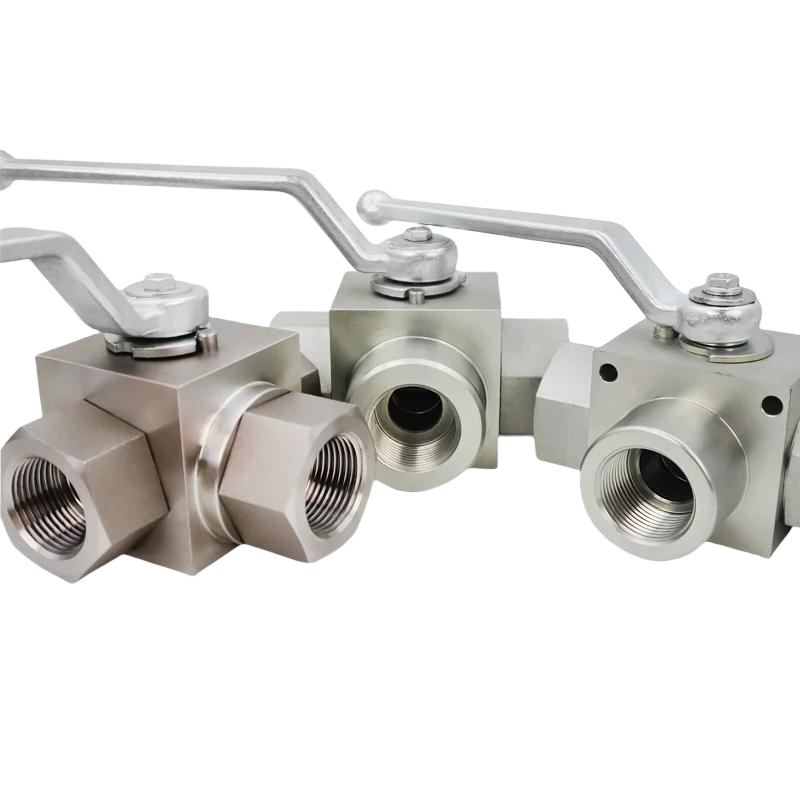
Yes. The manufacturer produces KHB3K series three-way high-pressure ball valves in carbon steel, 304, and 316L stainless steel. These valves can divert flow from one inlet to two outlets or combine flow from two inlets into one outlet. A globe valve cannot provide three-way flow diversion because its body only has one inlet and one outlet.
A needle valve is a specialized type of globe valve with a needle-shaped point on the disc. The needle enters a matching conical seat and creates a very small, controllable flow opening. This design is intended for fine metering and instrument isolation. Standard globe valves have a broader disc and are built for larger flow regulation tasks. Both operate on the same multi-turn, perpendicular-to-flow principle.
For natural gas, CNG, and LNG, a high-pressure ball valve is the standard choice. The quarter-turn operation enables fast emergency shutdown, and the ball-to-seat fit provides bubble-tight sealing that minimizes fugitive emissions. The manufacturer offers natural gas high-pressure ball valves in the KHB series with 304 or 316L stainless steel bodies and special seat materials designed for gas service. Globe valves can be used in natural gas lines but are not preferred for main isolation points.
Recommended Products
Copyright © Yancheng Yanye Hydraulic Parts Co., Ltd. All Rights Reserved
Custom Ball Valve Factory
China Ball Valve Manufacturers




 English
  русский
  Español